Your China & Yunnan Travel Experts

 Ask a Question
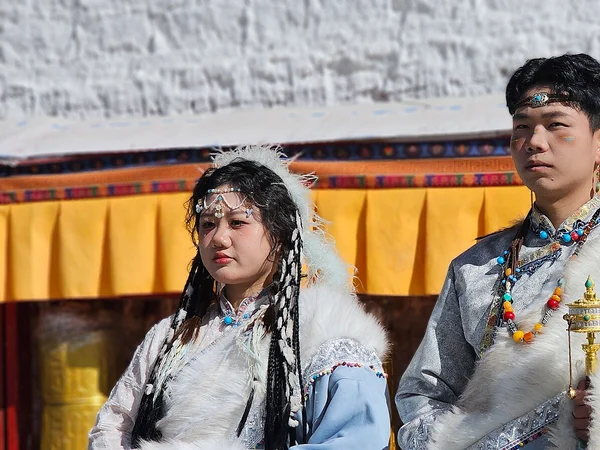
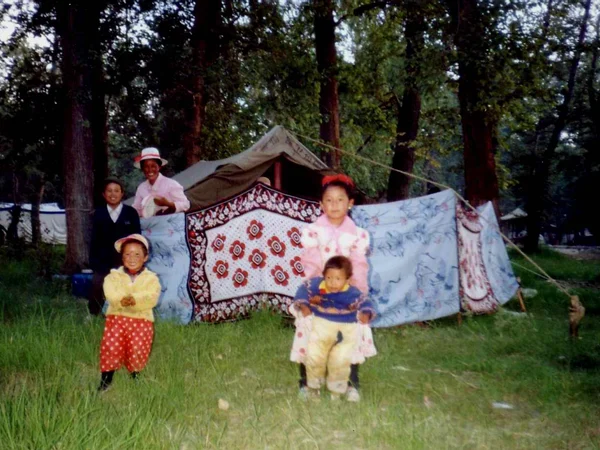
Tibetan clothing is not a single costume. The best-known garment is the chuba, a long wrap robe shaped for movement, layering and large changes in temperature. Cut, cloth, sleeve treatment and the way a robe is belted differ by region, livelihood, season, age and occasion. A herder's heavy sheepskin robe from the northern plateau answers a different practical need from a fine wool or silk garment worn at a Lhasa celebration. Historical textiles also record exchange: the Metropolitan Museum of Art documents an eighteenth-century aristocratic chuba refitted from valued Chinese court cloth, a useful reminder that dress traditions have always absorbed trade, status and local craftsmanship. Women's striped aprons, often called pangden, are strongly associated with parts of central Tibet, but they should not be used as a universal label for every Tibetan woman. Jewellery, boots, hats and hair ornaments can signal locality or occasion, yet modern daily wardrobes commonly mix factory-made clothes, outdoor layers and traditional pieces. When reading portraits, ask where and when the photograph was made before naming the style. Our Tibetan customs guide explains why context matters more than a generic caption.
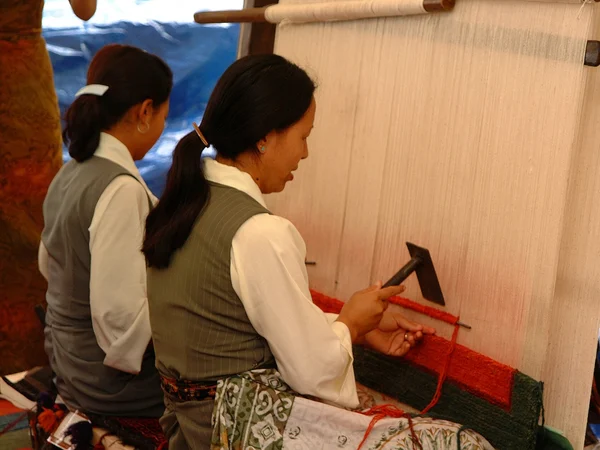
For travelers, the practical lesson is simple: observe without turning people into props. Festival dress can be spectacular, but a public celebration is not blanket consent for close portraits. Ask before photographing an individual, accept a refusal immediately and avoid blocking processions or prayer routes. Rental-studio outfits can make a pleasant souvenir photograph when the business and wearer agree; describe the result as a styled portrait, not proof that you wore “authentic local dress.” When buying textiles, ask whether an item is handmade, where the cloth was woven, what fibre and dye were used, and whether antique components require export documentation. Price alone does not establish age or origin. The Tibetan handicrafts guide helps distinguish a living workshop from a souvenir claim. A khata is a ceremonial scarf offered in greetings, blessings and expressions of respect. Receive or present one with both hands and follow the host's cue rather than inventing a ritual. Around monasteries, garments and religious imagery may have devotional meaning; the Tibetan religion guide covers the behavior expected in active sacred spaces. For museum displays, separate the object label's date from the date of the cloth it reuses; an older textile can be recut later. For new purchases, request a written description instead of accepting a salesperson's verbal claim that a piece is antique. Wool, silk, fur and synthetic trim also need different care, so ask how a garment should be stored and whether colour may run. A workshop visit is most useful when there is time to see cutting, weaving or finishing and to hear what is made locally. Do not pressure an artisan to disclose private designs or stage work for a camera. Pack your own warm, modest layers regardless of what appears in festival photographs: altitude, wind and sun matter more to a visitor than imitating local dress.