Your China & Yunnan Travel Experts


 Ask a Question
Lunar New Year and the January 1 New Year both mark transition, but they use different calendars and carry different social rhythms. This comparison focuses on timing, meaning, family customs and travel impact. It describes common patterns rather than rules for every household or country. For the wider festival sequence, begin with the Chinese New Year guide.
January 1 begins the civil year in the Gregorian calendar and has a fixed date. Lunar New Year begins on the first day of the first month in the traditional Chinese lunisolar calendar, so its Gregorian date changes from year to year. It normally falls in late January or February. Travelers should confirm the date for their specific travel year rather than reuse an old calendar.
The Chinese calendar coordinates lunar months with the solar year through leap months when required. That is why calling it simply a “lunar calendar” is convenient but incomplete. January 1 remains an official New Year observance in China as well; the two dates serve different purposes. The broader Chinese and Western culture overview offers context without reducing either side to a single tradition.
January 1 is widely associated with a fresh civil year, countdowns and personal resolutions, although practices differ across countries and communities. Chinese New Year places particular emphasis on reunion, renewal of family ties, respect for ancestors and wishes for wellbeing or prosperity. These meanings overlap with other New Year traditions but are expressed through distinct Chinese customs.

Red decoration prepared for the Lunar New Year season
January 1 celebrations often include public countdowns, concerts, fireworks or private parties. Family meals may matter, but there is no single “Western” program. Christmas and New Year can form one holiday season in some places, while in others they are separate religious, civic or social occasions.
Public countdown events are typically concentrated around December 31. Transport, security controls and opening hours vary by city, so international travelers should check the organizer and local authority close to the date.
For Chinese New Year, the reunion dinner on New Year's Eve is a central family occasion in many households. Demand for intercity transport rises sharply before and during the holiday, and restaurant, attraction and shop schedules may change. Advance reservations and flexible routing are practical necessities.

A family-style reunion dinner with several shared dishes
Red envelopes, or hóngbāo, are traditionally given by older or married relatives to children and younger family members, though practices vary. Digital red packets are also common, but visitors should not assume that money must be exchanged in every social setting.
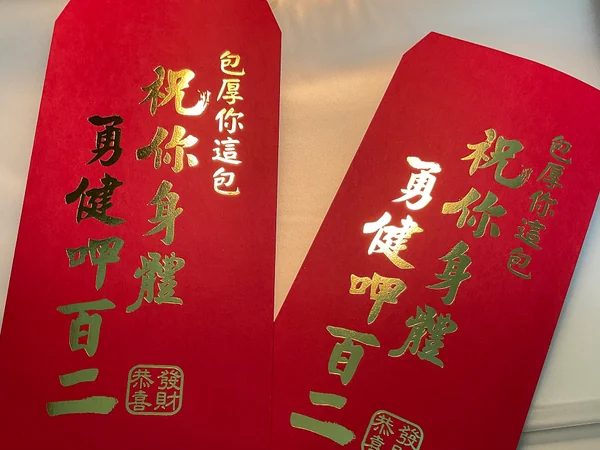
Red envelopes exchanged as seasonal good wishes
Firecrackers and fireworks are linked with festive noise and the folk story of Nian. Their use is restricted or prohibited in many urban areas, and rules can change. Attend only authorized displays and follow current local safety notices.
Lion and dragon dances may appear at temple fairs, shopping districts, community events and overseas celebrations. The two performance traditions have different costumes and movement vocabularies.

A lion dance performed for a public New Year celebration
Visiting relatives, sharing meals and offering greetings can continue over several days. The exact order is shaped by work schedules, distance and family custom rather than one nationwide timetable.
A Spring Festival trip can be culturally rewarding, but it requires more planning than an ordinary winter visit. Confirm the year's dates, transport release schedule, attraction notices and hotel meal arrangements. The Chinese New Year facts guide separates stable cultural background from details that need current confirmation.

Festival lights and red decorations in a Chinese city