Reviewed August 27, 2026. The Shoton Festival is one of Lhasa's major annual cultural and religious occasions. Its Tibetan name is commonly explained as a “yogurt banquet,” recalling the offering of yogurt when monastics completed a period of summer retreat. The modern festival brings together religious observance, Tibetan opera, family picnics and changing civic events. It should not be reduced to one tourist show, and no old timetable should be treated as the program for a future year.
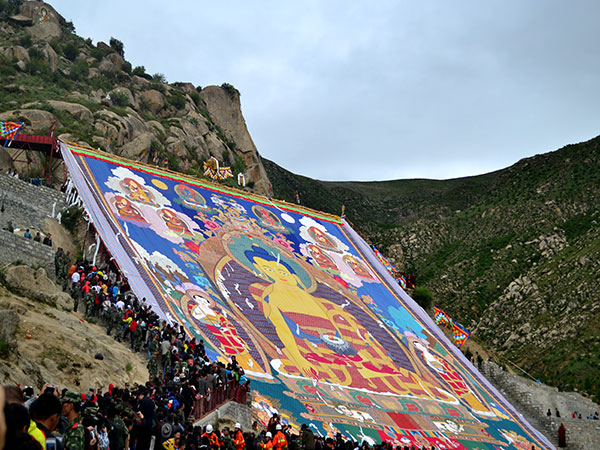
The retained photograph shows the unveiling of a giant thangka on the hillside at Drepung Monastery, a defining image of Lhasa's Shoton period. This is a sacred display attended by large numbers of worshippers and visitors. It is not a stage backdrop: stay within public areas, follow crowd-control instructions, never throw or place objects unless invited by the ceremony, and ask before photographing people in prayer.
Festival timing: Usually around the end of the sixth Tibetan month and the opening of the seventh; the Gregorian date and length change each year. Confirm the official Lhasa announcement before booking transport.
Principal settings: Lhasa, with events historically associated with Drepung Monastery, Norbulingka and public parks. Other Tibetan communities may hold related events, but their schedules and customs should be described separately rather than copied from Lhasa.
Origins and Development of the Shoton Festival
The name links the festival with yogurt offered to monastics after summer retreat. In the older religious setting, retreat limited travel during the season when small living creatures were especially vulnerable. The concluding offering expressed support for the monastic community. This origin is more specific than saying that people simply returned from mountain “penance,” and it explains why yogurt remains a meaningful symbol even though today's program is much broader.
From the seventeenth century onward, Tibetan opera became increasingly important to the occasion, and performances were later strongly associated with Norbulingka. The festival continued to change as public venues, community participation and civic programming expanded. Tradition here is not a frozen schedule: religious observance, local family custom and organized cultural events overlap, while each year's official program determines what a traveler can actually attend.
What Visitors Can See—and What to Verify
A Drepung thangka display may begin very early and involve uphill walking, darkness, security checks and extremely heavy crowds. Do not plan it as an easy first morning after arrival. Acclimatize first, carry only permitted essentials, agree on a meeting point and obey one-way routes. Weather, conservation and crowd safety can alter viewing arrangements. A giant thangka is a sacred object, so drones, flash, climbing for a viewpoint and intrusive close-ups of worshippers are inappropriate.
Tibetan opera is a major part of Shoton's public culture. UNESCO describes Tibetan opera as an art combining song, dance, storytelling, chant, acrobatics and religious performance; it was inscribed on the Representative List of the Intangible Cultural Heritage of Humanity in 2009. Our
Tibetan opera guide helps visitors recognize the performance structure without treating costume alone as proof of a particular play or troupe.
For a practical visit, allow several nights in Lhasa, separate the early religious event from a later opera or park session, and keep a backup cultural day. Check the
Tibet festival schedule for planning context, then confirm the current government notice, road controls and venue rules. The
Tibet travel planning guide covers permits, licensed guiding and altitude pacing. Respect picnic areas as community spaces, ask before photographing families or performers offstage, and leave no rubbish.

 Ask a Question