Reviewed August 28, 2026. Xi'an shopping is best planned by neighborhood: Bell and Drum Tower for a central evening, Shuyuanmen for calligraphy and craft, and Jiefang Road for transport-linked modern retail. Tenant names and traffic arrangements change, so verify the current pin before setting out. The
Xi'an tourism guide helps connect these stops to the city wall and museums.
East Street (东大街)
- Location: East of the Bell Tower in central Xi'an.
- Best for: General retail, restaurants and access to the Bell Tower commercial core.
East Street has changed repeatedly with city-center redevelopment. Do not expect every department store or overseas-oriented shop named in older copy to remain. Use the live mall directory, compare the exact product and request written return terms. The Bell Tower area is more useful for orientation, meals and mainstream shopping than for tracing a legacy store name. Visit after the day's heritage sights, but keep enough time to inspect purchases before closing.
Claims that an antique shop is “only open to overseas customers” are obsolete and should not guide a purchase. Any old or archaeological-looking object requires provenance and lawful export review. For ordinary fashion or cosmetics, match the product code to the receipt, check seals and ask whether a return must be made at the same branch. For jade-looking jewelry, precious metal or a named artwork, seek independent evidence when the price is consequential.
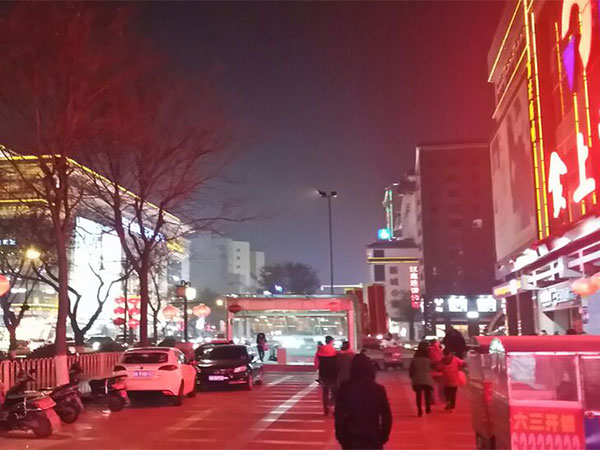
Jiefang Road Commercial District (解放路商圈)
- Location: Jiefang Road near Xi'an Railway Station and central east-side commercial blocks.
- Best for: Modern malls, practical supplies, dining and an arrival- or departure-day stop.
. Its value is transport access and current urban retail, not an old comparison with Wangfujing or Nanjing Road.
Check live construction and station access before walking with luggage. Mall tenants and outdoor vendors vary; use marked crossings and keep valuables secure in crowds. Railway-station approaches can involve security screening and long crossings, so store luggage before browsing. If you buy food for a train, choose sealed products with dates and allergens or freshly cooked items you can eat promptly; do not let shopping jeopardize boarding time.
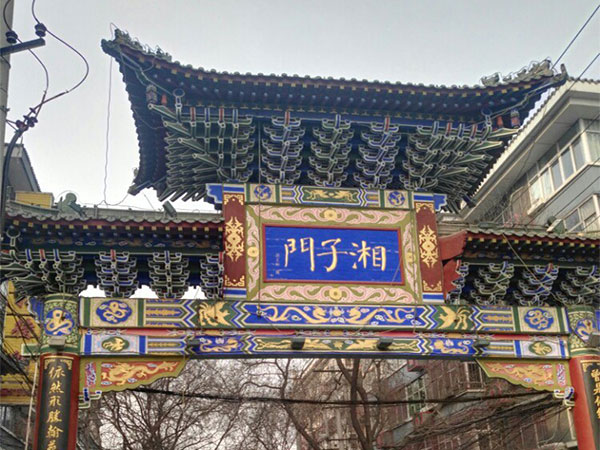
Xiangzimiao Street (湘子庙街)
- Location: West of South Street near Xiangzi Temple, Shuyuanmen and Defu Lane.
- Best for: A short cultural lane with cafés, galleries and access to nearby heritage streets.
Xiangzimiao Street is better as part of a walking loop than a destination for a specific old bookstore named in historical copy. Respect temple activity, ask before photographing people or interiors, and check whether galleries represent the artists they name. For tea, ask whether the quoted price is per pot, tasting or package. For paintings, distinguish original work, studio edition and print; request artist, medium, dimensions and return terms rather than relying on a gallery-style interior.
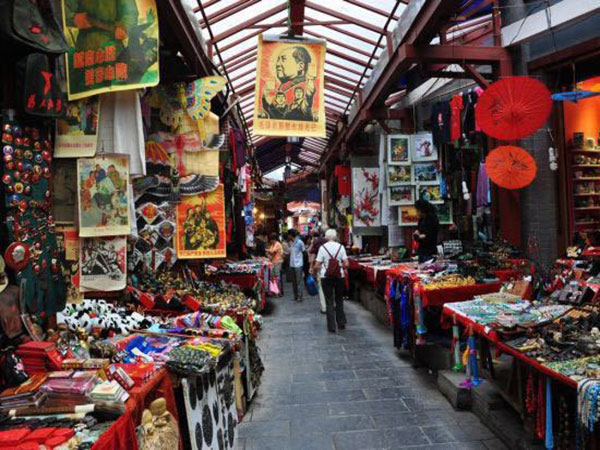
Beiyuanmen / Muslim Quarter (北院门)
- Location: North of the Drum Tower within the Muslim Quarter.
- Best for: Street food, small souvenirs and a busy evening atmosphere.
Beiyuanmen combines a living Hui neighborhood with visitor-oriented commerce. Avoid blocking doorways or treating residents as a performance. Ask food vendors about ingredients and allergens, and choose a quieter adjoining lane when the main route is congested. Pork-free does not automatically mean safe for every dietary or allergy need; stocks, oils, nuts, sesame and shared tools still require questions. Buy cooked foods to eat locally and check destination restrictions before packing meat, fresh fruit or seeds.
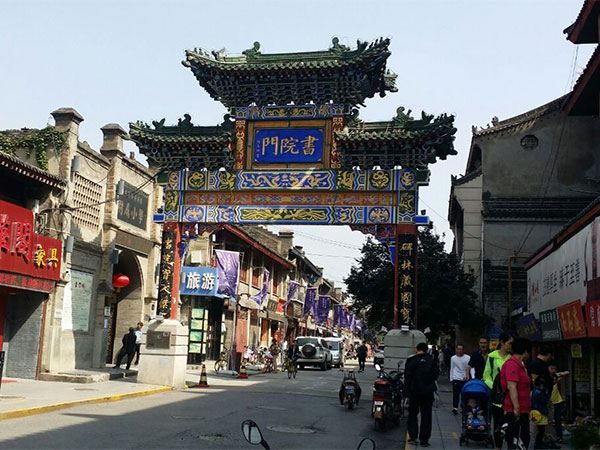
Shuyuanmen (书院门)
- Location: Inside the south city-wall area near the Forest of Stone Steles and South Gate.
- Best for: Calligraphy tools, contemporary painting, seals, paper, authorized rubbings and craftwork.
Shuyuanmen is Xi'an's most focused traditional arts street. Ask whether a work is original, a studio reproduction or a print, and record the artist, medium, dimensions and mounting. For brushes, identify hair or synthetic fiber, size and intended script; for ink, distinguish liquid ink from a solid ink stick; for paper, ask about dimensions, absorbency and whether it is handmade. Avoid wildlife-derived brush material that cannot be clearly identified or lawfully carried.
For rubbings, request the inscription source, production date and permission status. A famous-looking seal or aged paper does not prove authorship. Buy clearly labeled modern work when provenance is uncertain. Inspect sheets for mould, insect loss, trimming, tape and recent artificial staining, then have them rolled around a wide tube only if the mounting permits. Museum-authorized facsimiles often give better historical context than an anonymous “old” impression.
Wenbaozhai References (文宝斋)
- Location: Older guides place this tour-shopping business on Yanta Road. Confirm whether the exact shop, name and entrance remain active before travel.
- Best for: Only a verified current showroom with clear maker and material documentation.
Wenbaozhai appears in legacy group-tour itineraries, but age, overseas-customer status and a large commodity count do not establish present quality.
If open, inspect the specific work, request an itemized receipt and decline pressure tied to a tour schedule. A demonstration is educational but does not authenticate every piece in the showroom. Ask whether a craft was made there, sourced from another workshop or factory produced, and have the answer written for an expensive item. Compare final packaged dimensions with airline limits, particularly for framed work, ceramics and replica figures.
No shop can lawfully guarantee export of a genuine cultural relic merely by issuing a receipt.
Zhuque Road Antique-Market Listings (古玩城)
- Location: Zhuque Road area near the Small Wild Goose Pagoda; similar English names can point to different buildings.
- Best for: Browsing modern reproductions and collectibles after same-day venue confirmation.
A market address never proves that ceramics, coins, jade-looking objects or furniture are genuine antiques. Apply independent condition, provenance and export checks before considering any consequential purchase. Soil, patina, a dynasty name or a seller's own certificate is not independent authentication. Claims that an item was excavated, recovered from a tomb or can be hidden from customs are reasons to leave immediately.
Do not repeat the old claim that thousands of pieces are genuine. For a high-value item, use an independent specialist who does not benefit from the sale. Inspect ceramics for cracks and restoration, metal for repairs and active corrosion, and paper for mould and missing sections. Never scratch, clean or apply a chemical test to a seller's object. A business receipt identifies the transaction but is not a cultural-relic export permit.
Luomashi Pedestrian Area (骡马市)
- Location: East Street commercial core, Beilin District; confirm current entrances around redevelopment.
- Best for: Youth fashion, casual dining and an evening pedestrian link near the Bell Tower.
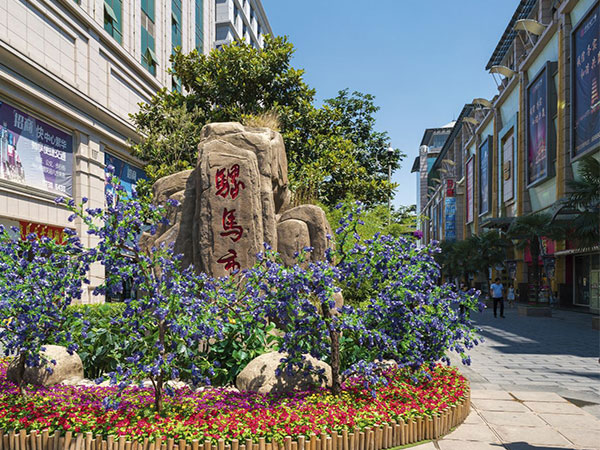
Luomashi has evolved from an older clothing market into a changing central retail area. Check current shops rather than expecting hundreds of fixed stalls. Use it for accessible mainstream fashion and food rather than assuming it still sets all northwestern trends. Tenant changes are frequent; a screenshot of the building directory is more reliable than an old English shop list. Evening crowds can slow the short walk back to the Bell Tower.
For clothing, inspect seams, zips, care labels and fitting policy. Ask whether prices are fixed before negotiating, and verify the terminal amount before mobile payment. Check that both shoes match in size and color, detachable accessories are included and alterations will be ready before departure. For branded goods, packaging alone does not prove authorization; established stores, product codes and written after-sales terms provide stronger protection.
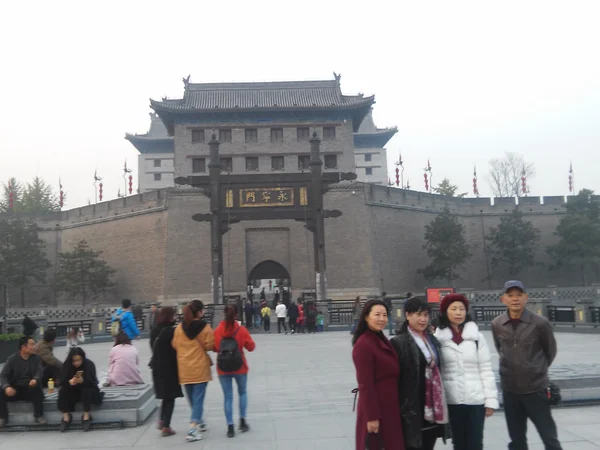
Real view of Xi'an City Wall near the central shopping area
Plan one central loop: Bell Tower, Beiyuanmen and Shuyuanmen can fit one half-day if you are comfortable walking; use transit or a taxi rather than crossing the city for an unverified legacy shop.
Keep museum time separate from shopping and visit the Shaanxi History Museum guide for object context before buying replicas. For the trade routes that shaped the city's wider historical identity, read the Silk Road guide. A balanced half-day is one modern retail block, one food lane and Shuyuanmen, with a final return to the seller you preferred. Keep itemized receipts, photograph fragile goods before wrapping and confirm customs rules before buying food, plant material or anything claimed to be old. Last reviewed August 28, 2026; shop names, entrances, hours and street works remain time-sensitive.