Your China & Yunnan Travel Experts


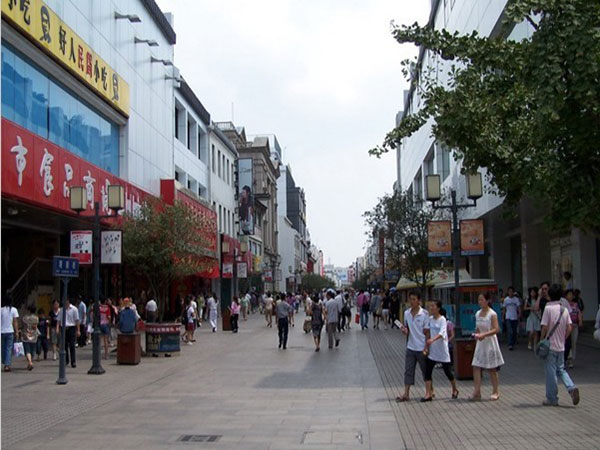
Address: Guanqian Street, Gusu District, central Suzhou; the pedestrian area runs between Renmin Road and Lindun Road around Xuanmiao Taoist Temple.
Best for: Time-honored food shops, Suzhou-style snacks, practical souvenirs, evening street life and a compact old-city walk.
Guanqian Street is Suzhou's traditional central shopping street, named for its position in front of Xuanmiao Taoist Temple. Reviewed August 28, 2026, this guide separates enduring place history from shop stock, prices, events and transport details that can change. Begin with the Suzhou overview, then use the street as a decision-led stop rather than a checklist of brand claims copied from an old directory.
The useful way to read Guanqian is as an east-west pedestrian spine linking Renmin Road in the west with Lindun Road in the east. Xuanmiao Temple and its open forecourt form the cultural centre; shopfronts, food lanes and side streets create a busier commercial layer around it. The Suzhou municipal cultural-tourism description confirms the same east-west boundaries and the concentration of old food brands, but individual entrances and tenants should be checked on arrival.
For a first visit, divide the area into three planning zones : western arrival and department-store access near Renmin Road; the central temple and old-brand zone; and the eastern exit toward Lindun Road and the wider old-city lane network. This reduces backtracking and helps travelers distinguish Guanqian's commercial street scene from nearby canal scenery. For product categories and citywide alternatives, compare the Suzhou shopping guide.
Guanqian is valuable because a living commercial street, a major Taoist monument and Suzhou's food traditions occupy the same compact area. Municipal sources describe long-established shops such as Lugaoxian, Caizhizhai, Huangtianyuan and Yeshouhe, but longevity does not guarantee that every branch, package or recipe is unchanged. Read the Chinese storefront, check the current business licence or official brand channel for expensive purchases, and treat unverified “founded in” signs as marketing until corroborated. The Suzhou shopping-streets comparison helps decide whether Guanqian, Shantang or another district better matches the trip.
Guixiangcun and Suzhou-style cakes
Dafang cake and other filled pastries are best judged by production date, ingredient label, sealed condition and how soon they will be eaten—not by a poetic description of color. Ask whether the product contains lard, nuts, sesame or alcohol flavoring if dietary restrictions matter. Buy a small tasting portion before committing to a gift box, and avoid fragile pastries when the onward journey is long or hot.
Packaging varies by season and branch. Photograph the label before discarding it, keep the receipt, and confirm that the shelf-life fits the travel date. A box described as a Suzhou specialty can still be factory-produced elsewhere, so read the manufacturer and place-of-production fields when provenance matters.
Caizhizhai
Caizhizhai is associated with Suzhou confectionery, roasted snacks and preserved foods. For pine-nut or sesame sweets, compare ingredient order, allergen information, net weight and unit price instead of choosing the largest presentation box. Travelers carrying food across a border must check the destination customs and biosecurity rules; meat, seeds, fruit and egg-containing products can be restricted even when commercially packed.
Ask staff to mark sweet, savory, meat-containing and vegetarian options in Chinese if the English label is incomplete. Keep unopened products in their original retail packaging, separate crushable boxes from bottles, and do not rely on a seller's verbal assurance that an item is permitted in every destination country.
Lugaoxian
Lugaoxian is known for Suzhou-style braised meats and prepared savory foods. These are meaningful local tastes but poor long-haul souvenirs unless cold-chain, storage time and import rules are all clear. For same-day eating, confirm whether the item is ready to eat, how long it may remain unrefrigerated and whether reheating is required. For travel, choose a factory-sealed product with an intact label and conservative use-by date.
Cooked meat is one of the categories most likely to encounter destination-country restrictions. Do not repack it into an unlabelled container, and never place a leaking or warm package beside pastries. A photograph of the receipt and package label supports both food-safety decisions and any later complaint.
Yeshouhe
Yeshouhe's sesame cakes and nut-filled pastries can be practical gifts when freshly packed, but texture deteriorates with heat and crushing. Ask for the packing time, ingredient list and storage guidance; travelers with nut, sesame, gluten or animal-fat restrictions should not infer suitability from appearance. Compare a single piece with the boxed version before paying for several identical packages.
Yuandachang and seasonal rice wine
Seasonal rice wine is culturally interesting, especially around the winter-solstice period, but availability and recipes vary. Check alcohol by volume, bottle seal, volume, producer and storage instructions. Alcohol is not a health product, and traditional use does not support medical claims. For flights, retail packaging, airline baggage rules, liquid screening and destination customs all apply; do not assume a decorative ceramic container is leak-proof.
If buying several edible souvenirs, make one comparison pass before paying: write down net weight, production date, allergens, shelf-life, price per unit and whether the seller participates in a stated return program. This is more reliable than choosing by queue length or gift-box size.
The street takes its name from Xuanmiao Temple, and Sanqing Hall is the architectural anchor rather than a themed shopping backdrop. Official heritage records identify the hall as a major protected historic building and date its reconstruction to the Southern Song period. Treat active worship areas respectfully: follow posted opening and photography rules, keep voices low, do not block incense or ritual movement, and ask before photographing worshippers or religious staff.
The temple forecourt is useful for understanding the transition between sacred space and commerce. Photograph architecture from public positions without leaning equipment on historic fabric. Opening, ticket and ritual access can change for maintenance or observances, so verify the same day rather than promising a fixed free-access route.
A specialist art bookstore or publishing outlet can be a better source of calligraphy books, reproductions and designed cultural gifts than an anonymous souvenir stall. For prints and paintings, ask whether the item is an original work, licensed reproduction or mass-produced decoration; request a written description for higher-priced pieces. Do not accept an oral claim of age, artist or edition as provenance.
Books are straightforward to carry but heavy; check the edition, language, ISBN and print quality before purchase. For seals, ink, brushes or paper, ask what material is used and whether liquids or animal-derived components create customs issues. Never export an object represented as an antique or protected cultural relic without the required documentation.
Start at the western side around Chayuanchang or Leqiao, make one slow eastbound pass, and enter the Xuanmiao forecourt while there is enough light to read architectural details. Sample one freshly prepared item rather than carrying hot food for hours; then compare packaged gifts at two established shops. Continue through the food-lane area only if crowds and mobility conditions remain comfortable, and finish near Lindun Road or retrace a short signed route to the most convenient metro.
Allow extra time on weekends, holidays and during night events. Keep a meeting point outside the densest lane, carry the destination name in Chinese, and avoid placing a tripod in the pedestrian flow. Travelers with limited mobility can ask the visitor service centre near Xuanmiao Temple about current step-free approaches, rest facilities, wheelchair or stroller support and the applicable participating-merchant return process.
By Metro and on Foot

From $ 197
From on request
From $ 490
Editorial accountability
Hu Lei, CEO. The named owner is responsible for travel-planning accuracy and escalation of time-sensitive checks.
Yuntian Travel (Yunnan) Group is identified in its corporate profile as a licensed professional inbound travel service provider based in Kunming, China. Registration and travel-service documents can be requested before booking.
Page-specific references where cited, official destination, transport and entry notices, YUNSKY route-planning records, and direct provider confirmation before a booking is finalized.
Content is reviewed when rules, transport, access, pricing or route conditions change. Final availability and operating details are reconfirmed for each traveler’s dates.
Quality review: Page updated:
