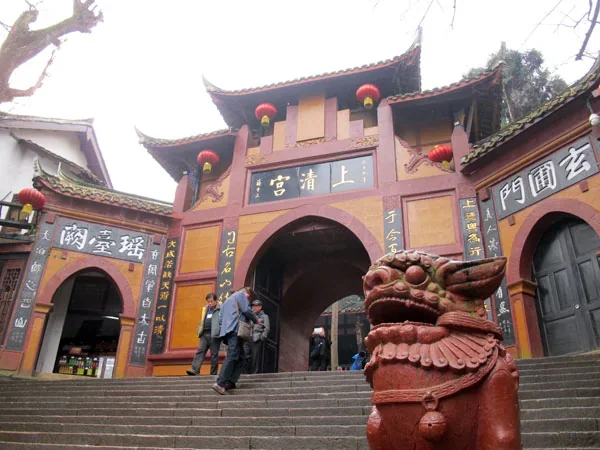
Jinli reopened to the public in 2004 as part of the museum-managed visitor area. Its lanes, shopfronts, stages and courtyards create a designed historical ambience, but a reconstructed façade should not be presented as proof that every building, tenant or object is centuries old. Read museum interpretation for documented history and treat merchant stories as claims that require evidence.

Jinli lane and traditional-style shopfronts beside Chengdu Wuhou Shrine
The old page's awards, “first street” slogans and comparisons with Wangfujing do not help a traveler make a decision. What remains useful is the contrast between daytime detail and evening lighting, the adjacency to Wuhou Shrine, and the need to verify any live performance, festival, maintenance closure or crowd-control notice on the museum's official channels.
Plan 60–90 minutes for Jinli alone, longer if eating or visiting Wuhou Shrine. Narrow lanes, thresholds, stone surfaces, low evening light and dense crowds can affect wheelchairs, strollers and travelers with low vision. Ask staff for the current step-free entrance and accessible toilet; do not assume the prettiest gate is the easiest route.
Food: Build a Tasting Route, Not a Checklist
Jinli gathers familiar Sichuan snacks, but no street can guarantee that every stall represents an “original” county recipe or the best version in Chengdu. Begin with a visible menu and price, buy one portion, then decide whether to continue. The
Chengdu shopping guide helps compare established food shops and craft districts if Jinli feels crowded or heavily touristic.

Jinli food stalls displaying sweet and savory Sichuan snacks
Look for turnover, covered food, separate raw and cooked utensils, and ingredients held at safe temperatures. Ask before photographing a cook or performer. Wheat, sesame, peanut, soy, egg, pork, beef and chilli oil recur across stalls; shared woks and serving tools make cross-contact likely, so travelers with serious allergies should choose a restaurant able to answer clearly rather than grazing anonymously.
Four Snacks Worth Understanding
Fried glutinous-rice sesame ball
A sesame-coated fried glutinous-rice ball should be crisp outside and freshly hot, with a chewy centre. Ask about filling, sesame, peanut and shared frying oil; buy one to share because a cooled batch becomes heavy quickly. The dish may be called 麻团 or related regional names, so point to the exact item rather than relying on the old translated phrase “fried sugar pastry ball.”
Beef guokui or crisp beef pastry
This wheat-based snack combines a layered or crisp shell with a savoury beef filling. Confirm whether it contains chilli, Sichuan pepper, sesame, spring onion or animal fat, and check that the centre is hot. The old “fatty-but-not-greasy” promise is subjective; texture depends on the batch and holding time. Compare it with other city foods in the
Chengdu attractions guide when planning a Wuhou Shrine day rather than treating it as a mandatory purchase.

Steamed snack display at Jinli with labeled portions
Sweet-water noodles
甜水面 uses thick wheat noodles and a sweet-savory, often chilli-forward sauce. It is not a dessert and may contain soy, sesame, peanut, garlic and spice. Ask for less chilli before the sauce is added, taste first, and do not assume “sweet” means mild or vegetarian; recipes and stocks vary by stall.
Steamed rice cake
Steamed rice snacks vary in grain, filling, fermentation and sweetness, so “white rice versus coarse yellow rice” is too crude a guide. Ask what the displayed item contains, whether it is freshly steamed, and how long it can be carried safely. Dense sticky cakes are a choking concern for small children and some older travelers; take small bites and avoid packing a moist unrefrigerated filling for a long train journey.
How to Reach Jinli Without Freezing an Old Route
By bus:
The former list of Bus 1, 57, 82 and 109 is not treated as permanent. Routes, stop names, diversions and the side of the road change. On the travel day, use the Chengdu public-transport app or live map for “武侯祠” or “锦里,” confirm the direction with the driver or station display, and allow for holiday traffic. A taxi destination should include Wuhou Shrine/Jinli and the current signed drop-off rather than only the English street name.
By metro and on foot:
The old instruction to take Line 1 to Huaxiba is removed because it is not a direct evergreen route. Use the live Chengdu Metro map to choose a nearby station and last-mile connection from your actual origin; line openings and exits can change. Before leaving a station, check which exit has a lift, the walking gradient and any bus transfer. Museum notices control temporary access around the complex, so recheck on the day and keep a rain or crowd alternative.