Reviewed August 28, 2026. There is no single ‘best' China destination for every family. A useful choice depends on the child's age, season, interests, walking tolerance, food or sensory needs and the number of hotel changes adults can manage. This guide compares eight bases by learning value, pace, climate, transport and practical limits. It is designed to help families shortlist two or three complementary places—not collect eight city names. For booking strategy, sleeper or high-speed rail choices, child tickets, rooms and health preparation, use the China family trip planning guide. Verify dated attraction notices and use the passport entered at real-name venues; hours, weather closures and child restrictions can change.
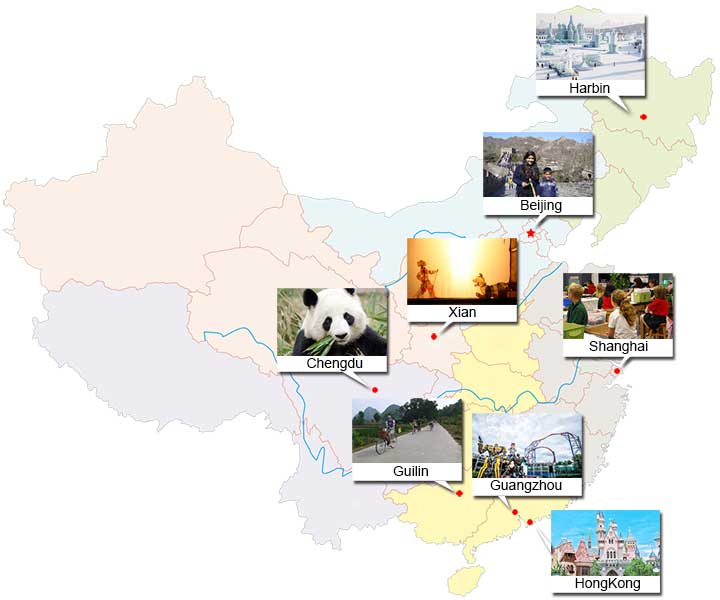
1. Beijing: history, imperial architecture and a manageable Great Wall day
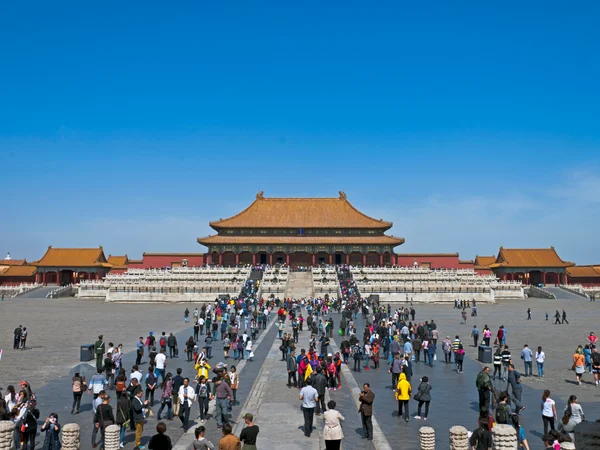
Beijing gives school-age children the clearest introduction to China's imperial and modern history, but its scale and security checks make pacing important. Allow three full days: one for the Palace Museum and nearby central sights, one for a Great Wall section, and one for the Temple of Heaven, Summer Palace or a hutong-based activity. The Palace Museum normally requires advance real-name booking and the original travel document; it is generally closed on Mondays except certain public holidays. A carrier may work better than a pushchair on crowded thresholds and historic stone surfaces.
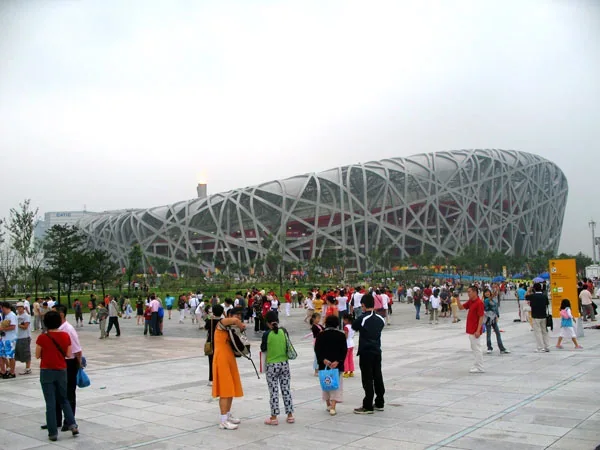
Choose a restored Great Wall section after comparing transfer time, steps, handrails, cable-car operation and toilets. Mutianyu is often easier to pace than a remote hiking section, but no section is step-free and winter ice, summer heat or wind can alter access. The Olympic Green can be a lower-intensity evening walk; the zoo or a theme park should only be added if it reflects the family's interests, not because a list says it is compulsory.
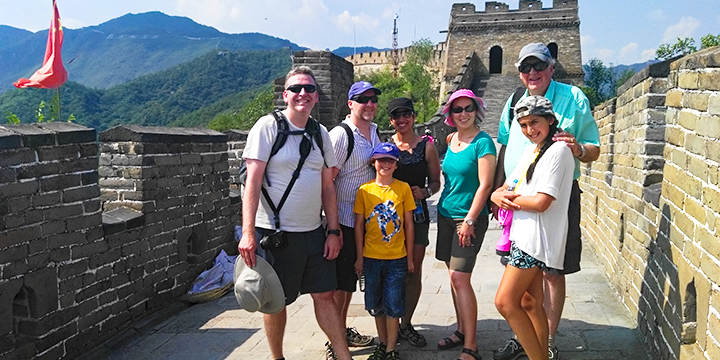
Walking a restored Great Wall section with a family
 Best for and practical limits
- Best for: ages six and above who enjoy history, architecture or walking. Allow two to three hours on a selected wall section plus transfers; stop before tired legs affect the descent.
- At the Summer Palace, select a lakeside route and confirm seasonal boat service rather than trying to cover the entire grounds. Waterside edges and long distances need supervision.
- At the Palace Museum, use a short story trail—gate, audience hall, family life and one gallery—instead of reading every label. Tickets and passport rules must be checked on the official channel.
- A supervised dumpling or calligraphy lesson can add participation, but ask for the teacher, language, group size, allergy controls and the exact skill a child will practise.
- A hutong walk can discuss courtyard planning and neighbourhood change. Use licensed transport, ask before photographing residents and avoid treating occupied homes as a performance set.
- Peking duck is a shared meal, not a test of adventurousness. Confirm allergens, order vegetables and a mild backup, and do not assume every sauce is free of wheat, soy or sesame.
- Kung fu or acrobatics can be loud and finish late. Check duration, effects, seat access and whether a shorter cultural demonstration better suits the child's bedtime.
Beijing decision: choose it for a first-time history anchor, then pair it with one contrasting nature or food destination. Do not schedule the Forbidden City and a distant Great Wall section on the same day.
2. Shanghai: city systems, river geography and carefully chosen theme-park time
Shanghai suits families interested in transport, design and the contrast between historic waterfronts and contemporary districts. Two full city days are adequate without a theme park; add a separate day for Shanghai Disney Resort. The Bund and Pudong skyline can introduce the Huangpu River's role in trade and urban development, while Shanghai Museum or a neighbourhood walk adds context that a skyline photograph cannot.
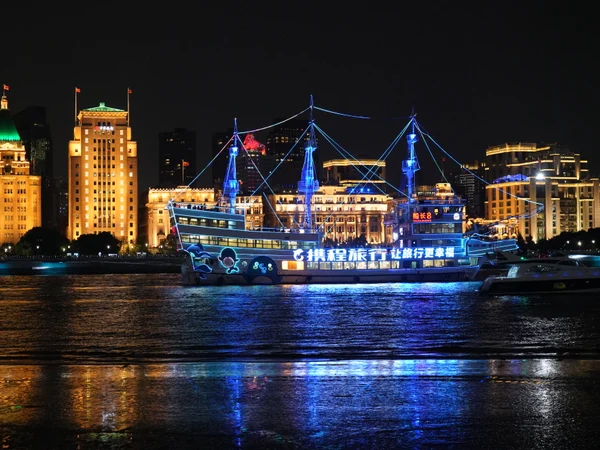
Huangpu River cruise and skyline
 Best for and practical limits
- Visit Yu Garden early and use one garden-design task—find borrowed views, rockwork or framed scenes. Nearby commercial streets can be crowded, so set a meeting point and shopping budget.
- A Huangpu cruise provides a seated overview, but verify pier, route, duration, open-deck access, life jackets and weather policy. Keep children behind railings and carry a wind layer.
- A community visit should be hosted with informed consent and a defined learning purpose. Never promise access to a private home simply to create an ‘authentic' photograph.
- The airport maglev is a transport experience only when it fits the actual arrival or departure plan. A high displayed speed does not justify an extra cross-city transfer with luggage.
- An acrobatics show may involve height, flames, haze and loud sound. Confirm current content, duration and safety information; aisle seating can help a sensory-sensitive child leave calmly.
Shanghai decision: choose it for a low-friction international gateway and urban learning. At Disney, an adult aged 16 or above must accompany visitors under 16, attraction height and health limits apply, and strollers must meet current size rules. Build the day around three priority attractions and recovery time, not a promise to complete the park.
3. Chengdu: ethical panda observation, archaeology and food learning
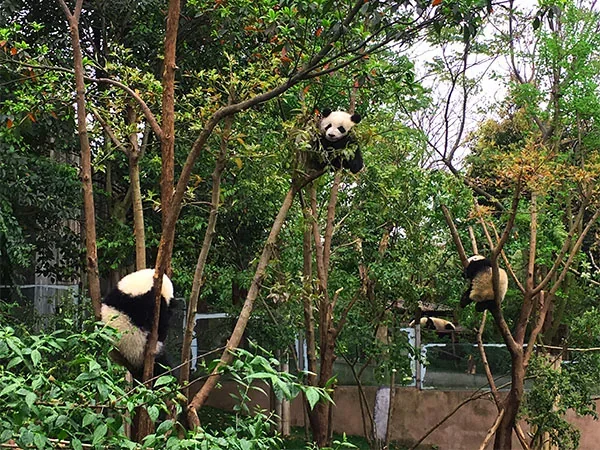
Chengdu is strongest for families who want wildlife observation and a slower city rhythm. Protect at least three nights: an early Panda Base visit, one archaeology or park day, and one food or theatre activity. The Chengdu Research Base uses real-name admission and may adjust opening slots by season. Pandas can rest indoors or remain out of view; no responsible guide can guarantee an active cub, feeding, holding or close contact.
Use People's Park, Jinli or Kuanzhai Alley as a short observation block rather than packing all three into one day. Jiuzhaigou, Leshan, Mount Emei and Dujiangyan are separate excursions with major road or rail time; they are not casual add-ons to a city afternoon. The Chengdu with kids guide compares panda welfare, Sanxingdui versus Jinsha, food safety and a realistic four-day route.

Giant panda in a managed Chengdu habitat
 Best for and practical limits
- Choose a named panda institution and current official ticket channel. Avoid any seller guaranteeing touching, holding or feeding; programme names, ages and duties change.
- For ancient Shu history, choose Sanxingdui for a dedicated Guanghan excursion or Jinsha for a shorter city-based visit. Do not rush both museums into one day.
- Try Sichuan flavours by separating chilli heat from Sichuan pepper's numbing sensation. Serious allergies require a translated card and written discussion of broth, sauces, shared oil and cross-contact.
- A Sichuan opera programme may include percussion, singing, puppetry and face-changing. Check volume, duration, effects and finish time; face-changing is one skill, not the whole tradition.
- Treat Jiuzhaigou as a multi-day extension with altitude, transfer and ticket planning. It should replace another destination block, not be inserted between two Chengdu city activities.
Chengdu decision: best for wildlife and food learners who accept that animal behaviour is not staged. Visit early in cooler hours, speak quietly, do not tap glass and respect rotational closures.
4. Hong Kong: compact transport, harbour geography and rule-based attractions
Hong Kong works well for families who want efficient public transport, bilingual visitor services and a mix of harbour, hills and theme parks. Three nights can cover Victoria Harbour, one island or neighbourhood day and either Hong Kong Disneyland or Ocean Park. These parks are different products: Disneyland centres on themed rides and characters, while Ocean Park combines rides, marine-life interpretation and hillside transport. Choose one unless the trip is long.
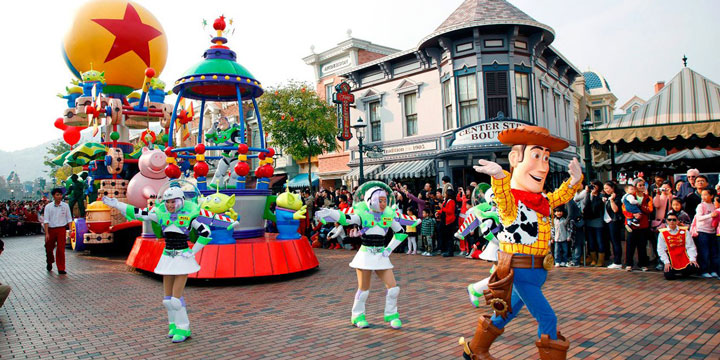
Hong Kong Disneyland family day
 Best for and practical limits
- Use the Peak Tram only after checking the current queue and return plan. The viewpoint can be foggy, and steep surrounding paths are not automatically pushchair-friendly.
- At Hong Kong Disneyland or Ocean Park, check every attraction's current age, height, health, maturity and accompaniment rule. Weather and maintenance can close rides without making the whole day a failure.
- Repulse Bay can provide a slower half-day, but supervise children near water, check lifeguard and water-quality notices and protect against strong sun and heat.
- The Star Ferry is a practical harbour crossing and a geography lesson. Keep hands inside, hold younger children on stairs and avoid blocking commuters for photographs.
- Dim sum is easiest when adults order a few shared dishes and ask about shellfish, pork, sesame, peanuts, soy and wheat. Hot tea, steamers and crowded trolley aisles need supervision.
Hong Kong decision: choose it for compact variety and independent logistics. Build a wet-weather alternative, download the transit plan and always use the attraction's official name, Ocean Park Hong Kong.
5. Guilin and Yangshuo: karst landscapes with route-specific safety choices
Guilin is the clearest nature contrast to Beijing or Shanghai. Three nights can cover a central Guilin walk, a Li River passenger cruise to Yangshuo and one countryside day; add Longji only with a fourth day or overnight. The cruise, Yulong bamboo-style rafting and lake boats are different products with different craft, duration, child rules and weather policies.
Children can connect limestone towers, caves and river erosion when adults explain one process at each stop. A cave may involve dim light, damp steps and echo; a carrier may be easier than a pushchair. Longji is a working agricultural landscape with mountain roads and stone stairs, not a guaranteed green postcard in every month. Use the Guilin with kids guide for activity-by-activity safety and a four-day framework.
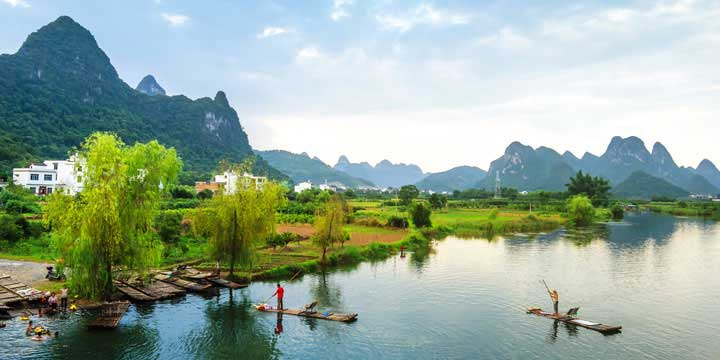
Yulong River countryside near Yangshuo
 Best for and practical limits
- The Two Rivers and Four Lakes cruise can be a lower-energy evening overview, but confirm the exact route, pier, deck access, duration and weather arrangement.
- For Longji, ask for village name, driving time, drop-off point, stair count, toilet access and luggage plan. Respect homes, crops and residents' photography choices.
- Choose one cave and explain how stalactites and stalagmites form. Do not touch formations, and prepare sensory-sensitive children for artificial lighting and echoes.
- Cycle only after checking route traffic, surface, gradients, helmets, brakes and weather. Countryside roads are not necessarily traffic-free; a vehicle plus short walks is a valid alternative.
- For Yulong rafting, confirm the exact section, current height or age rule, passenger limit, life jacket, small drops, closure policy and refund terms. Do not stand for photographs.
- A cooking class should name the venue, tasks and food-safety process. An adult handles cleavers and hot oil; send allergy and dietary needs in writing before payment.
Guilin decision: choose it for scenery and outdoor learning, but keep one weather-flexible day. Do not combine Longji, a Li River cruise and an evening show in one overloaded day.
6. Xi'an: archaeology and city history without defaulting to a hard mountain day
Xi'an is most valuable for families ready to ask how archaeologists reconstruct the past. Two full days can combine the Mausoleum of the First Qin Emperor museum complex with the City Wall, a museum or a food walk. The Terracotta Army pits and Lishan Garden are separate parts of the official visit; allow substantial time, use the shuttle plan and carry the passport used for real-name booking.
Mount Huashan is not a default child-friendly excursion. It involves a separate transfer, steep exposed mountain routes, changing weather and route-specific cable-car decisions. Families should add it only after an honest mobility, height, fear-of-exposure and supervision assessment. For most younger children, the Terracotta Army plus city-based history offers more learning with less fatigue.

Terracotta warriors in the Qin museum complex
 Best for and practical limits
- If considering Huashan, obtain the current route map, cable-car status, age or health restrictions and weather notice. Be willing to cancel; a summit is never owed to an itinerary.
- City Wall cycling suits confident older riders only when rental rules, helmet availability, surface, heat and crowd conditions are acceptable. Walking one gate section is a sound alternative.
- At Shaanxi History Museum, reserve through the current real-name channel and select a short object trail. The goal is understanding chronology, not finishing every gallery.
- A clay-warrior workshop should explain moulding, firing and the archaeological difference between a replica and an excavated object. Confirm materials and teacher supervision.
- Dumpling making is useful when children take age-appropriate tasks and allergies are controlled. Ask whether meat broth, wheat, egg, sesame or shared surfaces are involved.
- Shadow puppetry can connect craft, music and storytelling. Check language support, sound level, duration and whether children see how the leather figures are articulated.
Xi'an decision: choose it for archaeology and a slower historical narrative. Allow a full museum-complex day and keep Huashan optional rather than using it to prove the trip is adventurous.
7. Guangzhou: Cantonese food, subtropical climate and one carefully chosen park
Guangzhou fits families using southern China or Hong Kong transport links. Two city days can combine a Pearl River or neighbourhood experience, Cantonese food and one Chimelong park. Chimelong Safari Park, Paradise, Water Park and the circus have different tickets, hours, age or height limits, weather exposure and animal-welfare questions; do not sell them as one effortless attraction.

Pearl River evening cruise
 Best for and practical limits
- A Pearl River night cruise can be a seated city overview. Verify pier, route, deck access, life jackets, duration and the return journey before choosing a late departure.
- Canton Tower is weather-dependent. Check visibility, timed admission, lift queues and any separate observation or ride restrictions instead of promising a clear night view.
- At Chimelong Paradise, measure children before booking, read each ride rule and build rest periods. Height eligibility does not remove health, fear or accompaniment considerations.
- At the safari park, ask how animals are housed and interpreted, keep children behind barriers and never feed wildlife unless an official supervised programme explicitly permits it.
- The circus can be visually intense and late. Check current content, sound, lights, animal involvement, duration and exit access; choose a daytime alternative when it conflicts with sleep.
- The water park is seasonal and weather-dependent. Confirm supervision ratios, flotation devices, changing facilities, sun protection and each slide's height and health rules.
- Cantonese morning tea is a practical family food lesson. Order small portions, watch hot steamers and tea, and ask about shrimp, pork, peanuts, sesame, soy and wheat.
Guangzhou decision: choose it for food and a subtropical stop, then select one major park according to age and values. Keep an indoor backup for heat, rain or storms.
8. Harbin: a winter-specific destination requiring cold and closure planning
Harbin is not a year-round substitute for the other cities: its distinctive family value is winter. Festival venues usually operate within a cold-season window, but dates, opening areas and hours depend on construction, temperature and ice safety. In February 2026, official notices adjusted or temporarily closed major ice venues during above-freezing weather. Treat every date advertised far in advance as provisional and recheck immediately before travel.
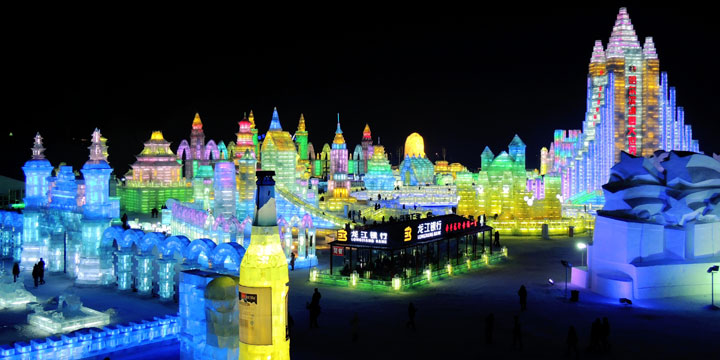
Clothing is safety equipment: moisture-managing base layers, insulating mid-layers, windproof outerwear, warm boots, mittens and face protection. Schedule indoor warming breaks, protect phone batteries and watch children for persistent shivering, numbness, pale skin, confusion or unusual tiredness. A four-night winter stay allows one festival day, one city day and one weather buffer.
 Harbin Ice and Snow World at night
- Best for and practical limits
- Skiing needs a named resort, qualified instruction, correctly fitted helmet and equipment, current slope information and insurance. A beginner lesson is not the same as unsupervised snow play.
- Festival venues should be chosen from current official opening notices. Confirm admission slot, warming shelters, food, toilets, transport and refund or closure policy.
- Ice structures are best viewed with frequent indoor breaks. Obey barriers and capacity controls; surfaces can be slippery even where staff have cleared snow.
- China Snow Town requires a separate long transfer and usually an overnight. Verify road conditions, accommodation heating, luggage handling and commercial activity prices. At a tiger park or other wildlife venue, evaluate welfare and safety information before including it; never treat feeding spectacles or close proximity as an educational guarantee.
Harbin decision: choose it only when the family genuinely wants severe cold and can keep a flexible weather buffer. It combines well with Beijing by air or rail, but not as a rushed one-night add-on.
Build the route around family capacity, not a destination ranking
For a first 10–12 day trip, two major bases plus one contrast usually outperform four rushed cities. Examples include Beijing + Xi'an + Shanghai for history and urban systems, or Beijing + Chengdu + Guilin for history, wildlife and nature. Count transfer days honestly and protect sleep after long-haul flights.
- 11-day learning route Beijing, Chengdu and Shanghai with one panda morning, one archaeology choice and no single-night hotel stops. Add a Yangtze cruise only after checking vessel accessibility, cabin, medical support and child policy.
- 12-day nature-and-history route Beijing, Xi'an, Guilin/Yangshuo and Shanghai, with at least three nights in the Guilin area and a weather alternative for river activities.
Before booking, request current child fares, bed and breakfast rules, guide hours, vehicle type, child-restraint availability, passport booking fields, accessibility, insurance and cancellation terms in writing. China family tour options should be compared by one learning goal and one recovery block per city; contact a trip planner only after the family has set its non-negotiable rest, food, mobility and safety limits. Request a tailor-made plan only when it states what is excluded and where weather or age rules can change. The strongest itinerary leaves children able to explain what they saw and adults able to change course safely; fewer bases and deeper context are better value than an attraction count.