Tibetan opera —often called Ache Lhamo—is a living performance tradition combining
song ,
dance ,
storytelling ,
masks , narration, acrobatics and religiously informed moral themes. UNESCO inscribed Tibetan opera on the Representative List of the Intangible Cultural Heritage of Humanity in 2009. The inscription recognizes a community practice, not one fixed stage script. Reviewed August 29, 2026.
Distinct traditions are performed across the plateau and neighboring Tibetan communities. Dialect, musical phrasing, mask style, repertoire and staging differ, so a Lhasa festival performance should not be labeled as representative of every region.
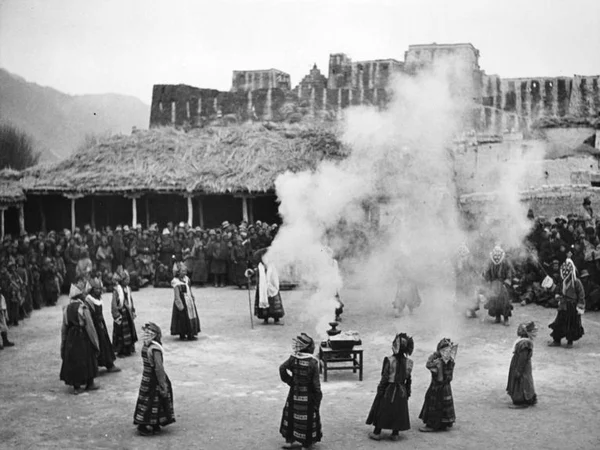
History, Tradition and Documentary Limits
Tradition links the art to the fourteenth- or fifteenth-century bridge builder Thangtong Gyalpo and a troupe of women who performed to raise support. This origin story is central to community memory, but details such as an exact number of performers and a single first performance come mainly from later accounts.
By the seventeenth century, opera was established in public, festival and patronage settings. Narration, repeated musical formulas and stylized movement allowed long stories to be presented in open spaces to audiences who might enter and leave over many hours.
Twentieth- and twenty-first-century troupes also use proscenium stages, amplification, lighting and new works. Safeguarding does not require freezing the art at one date; it requires transmission of skills, repertoire and community meaning.
Major Performance Traditions
White-mask traditions
are often described as earlier forms and are associated with particular regional lineages. “White mask” is a useful genre label, not proof that every troupe uses identical characters or music.
Blue-mask traditions are especially associated with central Tibetan performance and include influential schools and repertoires. Mask color works with costume, narration and role; it should not be decoded without the specific play.
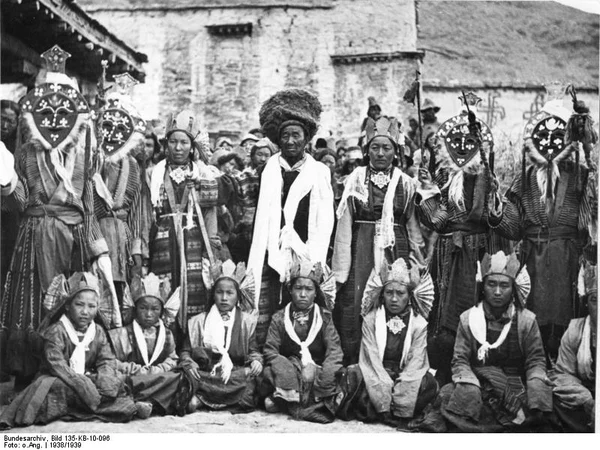
Khams, Amdo, Gannan, Huangnan and other local opera traditions show how the form traveled and changed. Use the performing troupe's own name and location rather than collapsing them into one “Tibet show.”
How a Performance Is Structured
Many performances are explained in three broad movements:
- Dön —an opening that prepares and blesses the performance space.
- Xiong —the main narrative, guided by narration, character scenes, song and dance.
- Zhaxi —an auspicious conclusion and blessing.
The sequence and transliteration vary. Performers may sit or stand around an open acting area, joining choruses until their character enters. A full traditional telling can be much longer than a tourist excerpt, so confirm duration and whether re-entry is allowed.
Costume as Movement and Character
Long sleeves, broad robes, boots, jewelry and layered textiles amplify turns and gestures. Costumes draw from several historical and regional clothing traditions rather than reproducing the Tibetan Empire exactly. Distinguish stage dress from everyday garments, and use the
Lhasa travel guide to check venue and festival logistics.
Animal fur or old ornaments should not be assumed from appearance. Modern troupes may use substitutes for cost, conservation and transport reasons. Never touch costume pieces backstage without invitation.
Masks: Read Them within the Play
Masks make roles visible at a distance and can indicate age, temperament, status or supernatural character. Their meaning depends on genre and story.
A simple chart such as “red always means king” or “blue always means villain” is unreliable across traditions. Ask the troupe or program for the role, and remember that blue also names an important opera style. For deeper language context, visit
Tibetan language; for festival planning, use
Tibet festivals. Arrive early, keep clear of the acting circle, silence phones and request permission before close-up photography or recording.