Your China & Yunnan Travel Experts

 Ask a Question
 Reviewed August 27, 2026. This is a practical guide to visiting active monasteries and religious sites in Tibet with respect. “Taboo” lists often turn local practice into rigid folklore; the safer rule is to treat every monastery as a living institution with its own route, restricted rooms, service schedule and photography policy. Signs and staff instructions at the entrance override any general advice online. Opening areas can change during ceremonies, conservation work or crowd control, so confirm access on the day. For permits, altitude pacing, guides and day-by-day logistics, use the Tibet travel planning guide.
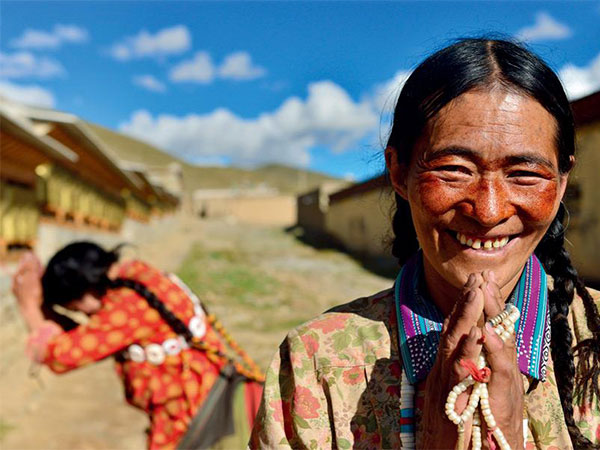
Before arrival, check the official opening window, ticket or reservation requirement and whether the site is an active place of worship, a protected monument, or both. Choose clothing that covers shoulders and knees, secure loose scarves and bring a quiet layer rather than treating dress as a costume rule. Large bags, tripods, drones, food, lighters and liquids may be restricted. At high altitude, plan fewer stairs and more rest; rushing through a sacred site is both physically unwise and disruptive. At the entrance, pause at the threshold and follow staff direction. Remove a hat if the site requests it, silence the phone and avoid stepping on raised thresholds or sitting on them. Do not assume that women are universally barred or that a skirt is always forbidden; access rules vary by institution and particular chapel. If an area is closed to any visitor category, accept the boundary without argument or covert entry.
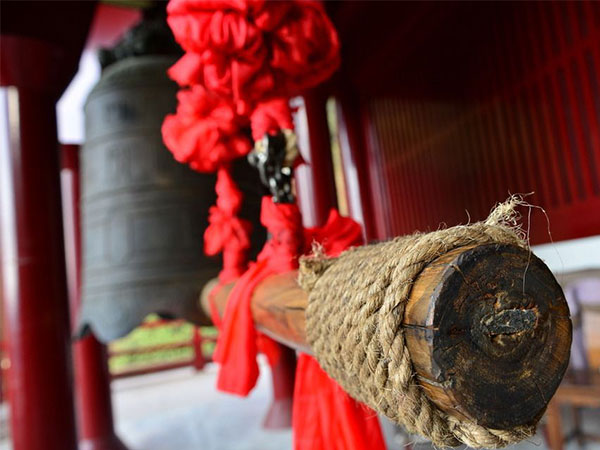
Inside, keep to the public route and allow worshippers to move ahead. Do not touch statues, thangkas, scriptures, murals, butter lamps, offerings, bells, drums or other ritual objects. These objects may be sacred, fragile, hot or part of an ongoing rite. A handrail is for support; a painted column is not. Do not place bags, phones or clothing on altars, monks' seats or scripture tables. Keep conversation low and stop talking during chanting, teaching or prayer. Avoid eating, smoking, vaping, strong perfume and phone calls. Garlic is not a universal visitor ban, but strong odors and food are inappropriate inside worship halls. If a ceremony begins, stand or sit where directed, keep exits clear and never cross between a practitioner and an altar for a better view.
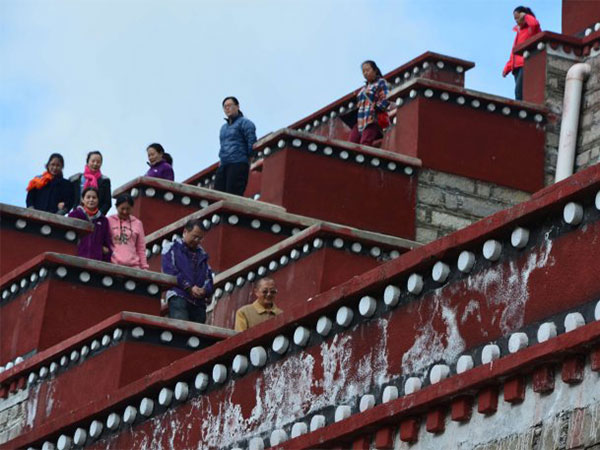
Photography is permission-based, not assumed. Many temple interiors prohibit photos and video even when courtyards allow them; a purchased ticket does not include image rights. Check the sign and ask a staff member before raising a camera. No flash, tripod or drone should be used unless explicitly authorized. Never photograph a person in prayer, a private rite, a funeral or a child without clear consent, and do not copy another visitor's behavior as proof that it is allowed. Circumambulation commonly follows the clockwise direction at Tibetan Buddhist sites, and prayer wheels are normally turned in that same devotional flow. Some Bon sites use the opposite direction. This is not a sightseeing game: watch local worshippers, read the posted route and ask your guide when uncertain. Do not reverse through a pilgrim line, spin wheels aggressively, climb on mani stones or move offerings to compose a photograph.
Point with an open hand rather than a single finger when a guide asks you to indicate a detail. Do not mimic prostrations, mudras or ritual gestures for a comic photo. Joining palms can be a polite greeting in some contexts, but no gesture is required if it feels performative; a quiet nod and space for others are enough. Avoid touching anyone's head or robes, and ask before helping a pilgrim or monk with an object.
Seats and platforms can signal role and seniority. Do not sit on a cushion, throne, teaching seat or monastic bench until invited. If public seating is available, keep feet off religious objects and do not stretch soles toward an altar or another person. Stand without stepping across books, robes, ritual implements or someone who is prostrating. Accessibility needs are legitimate—ask staff for a chair or alternative route rather than risking a fall.
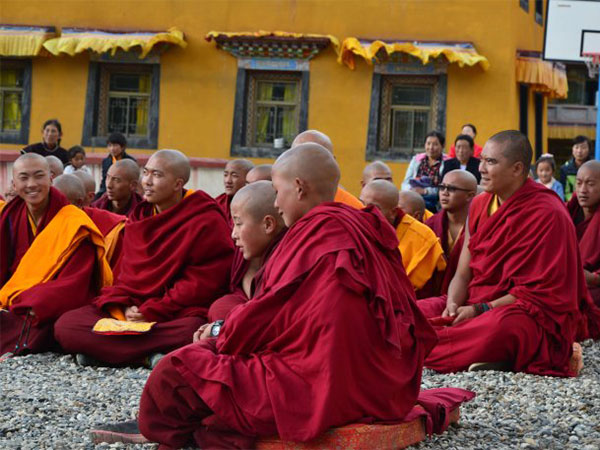
When resting in a courtyard, stay out of doorways, processional paths and residents' work areas. Monasteries are not only monuments; people study, cook, clean, receive visitors and conduct private daily life there. Keep children close without shaming their curiosity, and leave pets outside unless the site specifically permits them. Take rubbish with you and never feed birds or resident animals. Religious art should be read in context. A thangka, mural or statue is not merely decoration, and appearance alone cannot establish the figure, school or date. Use the site label or qualified explanation, keep a respectful viewing distance and never trace a painting with a finger. The Tibetan arts and culture guide explains how material, maker, function and conservation change what a visitor is actually seeing.
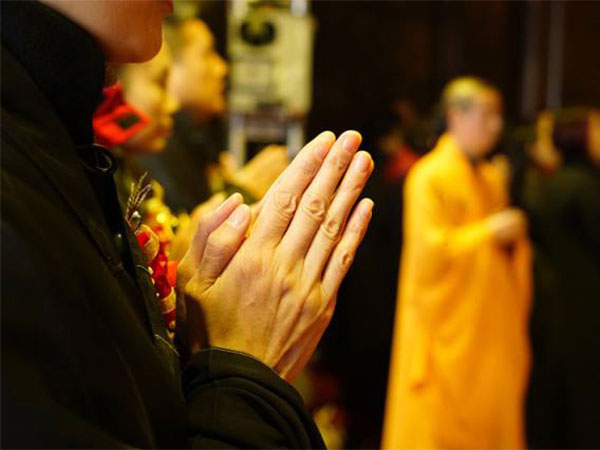
When meeting monks, nuns, teachers or lay practitioners, allow them to choose whether to interact. Do not hug, shake hands, request a blessing, ask about celibacy or politics, or call every monastic a “lama.” A greeting offered by the other person can be returned naturally. If you wish to make a donation, use the marked box or official desk; do not push cash into someone's hand or expect access in return. Buy or commission images responsibly. A sacred image may be newly made, ritually used, antique or a modern reproduction, and those categories should not be blurred. Ask the seller for material, maker and age; keep receipts and check cultural-property and wildlife-material restrictions. The Tibetan thangka guide gives a focused checklist for viewing workshops and avoiding unverified “antique” claims.
The dependable visitor routine is simple: confirm the route, ask before photographing, keep distance from worship, touch nothing, and follow the rule given on site. Local practice can differ by monastery, lineage, room and event, so this page deliberately avoids claiming one universal list. If staff close an area or a worshipper signals discomfort, stop immediately. Respect is measured less by memorizing exotic prohibitions than by paying attention, accepting boundaries and leaving the place as undisturbed as you found it.