Your China & Yunnan Travel Experts


Reviewed August 27, 2026. These useful Chinese phrases for travelers use standard Mandarin, simplified characters and tone-marked pinyin. Mandarin varies by region and pinyin is a pronunciation aid, not an English sound spelling. Save each destination and hotel address in Chinese, download an offline translation tool, and show the written phrase when pronunciation is unclear. The Chinese languages and characters guide explains the broader language context.
Start with a calm greeting, then point to a map, ticket or address. “Qǐng” adds politeness, but clear context matters more than a perfect accent. In an urgent situation, use the official emergency channel and ask nearby staff for help rather than relying only on a memorized phrase.
Pinyin: Xièxie
Chinese: 谢谢
Use it after assistance, service or a gift. The second syllable is often light in natural speech; being understandable and sincere matters more than reproducing every tone perfectly.
Pinyin: Bú kèqi
Chinese: 不客气
Pinyin: Duìbuqǐ / Bù hǎoyìsi
Chinese: 对不起 / 不好意思
Duìbuqǐ is a direct apology. Bù hǎoyìsi is often useful for a small interruption, getting someone's attention or acknowledging mild inconvenience; neither phrase replaces taking responsibility for a serious problem. Use the phrase that matches the situation rather than translating every English “sorry” in the same way.
Pinyin: Méi guānxi
Chinese: 没关系
Pinyin: Nǐ huì shuō Yīngyǔ ma?
Chinese: 你会说英语吗?
Ask without assuming the answer. If the person says no, show a short written sentence, address or booking screen rather than repeating English more loudly.
Pinyin: Wǒ bú huì shuō Zhōngwén
Chinese: 我不会说中文
Pinyin: Wǒ tīng bù dǒng
Chinese: 我听不懂
Pinyin: Qǐngwèn, xǐshǒujiān zài nǎlǐ?
Chinese: 请问,洗手间在哪里?
Show the characters if needed. “Xǐshǒujiān” is a polite, broadly understood term; signs may also use “卫生间” (wèishēngjiān) or “厕所” (cèsuǒ). Carry tissues and hand sanitizer because facilities and supplies vary.
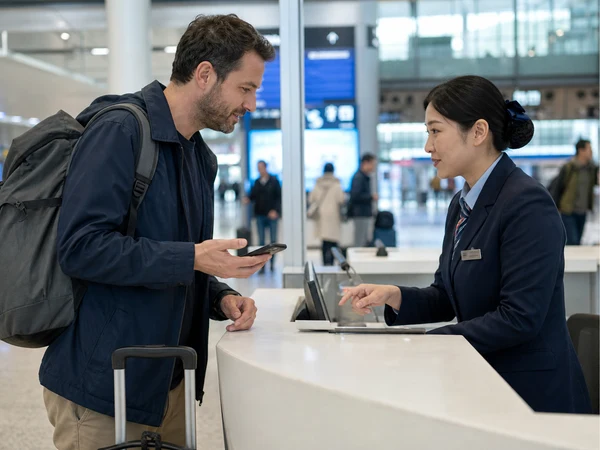
A greeting opens an interaction, but travelers do not need to force textbook exchanges. Match the setting: hotel staff, a shopkeeper and a person in a park may use different levels of formality.
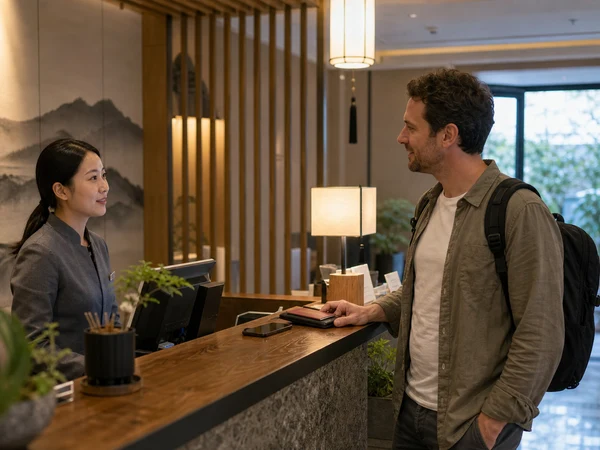
Hotel check-in is a useful moment to show a booking name and greet staff before presenting documents
Pinyin: Nǐ hǎo
Chinese: 你好
Pinyin: Nǐ hǎo ma?
Chinese: 你好吗?
Good / Fine — Hěn Hǎo
Pinyin: Hěn hǎo
Chinese: 很好
Have You Eaten? — Chīfàn Le Ma?
Pinyin: Chīfàn le ma?
Chinese: 吃饭了吗?
Ordering Food and Communicating Allergies Use short sentences and show the ingredient in Chinese. A restaurant may share oil, broth, utensils or grills, so a phrase cannot guarantee an allergen-free meal. For severe allergies, carry a professionally translated card and choose a setting able to explain cross-contact. The Chinese dining culture guide adds etiquette and shared-dish context.

Beijing duck is ordered more easily when the traveler can point to the menu and confirm portion size
Pinyin: Qǐng gěi wǒ zhège
Chinese: 请给我这个
Point to the exact menu item. “Wǒ yào zhège” (我要这个, “I want this”) is widely understood, while adding “qǐng” sounds more courteous. Confirm quantity if a menu lists portions or whole dishes.
Pinyin: Bú yào là
Chinese: 不要辣
This asks for no chili heat, but a regional sauce, broth or prepared ingredient may already contain chili. If spice is a health concern rather than preference, explain that separately and verify the dish before eating.
Pinyin: Wǒ duì ___ guòmǐn
Chinese: 我对___过敏
Fill the blank with the exact ingredient in Chinese and show the whole sentence. Add “严重过敏” (yánzhòng guòmǐn, severe allergy) only when accurate; translation support and staff confirmation remain essential.
Pinyin: Hǎochī
Chinese: 好吃
Say “hǎochī” for food; “hǎohē” (好喝) is used for a drink. These are simple compliments, not claims about every diner's taste.
Pinyin: Qǐng mǎidān
Chinese: 请买单
Ask the price before customization or packaging. Bargaining may be normal in some markets but inappropriate in fixed-price stores, museums or restaurants. Keep the tone friendly and be willing to decline.

Muslim Street in Xi'an has busy food and souvenir stalls where pointing and short price questions can help
Pinyin: Zhège duōshao qián?
Chinese: 这个多少钱?
Confirm whether the displayed amount is per item, per weight, per set or for the whole service. Use the calculator screen to prevent confusion over large numbers.
Pinyin: Tài guì le
Chinese: 太贵了
Pinyin: Kěyǐ piányi yìdiǎn ma?
Chinese: 可以便宜一点吗?
Pinyin: Bú yòng le, xièxie
Chinese: 不用了,谢谢
Show the destination in Chinese and confirm the exact station because some cities have several railway terminals. The China high-speed rail guide covers booking and boarding context; always check the current ticket, entrance and accepted identity document.
Pinyin: Qǐng dài wǒ qù jīchǎng
Chinese: 请带我去机场
Replace “jīchǎng” with the airport's full Chinese name when a city has more than one. For a taxi, show the terminal as well as the airport.
Huǒchēzhàn — Dìtiězhàn — Qìchēzhàn
火车站 — 地铁站 — 汽车站
Railway station — metro station — long-distance bus station. “Qìchēzhàn” can be ambiguous, so show the full station name and ticket whenever possible.
Bye-bye!
Chinese: 再见!
“Zàijiàn” is a standard goodbye. Casual speakers may also say “bāibāi” , borrowed from English. A phrase list is most useful when practiced with audio, saved offline and paired with written names—not when it is treated as a substitute for listening, patience or professional translation.
Want to learn more useful Chinese phrases for travelers? Please feel free to contact us for more basic Chinese sentences. Actually, it's better to travel with a local guide if you don't know mandarin Chinese at all. See our sample tours for inspiration.

Our customers in Beijing Summer Palace
Not interested in those tours? It's easy to get a tailor-made tour only for you, just tell us places you would like to visit and all your requirements, our travel consultant will help you with all the things.

From $ 2498

From $ 22782050
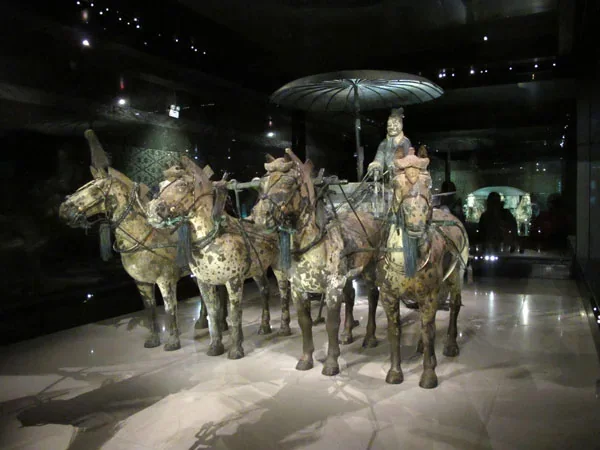
From $ 2983
Editorial accountability
Hu Lei, CEO. The named owner is responsible for travel-planning accuracy and escalation of time-sensitive checks.
Yuntian Travel (Yunnan) Group is identified in its corporate profile as a licensed professional inbound travel service provider based in Kunming, China. Registration and travel-service documents can be requested before booking.
Page-specific references where cited, official destination, transport and entry notices, YUNSKY route-planning records, and direct provider confirmation before a booking is finalized.
Content is reviewed when rules, transport, access, pricing or route conditions change. Final availability and operating details are reconfirmed for each traveler’s dates.
Quality review: Page updated: