Your China & Yunnan Travel Experts


Reviewed August 27, 2026. “Things not to do in China” should not become a list of stereotypes. The useful version separates law, local etiquette, payment, connectivity, food safety and personal boundaries. Customs vary by region and situation, and official rules can change; use these eleven cautions as prompts to verify the actual place rather than as claims about every person in China. When a mistake has a serious consequence, save the responsible authority's current instruction and ask the hotel or operator how it applies to the exact venue.
Read the current U.S. travel advisory and the rules of every religious, government, border or protected site on the route. Avoid restricted photography, demonstrations and conduct prohibited by local law. Sensitive legal or political circumstances deserve specific advice, not casual debate or a social-media assumption. Carry the identification required by local rules, keep immigration documents valid and never accept a package or favor whose contents you cannot verify. The traditional Chinese etiquette guide can add social context but does not replace law.

Potala Palace is protected living heritage with controlled visitor behavior
China's provincial-level regions contain many languages, religions and cultural traditions. Ask before photographing people, ceremonies, homes or sacred objects; follow the host's direction and avoid costumes, food or rituals framed as exotic props. A local guide should name the specific community and explain whether an activity is community-led, staged for visitors or religiously restricted. Read about China–U.S. cultural differences without turning tendencies into rules about individuals.

A visitor receives a welcome drink at Jidao Long Skirt Miao Village in Guizhou
Busy stations, holiday attractions and food streets may allow less physical space than an American traveler expects. Keep bags controlled, queue where staff direct and use a clear, calm boundary when needed. If crowds affect mobility or anxiety, choose an early slot, a less congested entrance or a quieter season rather than blaming the people around you. Keep children on the inward side of a platform or pavement, agree on a meeting point and never stop suddenly in an active gate to organize luggage.
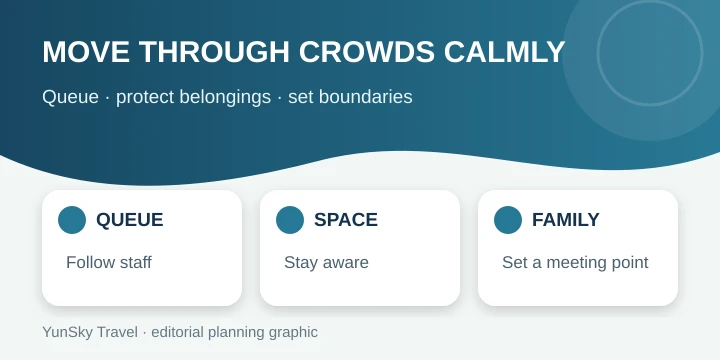
China crowd-etiquette plan for queues, belongings and personal boundaries
Carry a small, discreet day kit with tissues, hand sanitizer, any needed menstrual products and a sealable bag. Restroom standards differ by venue and region; upscale facilities are not a guarantee. Use soap and clean water when available, and do not flush paper unless the facility indicates that its plumbing supports it.
Foreign cards may work in many hotels and major attractions but not every small merchant. Official guidance says overseas visitors can use mobile payment, bank cards and RMB cash; setup, verification, limits, fees and issuer approval vary. Test a linked card before departure, carry a second card, keep modest cash and never let a stranger operate the payment app. Confirm the amount and recipient before approving a QR payment, retain large-purchase receipts and keep an offline way to reach the card issuer.
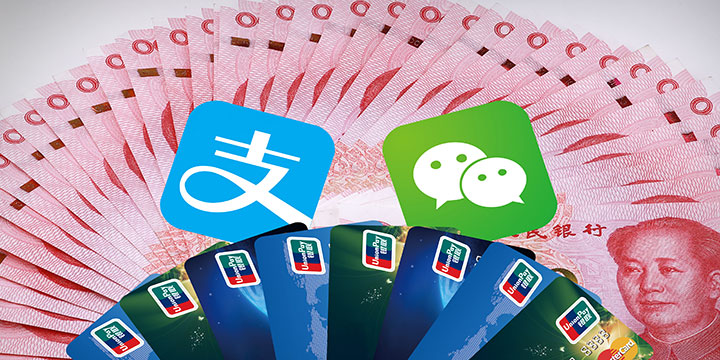
Mobile-payment options commonly used by visitors in China
Some services used in the United States may be unavailable or function differently in mainland China. Decide before departure how the phone will access maps, translation, tickets and emergency contacts, and save essential records offline. Check Chinese law, carrier terms and employer security policy; avoid unverified software or any seller promising guaranteed access. Keep the account-recovery method independent of one phone, test roaming or the chosen SIM on arrival, and write down the hotel and emergency contacts in case the device is lost.
Fixed-price malls, supermarkets, museums and formal stores are not bargaining venues. At a market where negotiation is normal, ask the price, decide your limit, compare quality and walk away politely. Confirm materials, return terms and card amount before payment; a lower price does not establish authenticity or legal export status. Antiques, wildlife products, medicines and culturally important objects can carry import or export restrictions, so do not rely on a shopkeeper's verbal assurance.
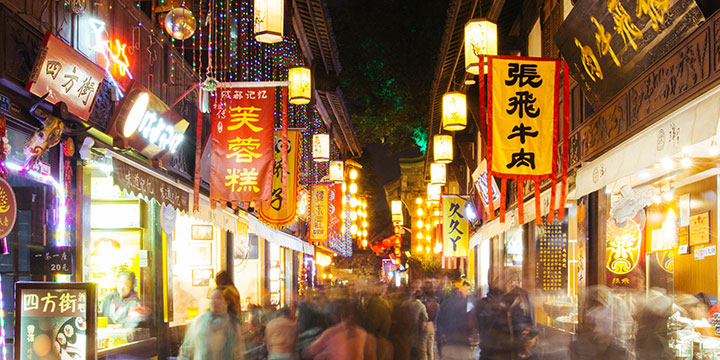
Jinli Old Street illustrates a busy retail setting where prices and sales formats vary
Tipping is not expected in every restaurant, taxi or hotel interaction, and a service charge may already apply. Organized tours, private guides and drivers can follow different conventions. Ask the operator what is included, who receives any gratuity and whether the suggested amount is optional before handing over cash. When service genuinely needs correction, describe the issue to the responsible manager rather than using a tip as a substitute for clear feedback.
Save the hotel name, address and phone number in Chinese; download offline translation; screenshot tickets and write allergies precisely. Ask staffed places for help when needed, but do not assume every passerby speaks English or is responsible for solving the issue. In an emergency, use the operator, hotel, police, insurer or consular channel appropriate to the problem.
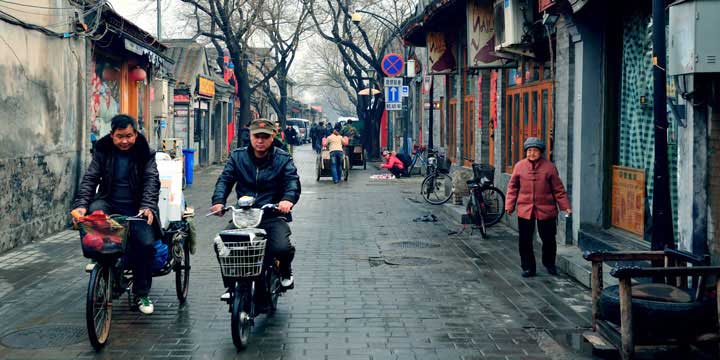
A Beijing hutong where a saved Chinese address can help with navigation
CDC's China traveler guidance states that tap water is not drinkable, including in major cities. Use sealed bottled water or properly boiled water, and follow the same standard for infant formula and other vulnerable uses. Check bottle seals, carry enough water for long transfers and ask what source was used for ice or uncooked produce when health risk is a concern. Seek medical care when illness, fever, blood in stool or dehydration warrants it.
Choose food cooked thoroughly and served hot, observe ingredient handling, avoid uncertain water or ice and pace unfamiliar rich or spicy dishes. Travelers with allergies should carry a clear Chinese-language card, name the ingredient and discuss cross-contact in shared oil, broth, utensils and grills. Children, pregnant travelers and people with relevant medical conditions may need more conservative choices from their clinician. Pair food-safety judgment with the Chinese table-manner guide so health precautions do not become disrespect toward a cuisine.
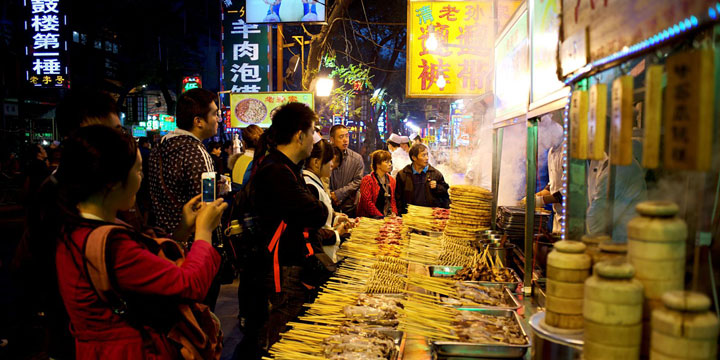
Cooked-food stalls on Muslim Street in Xi'an
Good preparation leaves room for ordinary human variation. A credible operator should explain which statement comes from law, which comes from a venue, which is a common convention and which is only a suggestion. Ask for the source when a rule affects entry, money, health or safety, and recheck it close to travel. If reality differs from the article, follow the current authority or venue and record the change for the next day.
For route-specific questions, send the exact cities, dates and traveler needs instead of asking for a generic guarantee. A custom itinerary should preserve your choices, document reservations and state what still needs reconfirmation.

From $ 2498

From $ 22782050
From $ 2983
Editorial accountability
Hu Lei, CEO. The named owner is responsible for travel-planning accuracy and escalation of time-sensitive checks.
Yuntian Travel (Yunnan) Group is identified in its corporate profile as a licensed professional inbound travel service provider based in Kunming, China. Registration and travel-service documents can be requested before booking.
Page-specific references where cited, official destination, transport and entry notices, YUNSKY route-planning records, and direct provider confirmation before a booking is finalized.
Content is reviewed when rules, transport, access, pricing or route conditions change. Final availability and operating details are reconfirmed for each traveler’s dates.
Quality review: Page updated: