Your China & Yunnan Travel Experts


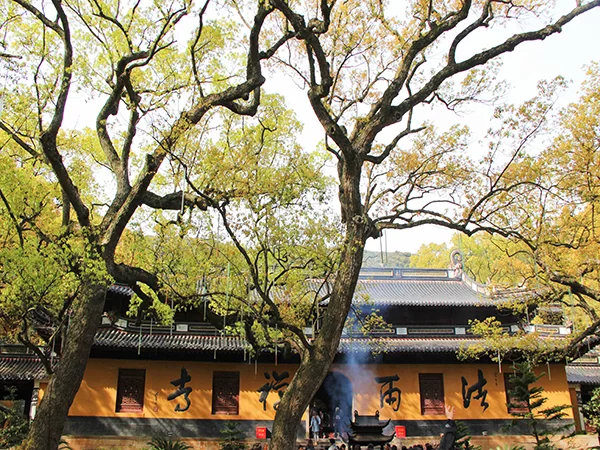
Reviewed August 28, 2026. Longjing is a pan-fired green tea associated with Hangzhou, but the name covers different production areas and grades. West Lake Longjing, or Xihu Longjing, is the tightly protected designation from the 168-square-kilometre West Lake production zone identified by Hangzhou authorities. Tea sold elsewhere as Longjing is not automatically Xihu Longjing. Begin with the Hangzhou travel guide to combine tea shopping with a realistic village or museum route. Hangzhou uses a traceability-label system for protected West Lake Longjing. When a seller claims Xihu origin, ask to see the authorized geographical-indication or provenance label on the sealed retail pack and check the producer information rather than relying on loose leaves in an unmarked tin. The first retained photograph shows a real Longjing village landscape and remains paired with this origin guidance.

Longjing is made from tender shoots that are heated and shaped in a pan to stop oxidation. Harvest timing changes with weather and elevation, so reject fixed promises that every “pre-Qingming” tea appears on one universal date. Examine dry leaves for a fresh, clean aroma and a reasonably consistent grade; brewed tea should not smell perfumed, smoky or stale. High price, bright green colour or a dramatic hand-frying demonstration does not alone prove origin. The retained tea photograph shows the correct flat-leaf style.
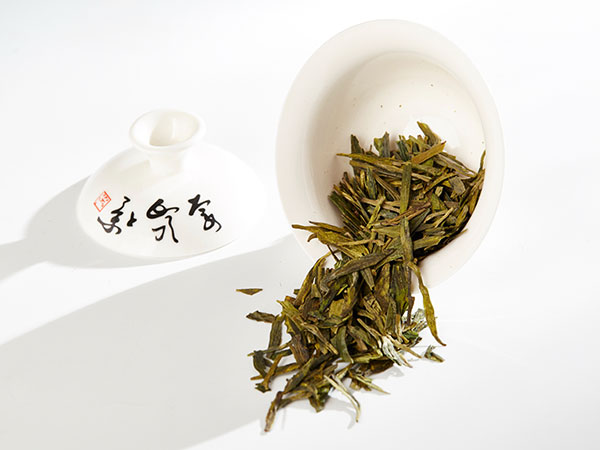
The name Dragon Well is linked to the Longjing area and its well, while imperial stories are part of local cultural memory. Treat legends as context, not as a quality certificate. Green tea is best bought in quantities you can drink while fresh. Ask for harvest season, production area, cultivar if known, processing date and storage advice. Keep the pack sealed, cool, dry, dark and away from strong odours; refrigeration is useful only when the package is moisture-proof and allowed to return to room temperature before opening.
Where to buy Longjing tea in Hangzhou
Tea villages such as Longjing and Meijiawu can provide landscape and production context, while established tea shops and museum stores may offer clearer packaging and receipts. A village address does not prove that every leaf was grown there. Taste before buying when possible, compare the same grade at more than one seller and request an itemized receipt. Use our Chinese tea culture guide for brewing etiquette, or compare retail questions with the Kunming tea-market guide. For a simple tasting, start around 80°C water, use a modest leaf amount and adjust rather than scalding delicate leaves. Confirm destination-country food-import rules before travel.
From on request
From on request
Editorial accountability
Hu Lei, CEO. The named owner is responsible for travel-planning accuracy and escalation of time-sensitive checks.
Yuntian Travel (Yunnan) Group is identified in its corporate profile as a licensed professional inbound travel service provider based in Kunming, China. Registration and travel-service documents can be requested before booking.
Page-specific references where cited, official destination, transport and entry notices, YUNSKY route-planning records, and direct provider confirmation before a booking is finalized.
Content is reviewed when rules, transport, access, pricing or route conditions change. Final availability and operating details are reconfirmed for each traveler’s dates.
Quality review: Page updated: