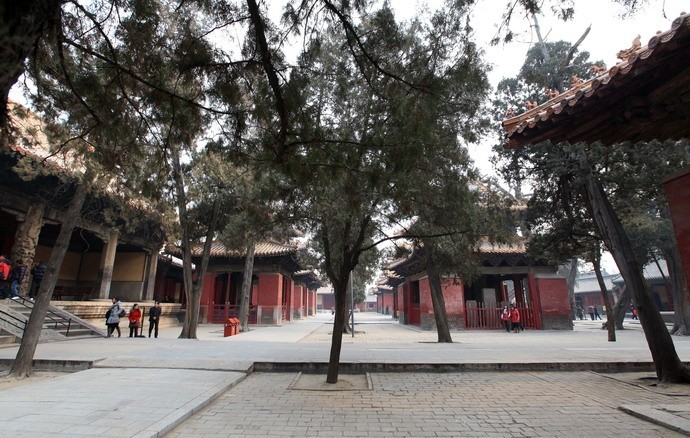
Confucian Temple in Qufu is in massive scale. The temple is resplendent and magnificent. It is the main place and largest site for worshipping and commemorates Confucius.
The king of Lu has Confucius's residence rebuilt as a temple on 478 B.C. (one year after Confucius' death). Then the temple was extended by emperors in the following dynasties. It didn't have current scale until Qing Dynasty.
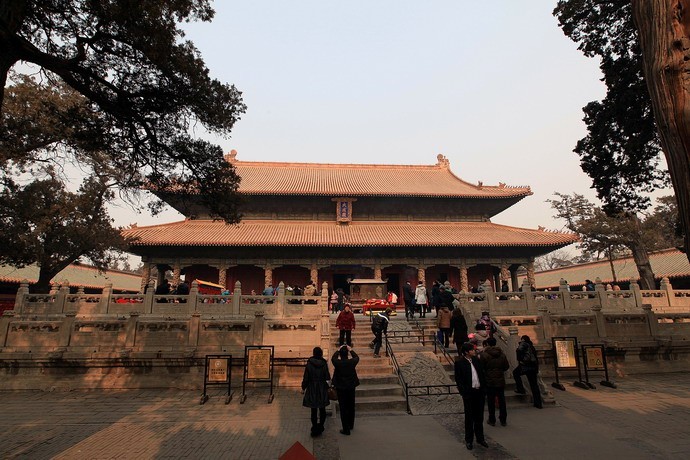
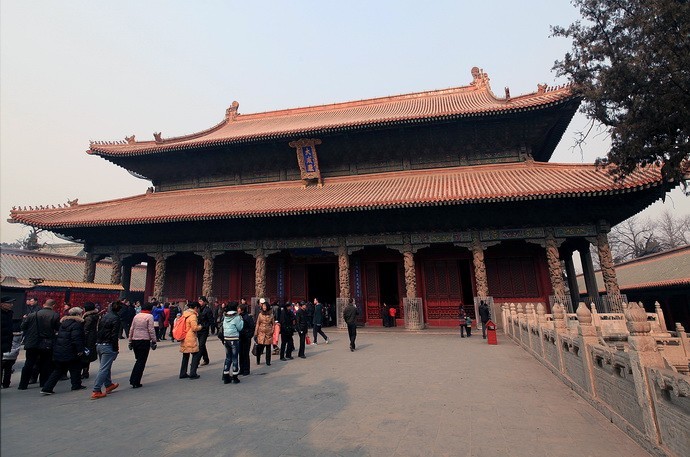
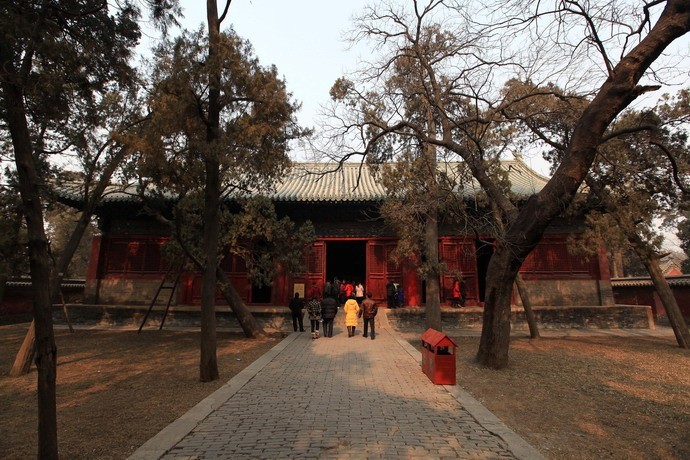
This golden building is Dacheng Hall, the main and topmost building in Confucian Temple. It is also the highest building in the old town of Qufu. The colour of the tiles, the bay and decorative painting are all the best.
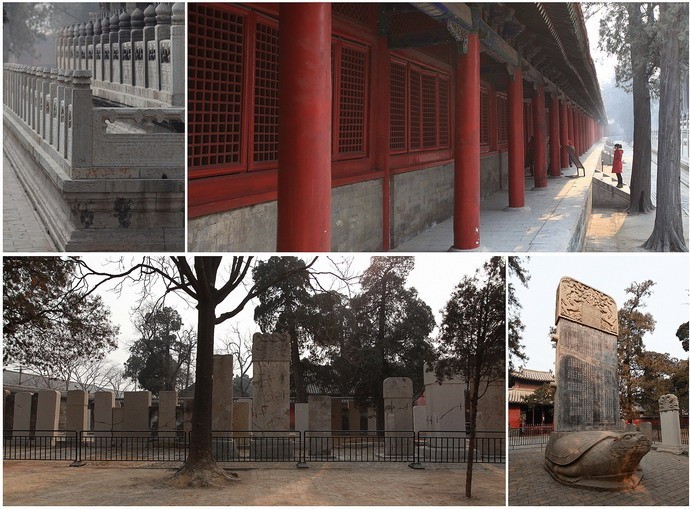
When people visit Confucian Temple, they mainly visit Kuiwenge( Tower of the Constellation of Scholars), stele pavilions, Dacheng Hall on the axle wire of this temple and visit the stone inscriptions on both sides, in which the Han Dynasty's inscription is the most in China. Therefore, it is also regarded as the 2nd Forest of Steles.
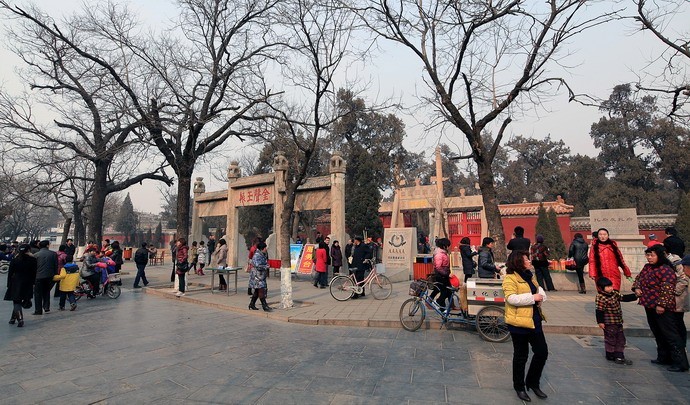
Jinshengyuzheng (Golden Sound and Jade Vibration) Arch is the first arch of Confucian Temple. The name of this arch is from Mencius' words. He praised that Confucius had a widespread reputation.
Lingxing Arch was built in 1415 AD. In ancient times, the first emperor of Han Dynasty often set sacrificial rites, praying seasonable weather for crop raising and peaceful life for his people. The first thing of the rites is to worship the Star of Lingxing. The Arch was named Lingxing. In other words, it reflects that people respect Confucius so much just as they respect Gods. There is a tablet on both sides of the arch, on which some words were carved. They tell that all officials and officers must get off their horse here.
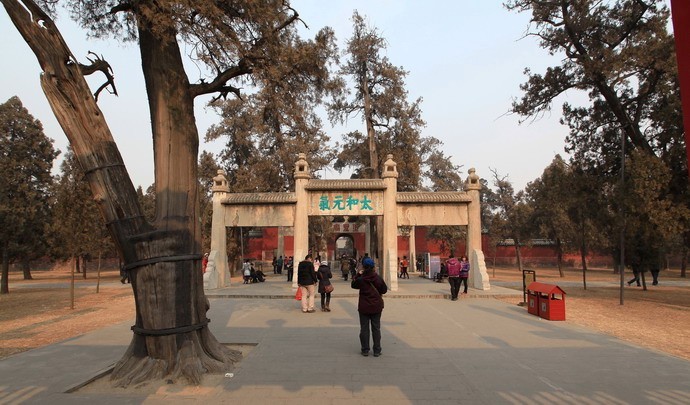
Taihe Yuanqi Arch was built in 1544 AD. It is made of stone. Taihe Yuanqi means Confucius' idea reflects the essence and the most distinguished aspect of human thoughts.
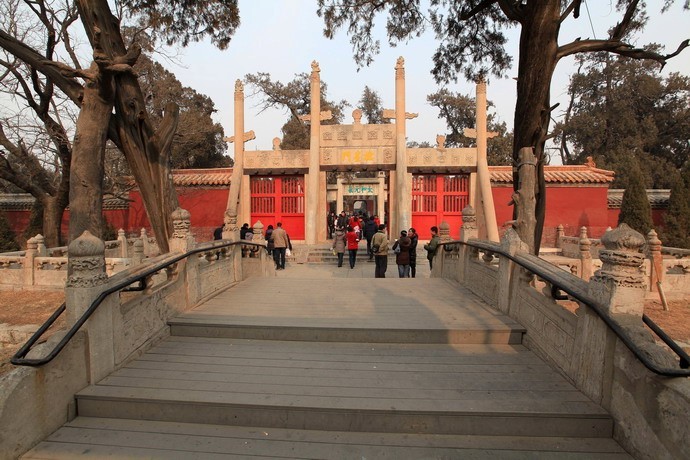
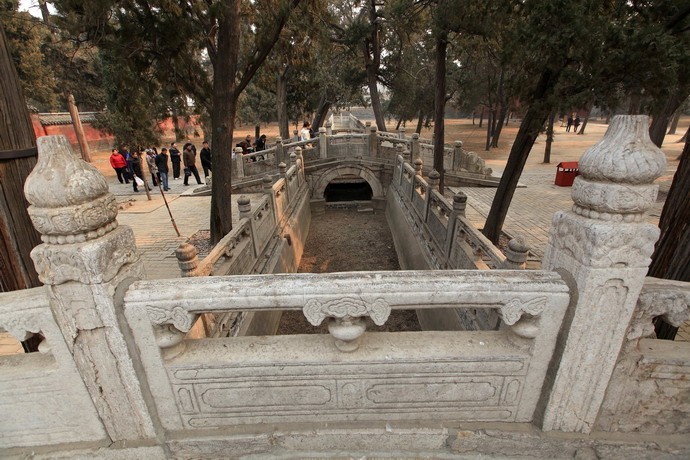
Bishui River is a man-made river, bug in Ming Dynasty. The bridge over it is called Bishui Bridge following the name of the river. There are 3 bridges over the river, right opposite to the three gateways of Hongdao Gate, The design and layout is very ingenious.
In the past, only emperors could go along the bridge in middle and officials were only allowed to take the other 2 bridges when they came here to worship Confucius. Civil officials went along the left one and military officers went along the right one.
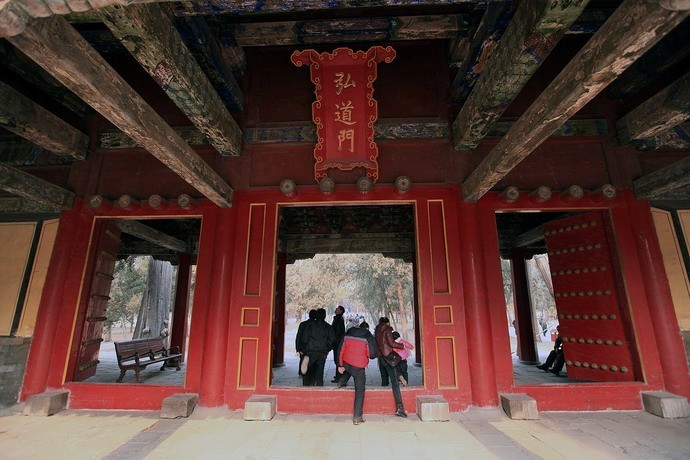
Hongdao Gate is the 3rd gate of Confucian Temple, built in Ming Dynasty and rebuilt in Qing Dynasty. The name means Confucius gave full play to ancient traditional Chinese thoughts. There Chinese characters of the name were written by Qianlong, one of the emperors in Qing Dynasty.
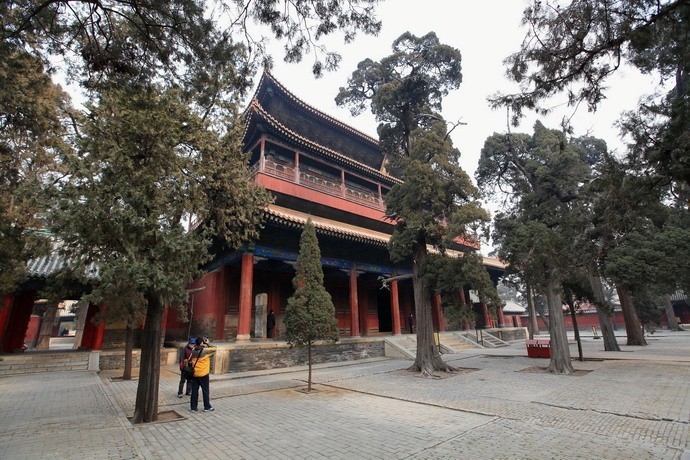
Kuiwenge Tower is a famous tower in China, made of wood, set up in 1018 AD. It was originally called Zangshulou Tower. It was rebuilt in 1191 AD and got the present name. Then it was extended to a 3-floor tower in Ming Dynasty and covered by yellow glazed tiles in Qing Dynasty when Yongzheng was the emperor.
Three Imperial Stele Pavilions were built to preserve the imperial steles carved by the emperors in the past dynasties. There are 55 steles in total, carved by Chinese characters, Mongolian characters, Manchu scripts,ect in dynasties of Tang, Song, Yuan, Ming, Qing and in Republic of China. The steles recorded the history of activities of sacrifice in the past. It is of historical importance and worth of studying.

Dacheng Gate is the 7th gate in Confucian Temple. From now on, Confucian Temple is divided 3 parts to visit. The middle is mainly for worshiping Confucius and his wife. The east part (Congsheng Temple) is for worshiping Confucius' ancestors, and the west part (Qisheng Hall) is for Confucius' parents. The name of this gate and couplet on the stone pillars in front of the gate are written by Yongzheng, one emperor of Qing Dynasty. There are also 3 gateways of the gate. In the past, the middle gateway was only open when the Confucian Worship Ceremony was hold. It is only open for emperors. Other people are only allowed to go through beside 2 gateways.
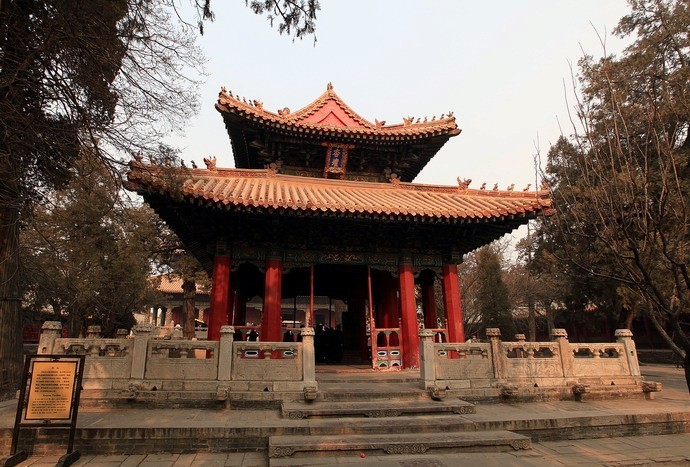
Xingtan is a 2-floor pavilion, where Confucius gave lectures to his students. It is right in the middle of the path leading to Dacheng Hall.
Dacheng Hall is 24.8 meters high, 45.69 long and 24.85 wide with yellow-tile double-hipped roof, decorating painting and surrounding porch. Dacheng Hall, Taihe Hall in Forbidden City and Tiankuang Hall in Daimiao Temple of TaiAn are regarded as the Three Grand Halls in China.
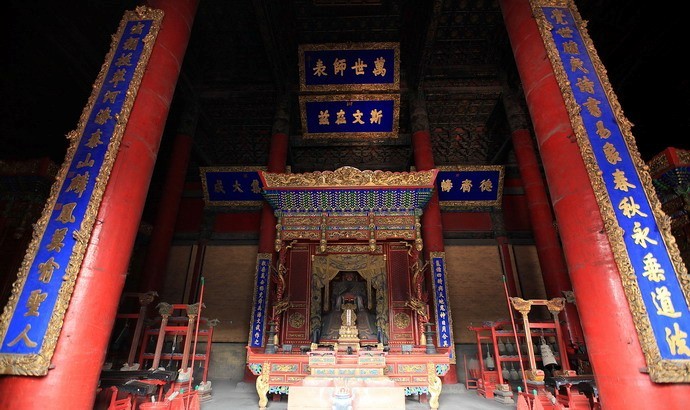
The hall is in beautiful decoration and looks splendid. There are 9 shrines in the hall and 17 statues. The middle statue is Confucius with height of 3.35 meters. He looks like an emperor. In the past, emperors respected Confucius as a God. 10 inscribed boards are hung high in and out of the hall. There is one right hung above the statue of Confucian, written by Kangxi, famous emperor in Qing Dynasty. The words mean that Confucius is emperor's teacher and the measure of what a human being should be.
The last courtyard is on the axle wire of Confucian Temple is Shenji Hal, built to preserve the woodcut of Confucius' life stories in Ming Dynasty.
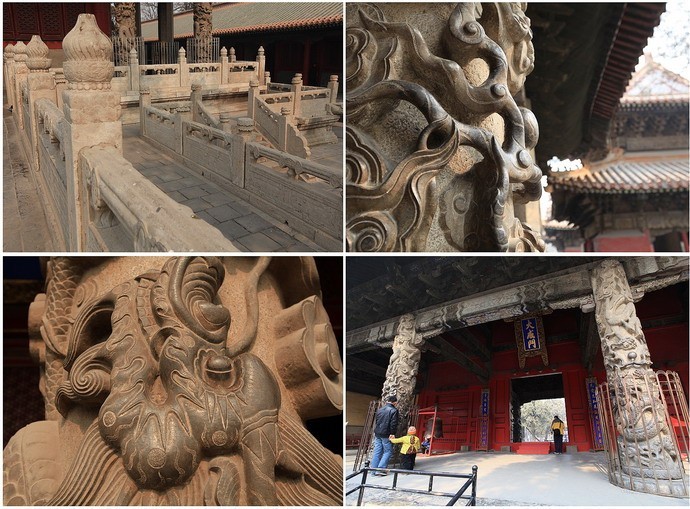
There are 18 pillars with dragon relief on both sides and the back of the hall. There are 8 faces of each pillar and there are 9 dragons on each of the face. In this case, there are 72 dragons on one pillar and 1296 dragons in total on 18 pillars.
The rooms on both sides of the principal hall are used to enshrine the past famous scholars of Confucian and Taoism, such as Dong zhongshu, Han yu, Wang Yangming, ect.

Confucian Temple in Qufu is the largest in scale and with longest history. Confucian Temple, Confucian Family Mansion and Confucian Cemetery are the largest 3 ancient architectural complexes existing in China.
♦ Note
Confucian Temple, Confucian Cemetery and Confucian Family Mansion were listed by World Heritage in December of 1994
The World Heritage Committee Declared,
Confucius was a great philosopher, statesman and educator in Spring & Autumn Period of China (600BC-500BC).Confucian Temple, cemetery and family Mansion are located in Qufu, Shandong Province, China. Confucian Temple was built in 478BC to commemorate Confucius. Although it was destoried and rebuilt for many times in the past, it has been developedas an architectural complex with over 100 halls. Original Confucius' residence was also extended to such a large mansion, including around 152 halls and rooms. The Ancient architectural complex is built with unique art and historical characteristics because Confucius was esteemed and Confucianism was implemented by emperors in the past 2000 years.




 Previous:
  Next:
Next: