Your China & Yunnan Travel Experts


A China high-speed rail map is useful only when its date and purpose are clear. This guide explains the national corridor framework, shows how north–south and east–west routes connect, and turns a planning graphic into a booking workflow based on current trains and exact stations. Continue planning with the China high-speed train guide.
A useful map must say what it represents and when it was updated. Schematic passenger maps simplify geography; planning maps may combine operating, under-construction and proposed segments; booking maps focus on services available for a selected date. Start with origin and destination cities, then identify the exact stations and any interchange. A colored line between two places is not proof of a direct train. Confirm the current train number, travel date and station pair through the official booking channel.
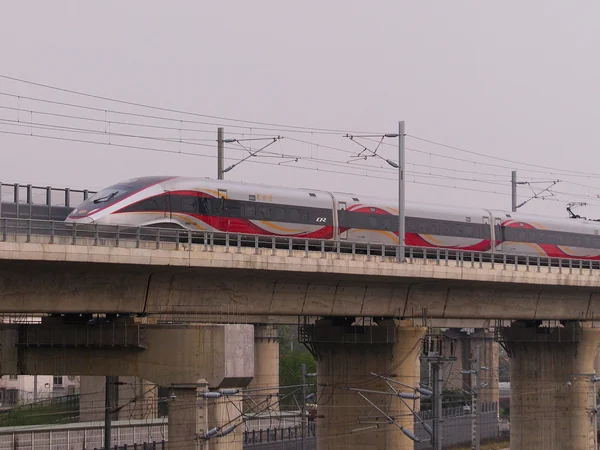
The national medium- and long-term plan organizes the backbone around eight broadly north–south and eight broadly east–west corridors. It is a planning framework, not sixteen single train services. Each corridor can include multiple alignments, branches and sections completed at different times. Use it to understand national geography and likely interchange hubs, then switch to a live timetable for booking. Avoid measuring current network coverage from an undated promotional graphic. Continue planning with the high-speed rail in China.
North–south routes connect major economic regions across long distances, but passengers often travel only one segment. Beijing, Shanghai, Guangzhou, Shenzhen, Wuhan, Zhengzhou, Xi'an, Chengdu and other hubs can connect several corridors, and similar station names make transfer planning important. Check whether a train uses the central station or a newer east, west, south or north station. If a transfer changes stations, allow urban travel time and a delay buffer rather than treating it as a same-platform connection.
East–west corridors link coastal gateways with central and western regions across varied terrain. Long-distance services may be direct, while a connection can provide a better departure time or seat choice. Compare total journey time, not just the fastest segment, and consider an overnight stop if a single rail day becomes too long. Service patterns change with timetable adjustments and engineering work, so verify the complete route shortly before travel and again on the departure date. Save the Chinese station names for taxi or metro use, and check whether a through train changes direction or makes a long intermediate stop. A map is best used to generate options; the dated booking result should decide the final route. Continue planning with the China transportation options.

From on request

From $ 1613
Editorial accountability
Hu Lei, CEO. The named owner is responsible for travel-planning accuracy and escalation of time-sensitive checks.
Yuntian Travel (Yunnan) Group is identified in its corporate profile as a licensed professional inbound travel service provider based in Kunming, China. Registration and travel-service documents can be requested before booking.
Page-specific references where cited, official destination, transport and entry notices, YUNSKY route-planning records, and direct provider confirmation before a booking is finalized.
Content is reviewed when rules, transport, access, pricing or route conditions change. Final availability and operating details are reconfirmed for each traveler’s dates.
Quality review: Page updated: