Your China & Yunnan Travel Experts


Reviewed August 28, 2026. During the Republic of China period (1912–1949), Muslim communities faced war, state-building and arguments over citizenship while creating schools, associations and print networks. This page focuses on documented institutions and debates. It avoids treating Hui identity as interchangeable with every Muslim identity in China or implying that one reform movement spoke for all believers.
The fall of the Qing opened new political language around equality and national belonging, but legal ideals did not remove local discrimination or regional conflict. Muslim intellectuals debated whether community interests were best defended through religion, ethnicity, citizenship or combinations of all three. Their positions changed with the political pressures of the 1920s, 1930s and wartime 1940s.
For a longer chronology, continue to Islam in modern China. Historical photographs on this page document education, institutions, books and wartime participation; they do not represent every community or authorize present-day access to the pictured places.
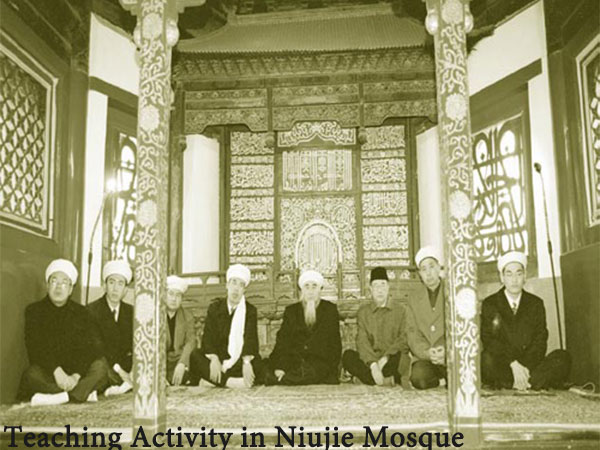
Educational reform began before 1912 and accelerated under the republic. Teachers sought to combine Arabic and Islamic learning with Chinese, mathematics, geography, history and other subjects needed for public life. This was not a wholesale rejection of mosque education; different schools negotiated religious and general curricula in different ways.
Niujie Mosque in Beijing was one important setting for reform-minded teaching. The archival classroom photograph is valuable because it shows people using a real institutional space. Visitors today should not assume the room remains open or stage similar images during lessons or prayer.
Chengda Teachers School, founded in 1925, became a significant institution for training Muslim educators and building links with intellectual centres in China and abroad. Its history involved changing campuses and political pressures, so it is more accurate to follow dated records than to describe it as one uninterrupted university.
Other schools appeared in places including Beijing, Shanghai, Yunnan, Ningxia and the lower Yangtze region. Some emphasized teacher training, some supported girls' education, and some served local primary or secondary needs. Lists in older travel copy often mix names and dates; this revision keeps the pattern without claiming a complete national directory.
Study abroad also mattered. Chinese Muslim students traveled to institutions such as al-Azhar in Cairo, then returned with language skills and new ideas about education, law and Muslim society. Their views were diverse, and overseas training did not produce one unified reform program. Travel required funding, institutional contacts and political permission, which limited who could participate. Returned students translated as well as taught: they had to explain Chinese conditions abroad and interpret international debates for readers at home. Their influence is best traced through named publications, schools and correspondence rather than broad claims that all reform came from overseas.
Women's education expanded unevenly through girls' schools, local classes and reformist advocacy. It should be included without claiming equal access across the country. Family resources, region, conflict and institutional leadership all shaped who could study.
The real historical school photographs are retained because they correspond to the education section and show no visible third-party branding. Their limitations are also clear: without a fully documented caption, they are evidence of the type of institution, not proof of every school named in the text.
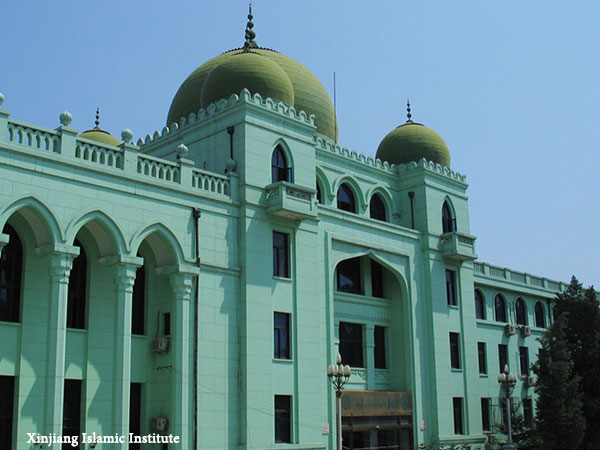
Travelers researching this history can begin with mosque museums, university collections and local archives. Ask before photographing documents or students, and record the institution's Chinese name so that a later caption can be verified rather than guessed.
Education helped Muslim writers and teachers engage with the new republic, but it also became a field of debate over state supervision, religious authority and the language of citizenship. That tension is central to the period.
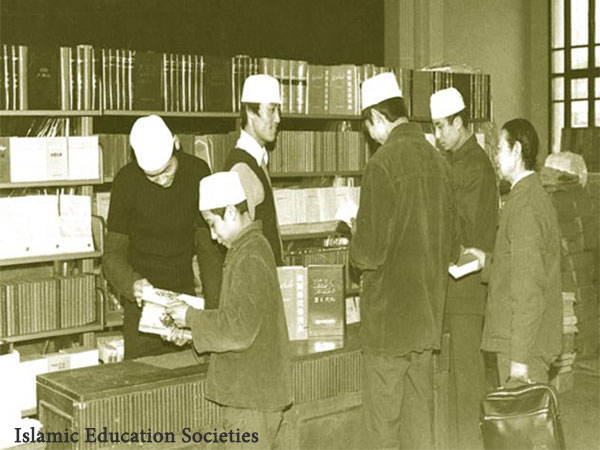
National and local Muslim associations formed to support education, charity, publishing, religious affairs and political representation. Their names, jurisdictions and longevity differed, and organizations were repeatedly reorganized as governments and wartime conditions changed.
A Beijing association founded soon after the 1911 Revolution became an influential reference point, but it did not speak for every Muslim community. Local groups in Shanghai, Nanjing, Tianjin and elsewhere pursued their own priorities and maintained different relationships with officials.
Associational meetings created channels between mosque leaders, teachers, merchants, students and government representatives. They also exposed disagreements: whether Muslims should be defined mainly through faith or ethnicity, how schools should be regulated, and how national unity could coexist with communal rights.
Charitable work, disaster relief and educational fundraising were practical forms of public participation. These everyday activities are less dramatic than political declarations but often better evidence of how an organization served its members.
The Muslims in China overview explains present-day diversity. Do not project the modern official ethnic classification system backward without noting that Republican-era terminology and political categories were still contested.
For E-E-A-T, association claims on this page are limited to durable historical patterns. Branch totals and “largest organization” labels are omitted unless tied to a dated archival source, because wartime relocation and renaming make static numbers misleading.
Print connected communities across distance. Journals such as Yuehua carried debates on education, religious interpretation, world affairs and citizenship, while presses issued textbooks, translations and works on Islamic history. A publication's editorial voice should not be mistaken for consensus among all Chinese Muslims. Circulation figures, publication runs and surviving issues are incomplete for many titles, and wartime disruption created gaps. Researchers should record an article's author, issue date and publisher instead of citing a magazine name as though its position never changed. Letters, advertisements and fundraising notices can reveal networks that formal essays leave invisible.
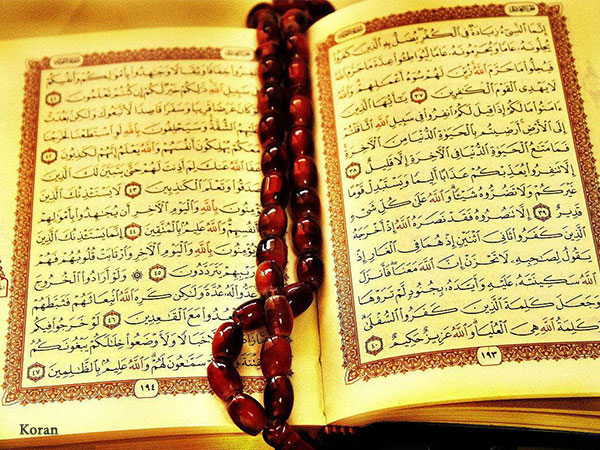
Chinese Qur'an translations appeared in multiple versions during the Republican decades. Translators made different lexical and interpretive choices, reflecting both linguistic scholarship and religious commitments. The retained Quran photograph is an illustrative real object; readers should consult a catalogued edition before assigning translator, date or school.
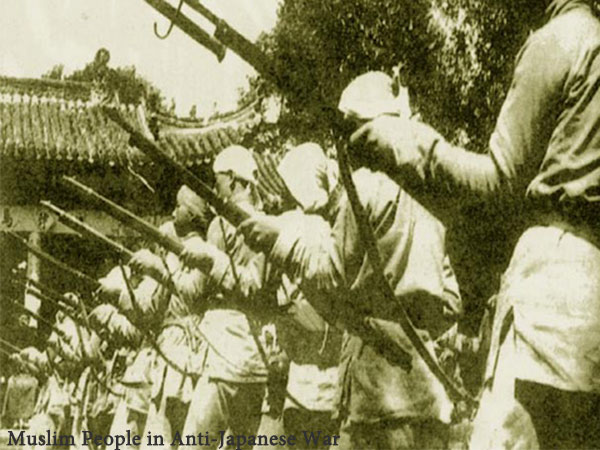
After full-scale war began in 1937, Muslim soldiers, associations, teachers and public figures participated in resistance, relief and international outreach. In occupied and unoccupied areas, choices were shaped by local control and survival. The record includes organized resistance as well as coercion and political division.
Older copy repeated precise battle and casualty totals for a named Muslim unit without showing the source. Those figures are removed. The archival military photograph remains because it is real and section-specific, but its subjects should not be individually identified unless the original archive provides names.
Wartime Muslim delegations also sought support abroad and presented resistance as part of a shared national struggle. Their activity linked religious networks with diplomacy, yet the experience of a traveling delegation cannot stand for civilians who endured occupation, displacement or disrupted schooling.
Republican constitutions and political rhetoric promised equality, while insults, exclusion and disputes over whether Hui constituted a religion, an ethnicity or a nation persisted. Muslim writers used petitions, journalism, associations and education to challenge discrimination and define their place in China. The debates were not merely semantic; categories affected representation, schooling and political claims.
Read the period through several voices and dated sources. Pair institutional history with local evidence, distinguish aspiration from implementation, and avoid romantic claims that the republic either liberated all Muslims or only repressed them. For living practice and calendar-aware visits, use the Muslim festivals guide and verify current venue rules separately.
From $ 1226
From $ 2183
Editorial accountability
Hu Lei, CEO. The named owner is responsible for travel-planning accuracy and escalation of time-sensitive checks.
Yuntian Travel (Yunnan) Group is identified in its corporate profile as a licensed professional inbound travel service provider based in Kunming, China. Registration and travel-service documents can be requested before booking.
Page-specific references where cited, official destination, transport and entry notices, YUNSKY route-planning records, and direct provider confirmation before a booking is finalized.
Content is reviewed when rules, transport, access, pricing or route conditions change. Final availability and operating details are reconfirmed for each traveler’s dates.
Quality review: Page updated:
