How to Read a Chinese Landscape Painting
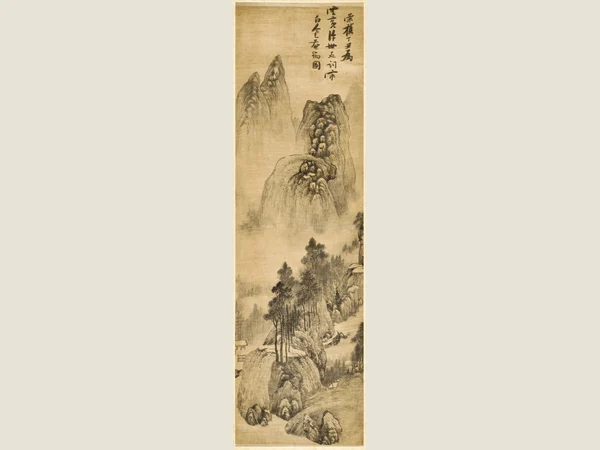
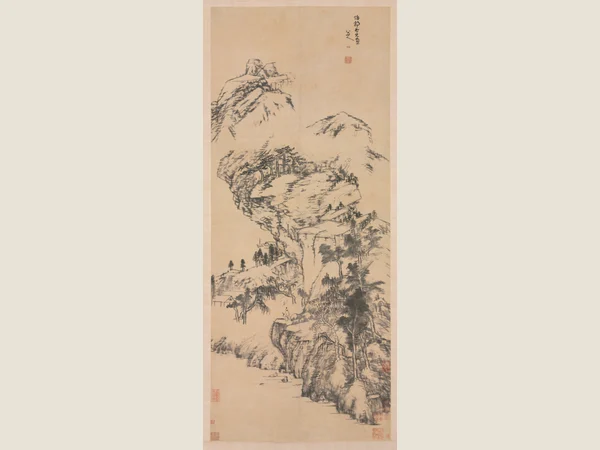
Begin with format and viewing direction. A hanging scroll is usually encountered from the whole composition toward details; a handscroll unfolds as a sequence and should not be judged like a framed panorama. Trace the route created by paths, riverbanks, mist and changes in scale. Chinese painting can combine multiple implied viewpoints, so distant peaks, buildings and foreground trees do not need to obey one fixed camera position. Ask whether the work is ink monochrome, lightly colored, or a blue-and-green approach, then look at how color supports rather than hides the brushwork.
Brush and ink carry much of the meaning. Dry, broken strokes can suggest rough rock; wetter washes create mist or atmospheric depth; repeated textured strokes build mountain mass. Empty paper may represent water, sky or distance rather than unfinished work. Inscriptions, colophons and seals can add a date, poem, studio name or history of appreciation, but unfamiliar characters need translation. For a hands-on introduction before purchasing tools or art, see the Chinese calligraphy and painting lesson guide. Guilin as Subject, Not Authentication
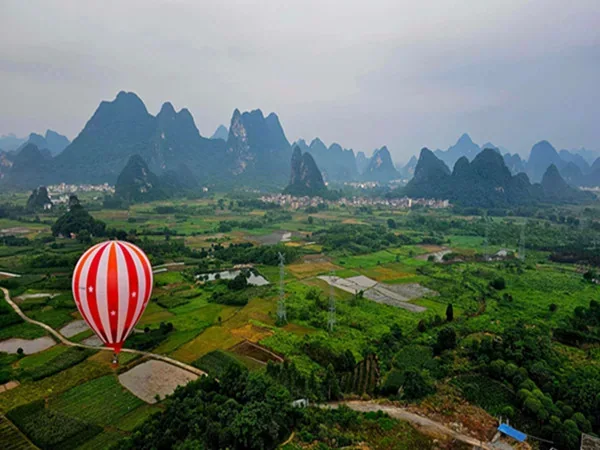
A pointed karst skyline, bamboo raft or riverbank can make the subject readable as Guilin, yet those motifs do not identify the artist or prove that the work was painted on location. Compare the composition with the written title and ask the seller to distinguish a unique hand-painted work from a studio edition, woodblock print, inkjet reproduction or decorative transfer. View the surface in even, neutral light. Repeated pixel patterns, identical copies, glossy machine paper or a printed “seal” can reveal a reproduction, although reproductions are perfectly acceptable when labeled and priced honestly.
Buying Checklist: Description Before Price
Request a written record with the artist's name in Chinese and Roman letters, title, medium, support, dimensions, date, whether the work is unique or an edition, and whether mounting or frame is included. For an edition, record the edition size and number. Photograph the full work, signature, seals, reverse and any condition issue before packing. A seller-issued certificate records the seller's claim; it is not independent authentication. For a high-value purchase, pause until the named artist, gallery history and prior ownership can be checked outside the transaction.
Compare like with like. Rice-paper type, silk, pigments, mounting, frame and conservation condition affect cost, but none automatically makes a work important. Ask for an itemized total covering the work, mounting, frame, packing, delivery and insurance. Inspect for tide lines, foxing, tears, flaking pigment, insects, strong mold odor, lifting seams and recent overpainting. Do not accept pressure to pay before seeing the work unframed when the frame hides edges or condition. The Liulichang cultural-street guide explains additional provenance and cultural-relic checks relevant to art shopping.
Packing, climate and display: paper and silk respond to moisture, heat, direct sun and pressure. A hanging scroll should be rolled around its intended roller with a protective outer wrap, never sharply folded; a framed work needs corner protection and a rigid, moisture-resistant outer box. Ask whether fresh mounting adhesive is fully dry before packing. At home, avoid direct sunlight, damp exterior walls, kitchens and bathrooms. If humidity or mold is suspected, do not clean the surface with water or household chemicals—consult a paper conservator.
Legal and practical limit: an object represented as old, excavated or culturally important may be subject to China's cultural-relic rules and official exit examination. A shop's verbal statement is not an export permit. Obtain an itemized invoice and the required documentation before payment, or choose a clearly contemporary work. Travelers using wheelchairs should confirm the exact gallery entrance, lift and viewing space; traditional storefronts may have thresholds even when the wider street is level.
Best decision rule: visit a museum or documented collection first, decide whether you want an affordable memory, a study piece or a researched artwork, and set a budget that includes conservation and transport. Buy only when the object, maker, medium, condition, legal status and total delivered price are written clearly. This method respects both the painting tradition and the traveler more than an unsupported promise that any Guilin scene is a masterpiece.