Your China & Yunnan Travel Experts


Guizhou Travel Guide for Expats Reviewed August 28, 2026. Guizhou rewards travelers who allow for winding roads, wet weather and community etiquette. Guiyang is the transport base; Anshun, Qiandongnan and Tongren serve very different trips. Travel times can look short in kilometers yet feel long because valleys, tunnels and mountain roads shape the route. High-speed rail simplifies the main corridor, but the final leg to a waterfall, village or summit often needs a shuttle or reserved vehicle. Do not anchor a plan on historical bus numbers. Confirm the Chinese name of the destination, the station used, the last return service and whether luggage storage exists. A private car becomes useful when two remote stops share one day, though the driver and vehicle should be legally arranged and the route should still allow rest.

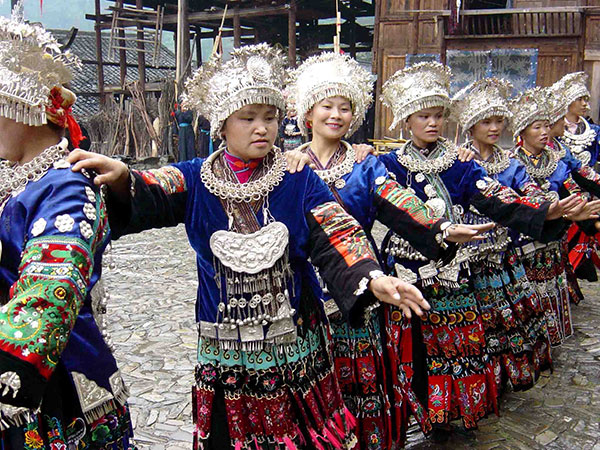
The retained village photograph shows a real performance setting. Ask before photographing residents, distinguish a community visit from a staged show, and never describe one village as representing every Miao or Dong tradition.
For four days, combine Guiyang with Huangguoshu and one nearby cultural or landscape stop. Five to seven days can add Kaili-area villages, Zhenyuan or Fanjing Mountain without turning every day into a long road transfer. A four-day plan might use Guiyang on arrival, Huangguoshu on the second day, a third-day food or museum experience and departure on day four. With six days, add Kaili and one village overnight. Fanjing Mountain is not a casual add-on to that loop: Tongren access, timed entry and weather deserve two more days. Travelers who dislike long drives should choose Anshun or Kaili, not both. Travelers with mobility concerns should ask about stairs, shuttle changes, cableway queues and hotel access rather than relying on the broad phrase “easy sightseeing.”
Choose one geographic cluster. Anshun and Huangguoshu pair naturally; Kaili and village visits form an eastern loop; Fanjing Mountain needs a separate Tongren-based plan.
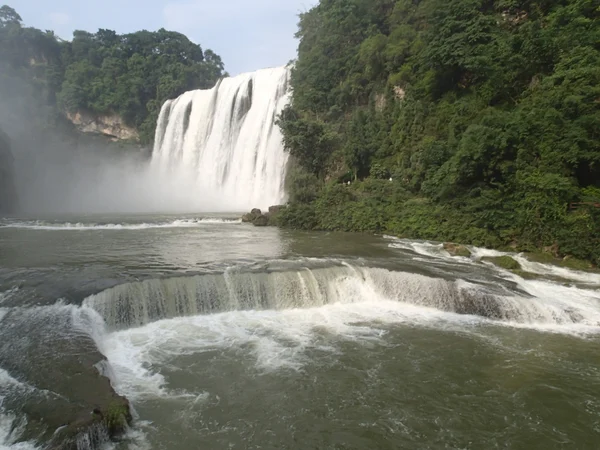
The new waterfall photograph accurately shows Huangguoshu without tour-company branding. Compare regional options in the Guizhou destination guide.
Huangguoshu Waterfall
The Huangguoshu complex is a network of waterfalls, caves, paths and shuttle-bus stops, not a single roadside viewpoint. Water volume changes seasonally and heavy rain can alter access. At Huangguoshu, the main fall is only one part of a larger scenic system that may include Doupotang and Tianxingqiao. The full combination can involve many steps, wet stone, crowded shuttle stops and a long day. Decide in advance which subsection is essential and which can be dropped if rain or fatigue builds. Spray can soak cameras even when the sky is clear. Waterproof the passport and phone, avoid leaning beyond barriers, and respect temporary closures. Water volume can be impressive after rain, but severe weather may reduce access rather than improve the visit.
Allow most of a day from Anshun or a long day from Guiyang. Wear shoes with wet-surface grip and protect electronics from spray.
Zhenyuan Ancient Town
Zhenyuan sits along the Wuyang River with old lanes and mountain-backed views. Stay overnight if you want quieter morning and evening streets.
Do not promise that every historic building is open; fires, maintenance and local controls can affect individual sites.
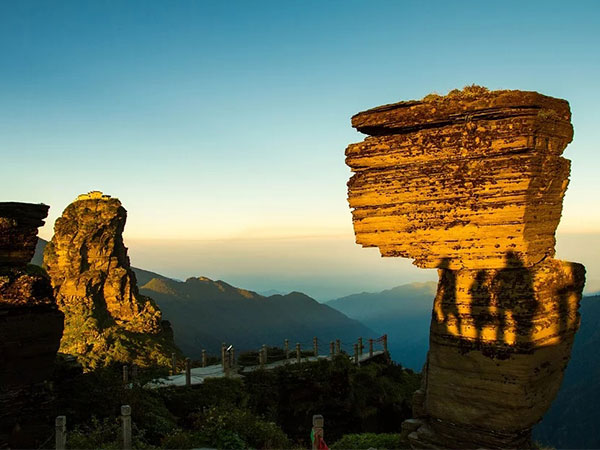
Fanjing Mountain Fanjing Mountain's summit day is governed by a timed ticket, entrance choice, park transport, cableway status and the steep final stairs. A clear forecast in Tongren does not guarantee the summit. Start early, carry layers, and turn back if staff close a path. People who cannot manage sustained stairs should discuss the actual route before booking; a cableway does not remove all climbing. Religious sites on the mountain deserve quiet behavior and appropriate dress. Drones and off-trail photography can breach park rules or disturb wildlife, so use only permitted viewpoints.
Fanjing Mountain combines high-elevation forest, rock formations and religious heritage. The summit approach can involve steep stairs, queues and weather exposure.
Route idea
Day 1 Guiyang; Day 2 Huangguoshu; Day 3 transfer east; Days 4–5 Kaili-area villages; add two days for Tongren and Fanjing Mountain.
Karst terrain creates sharp local weather differences. A clear Guiyang forecast does not guarantee visibility on a mountain.
Photography note
Use weather protection and avoid drones where local or scenic-area rules prohibit them.
Village choice
Xijiang is large and visitor-oriented; smaller communities can feel quieter but require more transport and respectful coordination. Community tourism is strongest when the host explains what visitors are seeing. Ask the village, family or cooperative name, whether a performance is scheduled for tourists, and how fees are distributed. Do not enter homes, kitchens, fields or ritual spaces without invitation. Clothing and silver ornaments may indicate a specific local tradition, but the guide should identify it rather than using “Miao costume” as a catch-all label. When buying craftwork, ask who made it, the material, technique and price; a machine-made souvenir is acceptable when labeled honestly.
Ask what part of a visit is a public performance, a household demonstration or ordinary daily life.
Photography
Request permission for close portraits, ceremonies, interiors and children. A guide's presence does not replace a person's consent.
Food
Sour fish soup, rice dishes and preserved flavors vary by county and household. Ask about freshwater fish bones, chili, alcohol, peanuts and shared cooking oil.
Moutai and baijiu
High-proof baijiu should be tasted in small amounts. Verify the seal and producer, refuse pressure to drink, and check airline and destination alcohol allowances.
Long-table meals
Guiyang → Kaili → one or two well-chosen villages → Zhenyuan.
April to October offers green landscapes and fuller waterfalls, with rain, humidity and holiday crowds as trade-offs. Winter is quieter but can be damp and cold; mountain ice or cableway closure is possible. Festival dates follow local calendars and should be confirmed with the hosting community. Season should also be matched to purpose. Stronger waterfall flow usually comes with more rain and reduced trail comfort. Spring planting and autumn harvest create different village landscapes without turning agricultural work into a photo set. Summer can be cooler than many lowland Chinese cities, yet valleys may remain hot and humid. Around public holidays, timed tickets, village rooms and intercity trains become the limiting factor. Winter offers quieter streets, but damp cold, mountain ice and shorter daylight need realistic clothing and transport buffers.
Pack a light waterproof layer, sun protection and shoes for polished stone. Temperatures can change between Guiyang, valleys and Fanjing Mountain; check the exact destination each evening.
Use a small daypack for scenic shuttles, keep a dry pouch for passport and phone, and carry any regular medication. Avoid a heavy suitcase on village lanes and steep guesthouse stairs. A Guizhou daypack should also include water, tissues, insect repellent in warm months and a small bag for wet clothing. Guesthouse heating, soundproofing and lift access vary, so ask directly instead of inferring from star ratings. If food allergies are serious, carry a translated card naming the ingredient and cross-contact risk. Remote clinics may have limited English service; save insurance assistance and the nearest suitable medical facility. These preparations are especially important when a route spends several nights outside Guiyang.
Stay near Guiyang transport for early departures and confirm vehicle access for village hotels. Registration requires the travel document accepted by the property; verify foreign-guest check-in before paying a non-refundable rate. Accommodation location should match the next morning. A scenic village room may offer atmosphere but require carrying luggage over slopes, while a county hotel can make the vehicle pickup easier. Confirm that the property can register the passport presented and ask whether breakfast, heating or air-conditioning operates in the season. For festivals, book only after the community date is verified. Flexible cancellation protects against schedule changes, but last-minute arrival without confirmation can leave few acceptable alternatives.
High-speed rail is useful between Guiyang, Anshun, Kaili and Tongren, but final scenic access often needs a bus or private vehicle. For the waterfall, confirm the current entrance and shuttle system in the Huangguoshu guide. Last reviewed August 28, 2026. Guiyang North and Guiyang East are different rail stations, and a fast connection on paper can fail if the transfer crosses the city. Anshun West is useful for Huangguoshu, while Kaili South serves much of the Qiandongnan corridor; the final route still needs verification. Keep the original passport used in the rail reservation, arrive early enough for document checks, and save the hotel's Chinese address. In rural areas, mobile coverage and foreign-card acceptance can be uneven, so carry an offline map, a backup payment method and the driver's contact.
From $ 2356
From $ 1207

From $ 22782050
Editorial accountability
Hu Lei, CEO. The named owner is responsible for travel-planning accuracy and escalation of time-sensitive checks.
Yuntian Travel (Yunnan) Group is identified in its corporate profile as a licensed professional inbound travel service provider based in Kunming, China. Registration and travel-service documents can be requested before booking.
Page-specific references where cited, official destination, transport and entry notices, YUNSKY route-planning records, and direct provider confirmation before a booking is finalized.
Content is reviewed when rules, transport, access, pricing or route conditions change. Final availability and operating details are reconfirmed for each traveler’s dates.
Quality review: Page updated: