Your China & Yunnan Travel Experts


Reviewed August 28, 2026. Important classification note: this legacy list uses ‘national park' in the broad tourism sense, but the seven places below are not all units in China's current national park system. China's first five formally established national parks are Sanjiangyuan, Giant Panda, Northeast China Tiger and Leopard, Hainan Tropical Rainforest and Wuyishan. Zhangjiajie, Jiuzhaigou, Huangshan, the Li River, Mount Emei, Shilin and Potatso remain outstanding protected landscapes with different legal designations, operators and access rules. Use this guide to compare scenery, logistics and conservation behavior, then explore China nature tours without mislabeling protected areas.
Zhangjiajie National Forest Park is part of the wider Wulingyuan Scenic and Historic Interest Area, a UNESCO World Heritage property known for thousands of sandstone pillars, ravines, streams and forest. It was designated China's first national forest park, which is not the same category as the five formal national parks announced in 2021. The Zhangjiajie guide helps distinguish the park, Wulingyuan entrances and nearby Tianmen Mountain.
Yuanjiajie contains the pillar promoted in connection with Avatar, but movie marketing should not replace geographic understanding. Elevators, shuttle buses, stairs and viewpoint queues shape the day more than straight-line distance. Start early, choose one mountaintop zone and one valley or stream route, and keep a fog or high-wind alternative.
Golden Whip Stream offers a lower-valley walk, but the full route is long for many families. Stay on open paths, secure food because macaques can approach visitors, and never feed or touch wildlife. Rain makes stone surfaces slippery; summer heat and humidity demand water and a shorter route.

Location: Wulingyuan District, Zhangjiajie, Hunan Province
Current access check: Real-name ticket, selected entrance, shuttle coverage, lift or cableway operation and weather closure; hours vary by season and gate.
Realistic visit: Two full days for major zones; add a buffer in fog-prone or peak periods.
Best conditions: Spring and autumn are often comfortable, but visibility, rain and holiday crowds matter more than a single “best month.”
►Plan with the Zhangjiajie trip guide and verify the official scenic-area notice before each day.
Jiuzhaigou is a UNESCO World Heritage natural property and national nature reserve celebrated for blue and green lakes, waterfalls, forests and mountain ecosystems. It is widely marketed as Jiuzhaigou National Park in English, but travelers should follow the reserve's own real-name reservation, capacity and route controls. Read the Jiuzhaigou destination guide before arranging transport into northern Sichuan.
The visit uses managed sightseeing buses plus boardwalk walking; it is not a free-driving lake circuit. Tibetan villages form part of the cultural landscape, so enter only open areas, ask before photographing people and avoid turning living communities into costume props. Altitude, early starts and long transfer days require a conservative schedule for children or travelers with heart or lung concerns.
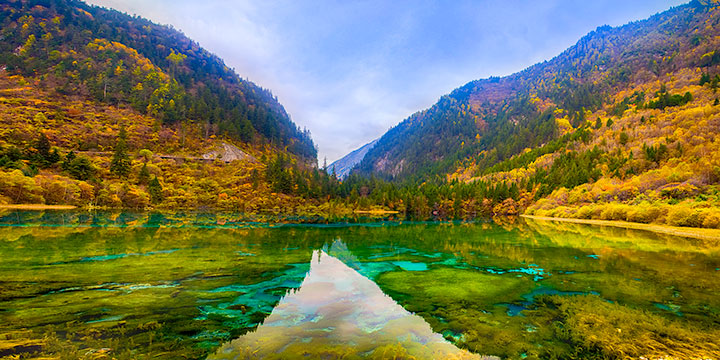
Location: Zhangzha Town, Jiuzhaigou County, Aba Prefecture, Sichuan
Current access check: Official dated ticket notice, daily capacity, original identity document, open valleys and sightseeing-bus routing; hazards can close areas without long notice.
Realistic visit: One full reserve day plus at least one arrival/departure day; add altitude and weather buffer.
Best conditions: Autumn color is famous but heavily demanded; spring and summer have different water levels and weather. Check conditions, not an old fixed season.
►Use current Jiuzhaigou sightseeing tips and buy only through the official reservation channel.
Huangshan is a UNESCO mixed cultural and natural World Heritage property known for granite peaks, old pines, cloud seas and a long artistic tradition. It should not be presented as a unit in the current national park system. The planning challenge is vertical movement: cableways reduce ascent but do not remove steps, queues, changing weather or the need to carry overnight essentials.
Choose a day trip for one cableway zone and nearby viewpoints, or an overnight summit stay only when the traveler can manage stairs, simple mountain logistics and uncertain sunrise visibility. “Sea of clouds” and sunrise are weather events, never guaranteed inclusions. Do not climb closed railings for photographs or approach cliff edges in fog.

Location: Tangkou area, Huangshan District, Anhui Province
Current access check: Official entry window, transfer-bus gate, cableway maintenance, trail closures, summit-hotel rules and severe-weather notices.
Realistic visit: One long day for a focused route; two days for an overnight summit plan; add separate time for Hongcun or Xidi.
Best conditions: Every season changes the route; ice, storms, heat and holiday quotas can matter more than scenery preferences.
►Build the route with the Huangshan planning guide then recheck cableway and trail notices close to travel.
The Li River between Guilin and Yangshuo is a celebrated karst corridor, not one formally designated national park with a single gate or all-day opening time. The South China Karst World Heritage property includes other nominated components; avoid unsupported claims that the river is the world's largest sightseeing area. Its value is the relationship among limestone towers, river, villages and cultivated land.
A scheduled Guilin–Yangshuo cruise provides a long, low-effort overview but follows fixed boarding and disembarkation arrangements. A shorter river or Yulong countryside experience gives more flexibility but is not the same product. Check water level, boat class, child rules, meal details, life jackets, pier transfer and luggage plan; weather can change views and sailing operations.
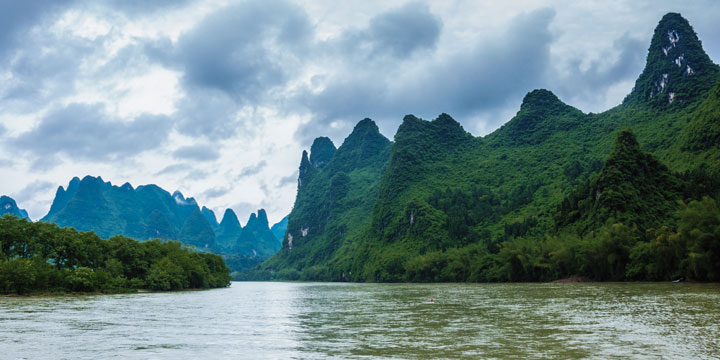
Location: Guilin and Yangshuo, Guangxi Zhuang Autonomous Region
Current access check: Cruise operator, exact pier, departure time, vessel safety, water conditions and local scenic-area tickets.
Realistic visit: One day for the cruise corridor; two or more days when adding Yangshuo countryside, caves or city sights.
Best conditions: Water level, rain, heat and visibility vary. Avoid treating April–October as a guarantee; review the forecast and operator notice.
►Compare route choices in the Guilin trip planning guide before choosing cruise, road or countryside activities.
Mount Emei forms a UNESCO World Heritage property with the Leshan Giant Buddha and combines biodiversity, mountain scenery and a living Buddhist pilgrimage tradition. At 3,099 meters, the Golden Summit is much colder and windier than the foothills. Mount Emei is not one of the current five formal national parks, so use the scenic area's own transport and conservation rules.
Buses and cableways shorten the ascent, but stairs, altitude, fog and queues remain. Macaques are wild animals: keep food hidden, do not feed or touch them, follow staff instructions and give them space. At temples, keep voices low, respect worship and obey photography restrictions.
Possible highlights:

Location: Emeishan, Sichuan Province
Current access check: Mountain bus, cableway, trail, temple and weather notices; last uphill and downhill transport can differ.
Realistic visit: One long day for a summit-focused route; two days for summit plus lower-mountain temples.
Best conditions: Spring and autumn may be comfortable, but summit ice, summer storms and peak-day crowds require dated checks.
►Review transport to Mount Emei and leave a weather alternative.
Shilin is a major limestone landscape and a component of the South China Karst UNESCO World Heritage property. It is not a unit in the current national park system. Its paths weave among stone pinnacles, so a map, agreed meeting point and realistic loop matter more than claims about exact geological age presented without context.
The area is in Shilin Yi Autonomous County. Respectful interpretation should explain local Yi communities and living traditions through named guides, museums or official programs, not use ethnicity as decoration. Ask before photographing people, verify performance schedules and buy crafts only when the material and maker are clear.
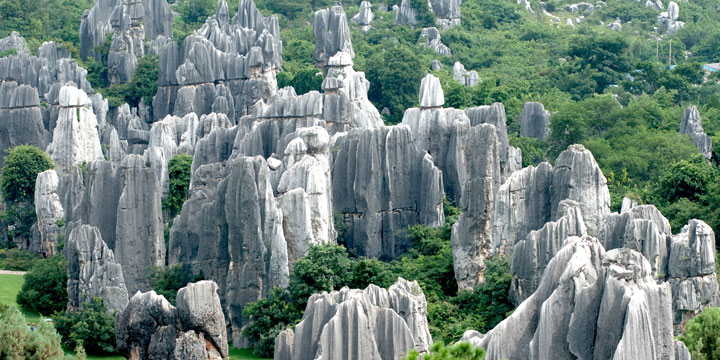
Location: Shilin Yi Autonomous County, Kunming, Yunnan Province
Current access check: Official ticket, shuttle operation, open loops, heat or storm notices and the return point to Kunming.
Realistic visit: A half to full day from Kunming depending on transport and chosen walking loop.
Best conditions: Year-round visits are possible, but sun exposure, summer rain and holiday crowding change comfort.
►Plan transport with the Kunming–Stone Forest guide and save the driver or bus return details offline.
Potatso, also written Pudacuo, is a protected highland scenic area near Shangri-La and was an early pilot in China's national-park development. It should not be described as one of the five formal national parks announced in 2021. Visitor routes can include lakes, forest and alpine meadows, but open sections and shuttle patterns have changed over time; the current park notice takes priority over old maps.
Elevation is the defining planning factor. Walk slowly, stay hydrated, protect against strong sun and rapid weather change, and seek medical advice before travel for relevant heart, lung, pregnancy or altitude concerns. Do not approach yaks, horses or wildlife for a photograph, and remain on open boardwalks to protect vegetation.
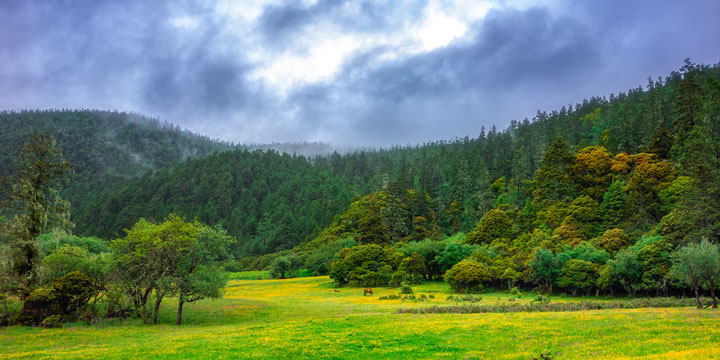
Location: Shangri-La, Diqing Tibetan Autonomous Prefecture, Yunnan
Current access check: Open scenic sections, shuttle route, last entry, weather and altitude warnings; never rely on an old seasonal timetable.
Realistic visit: One half to full day after acclimatization in Shangri-La; do not schedule immediately after a low-altitude arrival.
Best conditions: Late spring through autumn often offers more accessible conditions, while snow and cold can change operations.
►Read current Potatso planning tips and confirm official access before departure.
Choose by ecosystem, altitude, transfer time and mobility—not by how many times an old article says “best.” Zhangjiajie and Huangshan emphasize mountain transport and steps; Jiuzhaigou uses buses and boardwalks at elevation; Li River is a cruise corridor; Emei combines pilgrimage and wildlife; Shilin is a day route from Kunming; Potatso adds high-altitude exposure.
Share mobility, altitude history, wildlife interests and weather tolerance before asking us to customize a nature-focused itinerary.
For families, state each child's age, height, hiking experience and motion sickness. Compare China family tours only after checking official real-name reservations, protected-zone boundaries, daily capacity, transport, weather and closures. National Park Law took effect in 2026, and future designations can change this taxonomy after the review date.

From $ 509
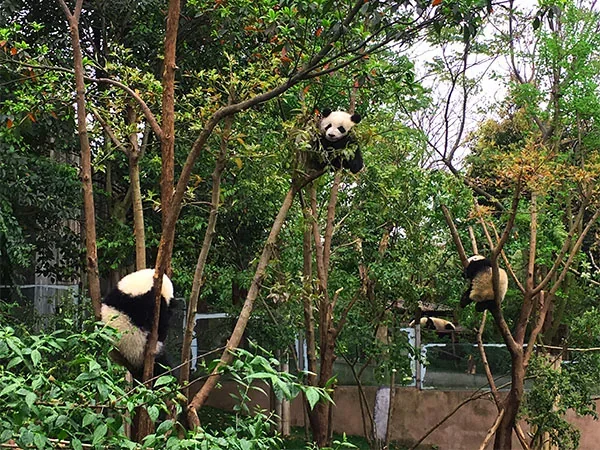
From on request
From on request
Editorial accountability
Hu Lei, CEO. The named owner is responsible for travel-planning accuracy and escalation of time-sensitive checks.
Yuntian Travel (Yunnan) Group is identified in its corporate profile as a licensed professional inbound travel service provider based in Kunming, China. Registration and travel-service documents can be requested before booking.
Page-specific references where cited, official destination, transport and entry notices, YUNSKY route-planning records, and direct provider confirmation before a booking is finalized.
Content is reviewed when rules, transport, access, pricing or route conditions change. Final availability and operating details are reconfirmed for each traveler’s dates.
Quality review: Page updated: