Your China & Yunnan Travel Experts


Reviewed August 28, 2026. A useful Chinese gift for a child should fit the child's age, interests and home-country rules—not simply look ‘Chinese' on a market shelf. This guide keeps the original toy, clothing, game and art ideas, then adds safety labels, cultural context, packing, authenticity and customs checks. Start with the Chinese handicrafts guide if the goal is to understand how an object is made rather than buy a generic souvenir.
Use three filters before paying: will the child actually use it, can you explain its connection to the place or maker, and can it travel home legally and intact? Ask for the material, maker or workshop, recommended age and care instructions; keep the receipt and photograph any label. Avoid wildlife products, unprocessed plant material, loose magnets, unknown batteries and objects with sharp edges. Destination-country rules differ, so check the relevant customs and plant-health authority before purchase rather than relying on a seller's assurance.
Toys are easy to find in attraction shops and commercial streets, but age fit and traceability matter more than novelty. The U.S. Consumer Product Safety Commission, for example, advises following age guidance and keeping small parts away from children under three; other destinations have their own standards. Choose intact packaging with a manufacturer, material, warning and age range. Test that seams, paint, cords, batteries and moving parts are secure, then reserve luggage space so the item is not crushed.
► Opera Dolls
Opera dolls can introduce costume, color and character types when the seller can name the opera tradition and role shown. Beijing-opera and Sichuan-opera figures are not interchangeable, and a factory-made doll should not be presented as a handmade collectible. Check facial paint, glued ornaments and detachable accessories for the child's age; for play, choose a washable, robust figure, while a silk or clay display doll belongs with an older child who understands that it is fragile.
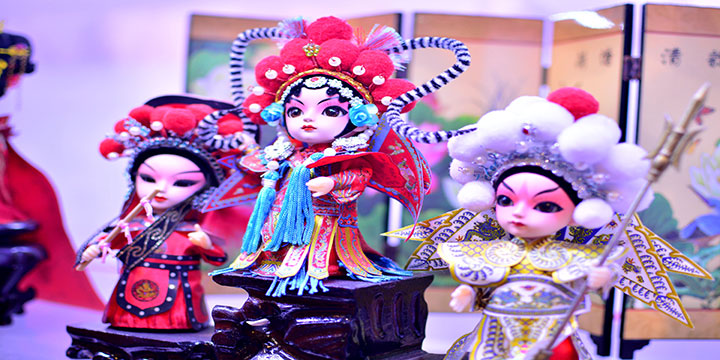
Beijing opera dolls in traditional costume
► Stuffed Pandas
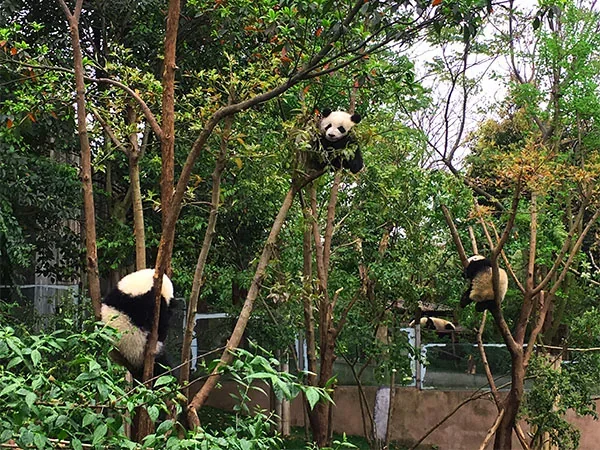
A stuffed panda is portable and immediately recognizable, especially after a Chengdu visit. Look for secure eyes, strong stitching, washable fabric and a stated filling material. Avoid implying that a souvenir purchase funds conservation unless the shop or product gives a verifiable program and amount. A panda-base store can provide location context, but the child should still learn that a giant panda is a wild animal observed under welfare rules, not a pet or photo prop.
► Chinese Yo-Yo
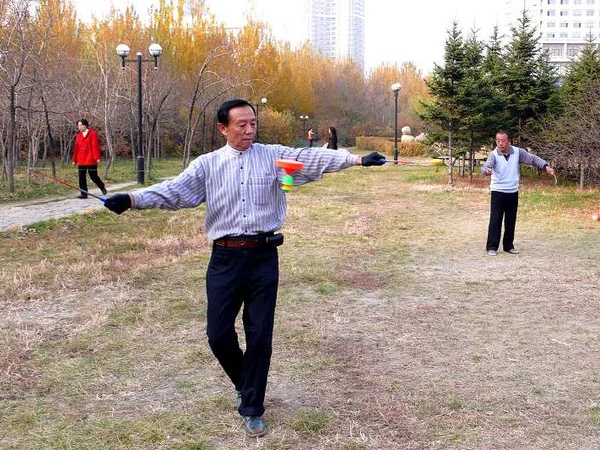
The Chinese yo-yo, or kongzhu, rewards coordination and patient practice. A traditional bamboo version makes a distinctive sound, while modern models may be quieter and more durable. Check the axle, sticks and string for splinters or fraying, make sure the package suits the child's age, and use it in an open area away from faces, traffic and breakable objects. Beginners need an adult demonstration; a performance-quality model is not automatically the safest first toy.
Buy from a specialist toy, sports or craft shop when possible, compare the item with its demonstration model, and ask whether spare string or instructions are included. In Beijing, Shanghai or Chengdu, a short workshop or park demonstration can give the gift a stronger memory than bargain hunting across several distant markets. Do not buy several nearly identical toys simply to fill luggage; one well-explained object is more valuable.
Cultural gifts work best when a child knows the region, technique and occasion behind them. Ask whether an item is handmade, workshop-produced or mass-produced, and pay a fair price for the category rather than accepting unsupported ‘antique' or ‘museum quality' claims. Small enamel objects can be compared with the history and technique in the Chinese cloisonné guide, while textiles and masks need equally specific origin and material information.
► Qipaos and Chinese-Style Clothing
A qipao or Chinese-style jacket can be a wearable memory, but it should be chosen by fit and comfort rather than gender assumptions. Measure chest, shoulder, height and sleeve length; inspect the lining, fasteners and washing label; and leave room for growth. Explain that the qipao has a changing modern history and is not a single timeless national costume. For school events, the child should know what the garment represents and be free to choose whether to wear it.
► Kung Fu Costumes
A loose practice uniform may suit a child already taking martial-arts classes, but a film-character outfit is mainly dress-up clothing. Confirm fabric, sizing and whether frogs, sashes or shoe parts can detach. Do not buy toy weapons for air travel or school use without checking airline, security and local rules. If the trip includes a performance or lesson, let the instructor explain the school and movement tradition so the gift is connected to practice rather than celebrity imitation.
► Opera Masks
Painted opera masks and face designs encode role qualities through color and pattern, but meanings vary by character and tradition. Ask the shop to identify the figure and whether the piece is intended to wear, display or paint. A blank paper or lightweight craft mask is safer for a supervised workshop than a heavy, rigid mask with sharp ties. Avoid applying unverified paint to a child's skin, and do not claim that every red, black or white design has one universal meaning.
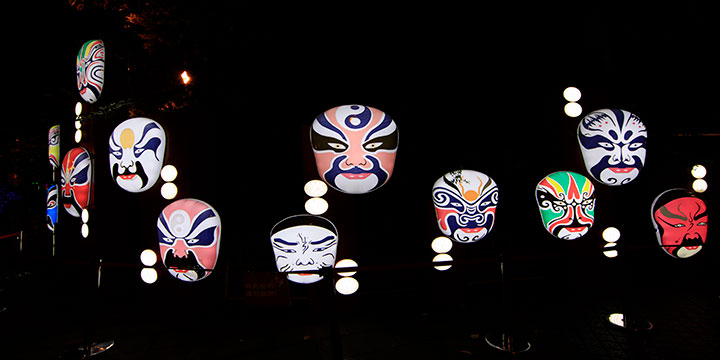
Colorful Chinese opera masks
► Training Chopsticks
Training chopsticks can support coordination, but the hinge does not guarantee a correct grip and small toppers may detach. Choose food-safe material, smooth edges and an age-appropriate length; wash them according to the label and supervise younger children. Teenagers may prefer ordinary reusable chopsticks with a textured tip. Do not treat chopstick use as a test of cultural competence—comfort and safe eating matter more than speed.
An educational souvenir should do one job well: recognize a few characters, understand a game, compare images or practice a craft. Match simplified or traditional characters to the child's course, check that any English translation is accurate, and select a level that can be used without an adult translating every card. Ask the child to choose between language, strategy, art and history; this prevents a ‘learning gift' from becoming unused luggage.
► Chinese Puzzles
Picture-and-word puzzles can work for early learners when images are clear, pieces are large enough and pinyin or translation follows the child's program. Check the finished dimensions and piece count before buying. For toddlers, avoid tiny cardboard pieces and laminated layers that peel; for older children, a map, monument or artwork puzzle creates a better research prompt than a random vocabulary set.
► Chinese Character Blocks
Character blocks are useful only when the typeface, stroke order and definitions are reliable. Look for a publisher, edition and age level, then test several examples with a teacher or dictionary app. Blocks containing magnets need intact, permanently enclosed magnets and strict age guidance. A compact bilingual book or card set may be easier to pack and update than a large box of poorly translated pieces.
► Chinese Board Games
Strategy games suit older children who want a lasting activity, but the name on the box should match the actual rules and pieces. The three common choices below are different games; ask for an English rule sheet or photograph the Chinese instructions before leaving. Xiangqi (Chinese chess) uses a river, palaces and character-marked pieces; it rewards tactical thinking but requires learning each piece name. Weiqi (Go) uses black and white stones on a grid and can begin with a small board before the full game. Chinese checkers is a modern peg-jumping game despite its English name; do not present it as an ancient Chinese invention.
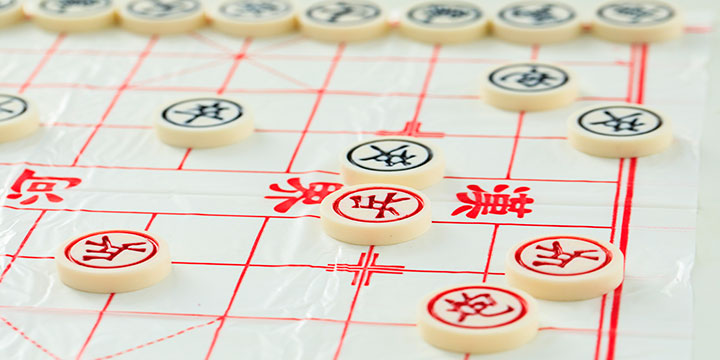
Xiangqi pieces arranged on a Chinese chess board
For a first calligraphy kit, choose a medium brush, washable practice surface and water-writing cloth before buying ink, an inkstone and delicate paper. Confirm whether the brush uses animal hair, synthetic fiber or a blend, because materials may affect allergies, customs and care. Water-writing cloth lets a child repeat strokes without permanent ink, but it does not replace instruction on posture, stroke order and respectful handling of written characters.

Chinese calligraphy brush beside reusable water-writing paper
Chinese paper-cut is a living practice found in different regions and communities, not one red decoration style. UNESCO notes that motifs and techniques vary with place and purpose. Read the Chinese paper-cut guide, then choose a signed finished work or an age-appropriate kit with blunt scissors and clear provenance. A workshop led by a named practitioner gives the child a chance to ask what the motif means; request permission before photographing the maker or other participants.
Confirm the price in writing, inspect the exact item rather than the display sample, and keep packaging for fragile or age-labelled products. Ask: who made it, where, from what material, and how should it be cleaned? Photograph the receipt and label; avoid pressure sales, ‘ancient' objects without lawful provenance, and products made from coral, ivory, shell, feathers, fur or unidentified wood. If the gift has a battery, magnet, liquid, blade or plant/animal material, check both airline and arrival-country rules before it enters the suitcase.
Do not trade a museum, meal or rest period for a cross-city shopping detour. Reserve one nearby shop or workshop after the related experience, give each child a budget and decision question, and stop once the chosen item passes the safety and meaning checks. Before flying home, separate fragile pieces, remove no labels, carry receipts and declare restricted or over-allowance goods as required. Customs rules are set by the arrival country and may change; official border guidance takes priority over this article and any seller.
Read more China Family Tours or request a tailor-made family trip with each child's age, interests, allergies and learning goals. Ask the planner to identify a reputable workshop or fixed-price store near the day's route, not an unexplained commission stop. Recheck product recalls, airline restrictions, customs allowances and plant or wildlife rules before departure; this editorial guide helps compare gifts but does not certify an individual product or guarantee admission at the border.

From $ 509
From on request

From on request
Editorial accountability
Hu Lei, CEO. The named owner is responsible for travel-planning accuracy and escalation of time-sensitive checks.
Yuntian Travel (Yunnan) Group is identified in its corporate profile as a licensed professional inbound travel service provider based in Kunming, China. Registration and travel-service documents can be requested before booking.
Page-specific references where cited, official destination, transport and entry notices, YUNSKY route-planning records, and direct provider confirmation before a booking is finalized.
Content is reviewed when rules, transport, access, pricing or route conditions change. Final availability and operating details are reconfirmed for each traveler’s dates.
Quality review: Page updated: