Your China & Yunnan Travel Experts


Reviewed August 28, 2026. Eating in China with kids is easier when the family separates three decisions: what a child is willing to try, what is safe for that child, and what can be communicated clearly to the restaurant. Use the Chinese cuisine guide for regional context, then build meals around fully cooked food, allergy communication, hydration and a familiar fallback. This guide offers practical travel planning, not individualized medical advice. Families managing severe allergy, diabetes, celiac disease or another medical diet should discuss the trip with a qualified clinician, carry prescribed medication and a written emergency plan, and verify every ingredient at the point of service.

Beijing roast duck served with pancakes and accompaniments
Let children practice with larger pieces of food and reusable training chopsticks, but make the skill optional. Holding a bowl close, using a spoon or asking for a fork is not a cultural failure. A relaxed child is more likely to try unfamiliar dishes than one being tested at every meal. Explain that shared dishes are normally moved to a personal bowl before eating and that serving utensils should be used when provided.
Chopsticks are utensils, not toys. Seat young children away from crowded table edges, remove sharp or splintered disposable pairs, and never let a child run while carrying them. Hotpot burners, tea and soup create a greater immediate risk than imperfect chopstick technique, so assign an adult to manage the hot zone.
Spoons are common, while forks may be available in hotels, larger restaurants and many family venues. Ask instead of assuming; carrying one clean child-sized utensil can reduce stress. Knives are less common at the table because food is usually cut during preparation.
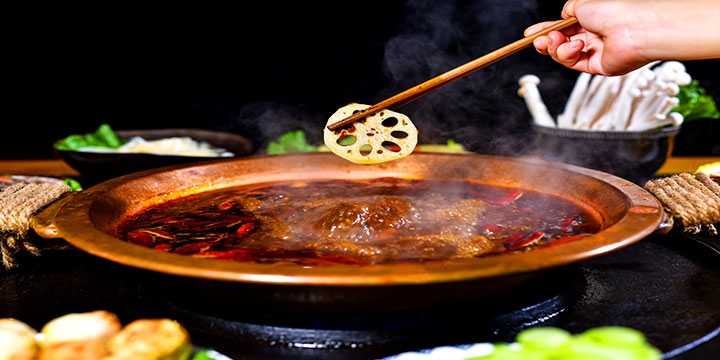
Chengdu hotpot with broth and shared ingredients
Chinese dishes may contain soy, wheat, sesame, peanut, tree nuts, egg, milk, fish or shellfish, and sauces, stocks and cooking oils can hide ingredients. Do not rely on color, dish name or a photograph. Carry a professionally translated allergy card that states the allergen, severity, cross-contact concern and emergency instruction in Simplified Chinese; keep a digital copy and show the card before ordering. A guide can support communication but cannot guarantee an allergen-free kitchen.
Bring an adequate supply of prescribed medication in original labeled packaging and keep it accessible during transfers and meals. For severe allergy, identify emergency care near each overnight base and ask the clinician whether a medical alert item is appropriate. If restaurant staff cannot confidently explain ingredients or shared equipment, choose a simpler dish or leave. Never test a suspected allergen while traveling.
Begin with plain rice, congee, steamed egg, noodles, dumplings, cooked vegetables or a mildly seasoned protein, then add one unfamiliar dish. Ask for “not spicy” explicitly, but remember that chili oil, peppercorn, sauces and garnishes may be added after cooking. Order small portions first and let appetite, not a sightseeing checklist, set the pace.
Noodles, dumplings, spring rolls and dim sum vary by region and recipe. Hotpot can use a non-spicy broth, but shared pots, utensils and sauces create burn and cross-contact risks. Adults should cook food completely, separate raw and cooked utensils, cool each bite and keep the child away from the burner. Soup-filled dumplings such as xiaolongbao also need time to cool before biting.
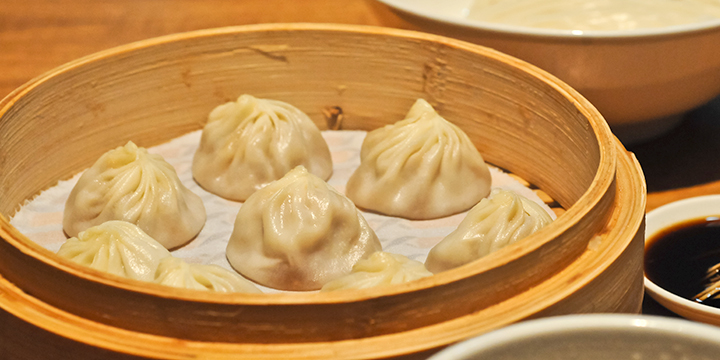
Shanghai xiaolongbao in a bamboo steamer
Choose food cooked thoroughly in front of you and served steaming hot. Avoid raw or undercooked meat, seafood or eggs; cut fruit that has been standing uncovered; and cold dishes when storage temperature is uncertain. Clean hands before eating and use a fresh utensil. Families with strict allergy or medical-diet needs may reasonably skip street food because ingredient and cross-contact answers are harder to verify.
A queue can indicate popularity, but it does not prove hygiene. Look for clean preparation surfaces, protected ingredients, high turnover and separate handling of money and food. Keep children clear of oil, grills and skewers, buy a tasting portion instead of a full meal, and stop if food smells wrong or has been sitting lukewarm.
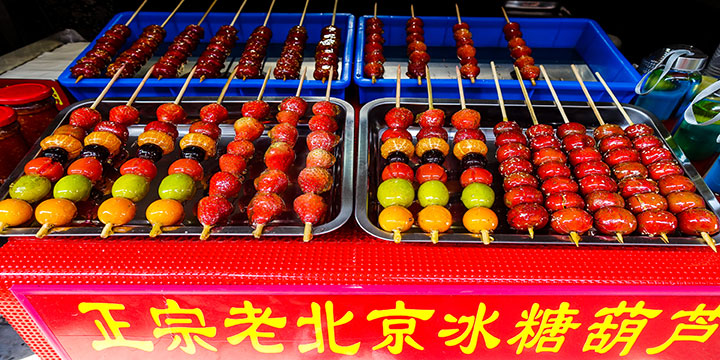
Tanghulu fruit skewers with a hard sugar coating
Restaurants provide seating, handwashing access and more time to discuss ingredients, but comfort does not remove food-safety or allergy risk. Choose a place where staff can answer questions, the menu suits the child and the table can be positioned away from a service aisle, door or hotpot burner.
 How do we choose a suitable restaurant?
Check recent reviews for service, cleanliness and family logistics, then confirm the current menu directly. A busy dining room is not proof that a particular dish is safe. Look at food handling, table condition and restroom access; for serious allergy, contact the restaurant before arrival and eat at a quieter time when staff can communicate.
 How do we order clearly?
Use a translated request, dish photographs and one question at a time: ingredients, cooking oil, stock, garnish and shared equipment. Repeat the critical restriction when the dish arrives. The Chinese table manners guide explains shared dishes and serving habits, but medical safety takes priority over etiquette. If the answer is uncertain, order a different dish rather than relying on “probably.”
 What should we do before eating?
Do not assume untreated tap water is safe to drink. Use sealed bottled water, properly boiled water or water that the accommodation confirms has been treated; check the cap before opening. Use the same standard for brushing teeth when local advice requires it, and refill bottles only from a source you trust. Rules and water systems vary, so follow current public-health and accommodation guidance rather than a blanket claim about every building in China.
Restaurants often serve hot tea or boiled water. Ask for sealed room-temperature water for children and place hot cups away from the table edge. Ice is acceptable only when the business can confirm it was made from treated water; when uncertain, choose a drink without ice.
Milk tea, juice and bubble drinks can be high in sugar or caffeine, and tapioca pearls can be a choking concern for young children. Treat them as an occasional food, choose an age-appropriate topping and size, and confirm milk, nut or other allergens. Water remains the main drink during sightseeing.
A fallback does not have to mean an international fast-food chain. Plain rice, congee, steamed egg, mild noodles, bread, yogurt where safely stored, fruit that an adult peels, or a known packaged snack can bridge a difficult meal. Carry enough safe snacks for rail or flight delays, read current labels and avoid promising that a familiar brand uses the same ingredients as at home.
Plan one important regional meal per day, leave the other meals simple, and place food streets or hotpot after a lighter sightseeing block. Save the restaurant name and address in Chinese, eat before children become overtired, and keep a safe snack for delays. Tell the planner every allergy, dietary rule and sensory need before reservations are made.
Explore China family tours for route ideas, or request a tailor-made family itinerary . Before departure, read the China with kids planning guide. Recheck medical advice, restaurant details and current food-safety guidance close to travel; no itinerary can remove all allergy or illness risk.
From $ 509
From on request

From on request
Editorial accountability
Hu Lei, CEO. The named owner is responsible for travel-planning accuracy and escalation of time-sensitive checks.
Yuntian Travel (Yunnan) Group is identified in its corporate profile as a licensed professional inbound travel service provider based in Kunming, China. Registration and travel-service documents can be requested before booking.
Page-specific references where cited, official destination, transport and entry notices, YUNSKY route-planning records, and direct provider confirmation before a booking is finalized.
Content is reviewed when rules, transport, access, pricing or route conditions change. Final availability and operating details are reconfirmed for each traveler’s dates.
Quality review: Page updated: