Your China & Yunnan Travel Experts


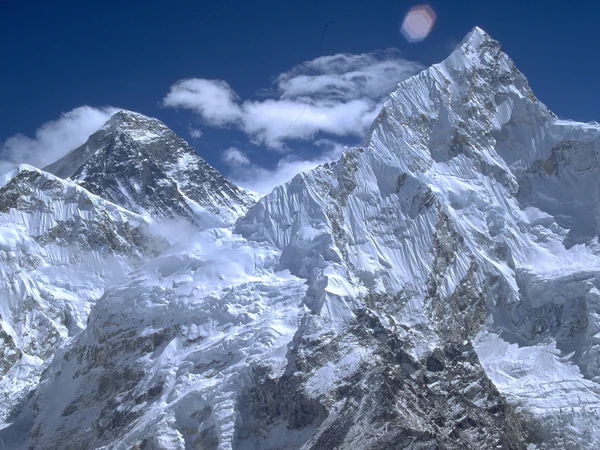
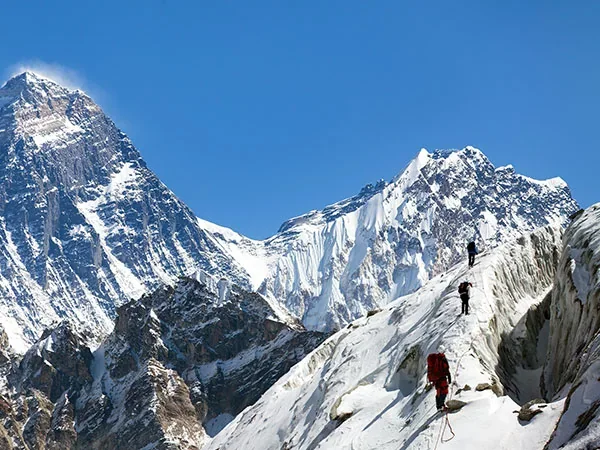
A Mount Everest banner cloud is a plume that appears attached to the summit or its lee side while nearby sky may remain clear. It can stretch horizontally like a flag, change shape within minutes, or disappear as moisture and airflow change. The feature is especially striking from the Tibetan north side, but seeing one is never guaranteed. For the wider setting, begin with the Mount Everest guide.
“Banner” describes the cloud's appearance, not a piece of material on the mountain. A still photograph can make the plume look fixed; in reality, air continuously enters, rises, cools and leaves while condensation or ice particles continually form and evaporate.
Not every white trail is identical. Peer-reviewed work on winter Everest plumes found that some were cloud droplets, ice crystals or a mixture, while blowing snow can produce a similar-looking stream in other conditions. The safest description is therefore a summit plume unless its composition has actually been observed.
Everest forces strong airflow around its steep summit pyramid. On the sheltered side, a rotating lee flow can lift relatively moist air from lower levels. As that air rises, pressure falls and the parcel cools; if it reaches saturation, droplets or ice crystals form a cloud. Research identifies this lee-vortex uplift as the main banner-cloud mechanism, with terrain, humidity, temperature and wind jointly controlling the result. The underlying seasonal pattern is explained in the Everest climate guide.
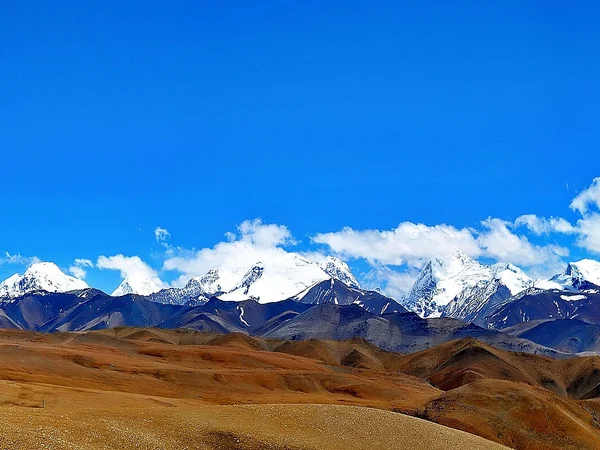
The plume confirms active airflow near the summit, and its downwind direction can show the broad direction in which upper-level air is moving at that moment. Its length and angle also change with wind and moisture. Those visual clues are useful context, but they do not provide a calibrated wind speed.
Do not use the plume as a stand-alone weather forecast. A short or high plume does not guarantee mild conditions, and a missing plume does not prove calm air: the atmosphere may simply be too dry for visible condensation. Summit conditions also differ sharply from those at Pang La, Rongbuk or the public visitor area.
For photography, use a moderate telephoto view to keep the summit and plume together, then make a wider frame that shows the Himalayan setting. Expose for snow highlights, stabilize the camera against wind, and take several frames because the outline changes quickly. More practical advice appears in the Everest photography guide.
Tibetan cultural descriptions sometimes associate auspicious meaning with cloud forms around sacred mountains. Present that respectfully as cultural interpretation, not meteorological evidence. Visitors can appreciate both meanings while distinguishing a local belief from a scientific explanation.
From $ 1637
From $ 3179