Your China & Yunnan Travel Experts


An ancestral hometown trip is not a generic sightseeing list. Begin with Chinese names, ancestral village or county, dialect group, migration generation and documentary evidence; then verify the place before contacting residents. Guangdong and Fujian contain many overseas-community hometowns, but no city should be assigned to a family from surname alone. Reviewed August 29, 2026.
Why it matters: the Jiangmen area has deep overseas Chinese links, while UNESCO-listed Kaiping Diaolou shows how returning migrants combined local defensive building traditions with architectural ideas brought from abroad.

How to plan: identify the exact county or village first, allow a full day for Kaiping clusters, and ask permission before photographing homes or ancestral records. Use the Guangdong planning guide for regional transfers.
Why it matters: Meizhou is an important Hakka cultural center, but Hakka identity spans several provinces and countries. Match written ancestral place names, generation poems and kinship records rather than assuming the nearest famous Hakka site is the family village.

How to plan: village roads can require a local vehicle and a Mandarin or Hakka-speaking facilitator. Contact archives or relatives before arrival, protect living people's personal data, and bring printed names in Chinese characters.
Regional logic
Chaoshan shares language and food traditions but contains different counties, villages and transport links. A family record naming Teochew may use a historic place name that does not match today's administrative map.
Chaozhou
Build the visit around old-city lanes, ancestral halls and craft traditions, then verify whether the actual village lies outside the urban core. Shantou

Use Shantou as a transport and archive base when records point to the coastal plain; do not replace the family village with a city photo stop.
Jieyang
Jieyang may fit families whose documents name eastern Guangdong counties now administered separately. Confirm characters and historic boundaries with a local researcher.

Food and etiquette
Regional dishes can help family conversation, but dietary needs should be written clearly. Bring copies, not irreplaceable originals, and ask before opening or photographing a genealogy.
Evidence ladder
Prioritize family documents, clan books, cemetery inscriptions and local archives; treat online surname trees as leads that still require corroboration.

Allow an unstructured half-day after any family meeting so a new village lead does not force the group to abandon confirmed transport or impose on local hosts.
UNESCO describes Song–Yuan Quanzhou as a global maritime emporium whose ports, religious sites, production areas and transport network linked East and Southeast Asia. That history explains regional mobility but does not prove an individual lineage.
Plan two layers: visit the heritage system for context, then use the exact county, village and Chinese name for family research. The Fujian guide helps connect Quanzhou, Xiamen and inland counties without excessive backtracking. Respect active temples, mosques, homes and clan halls as living places. Use a local archive appointment or family contact instead of arriving with a demand for private records.
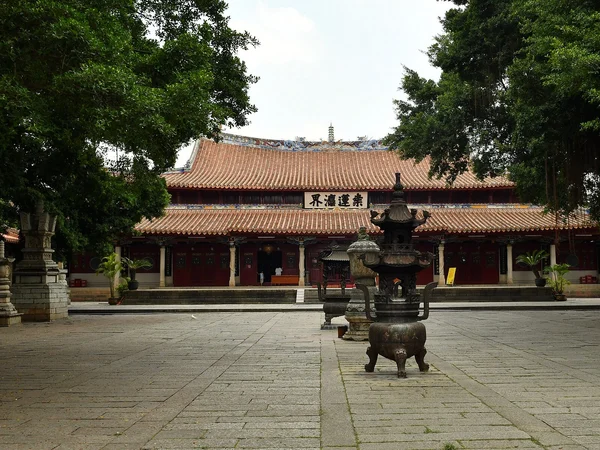
Allow time for dialect interpretation: Minnan, Mandarin and overseas romanizations can represent the same name differently.
Fuzhou is a practical base for families whose records point to central or eastern Fujian, but “Fuzhou” in an old document may refer to a wider prefectural area. Compare historic and current place names before choosing transport.

Build the trip as research, meeting and heritage days rather than one rushed reunion. Place family evidence inside the broader Chinese history framework, obtain consent for interviews and photos, and record uncertainty instead of inventing a definitive connection.
From $ 3061

From $ 1568

From $ 1136
Editorial accountability
Hu Lei, CEO. The named owner is responsible for travel-planning accuracy and escalation of time-sensitive checks.
Yuntian Travel (Yunnan) Group is identified in its corporate profile as a licensed professional inbound travel service provider based in Kunming, China. Registration and travel-service documents can be requested before booking.
Page-specific references where cited, official destination, transport and entry notices, YUNSKY route-planning records, and direct provider confirmation before a booking is finalized.
Content is reviewed when rules, transport, access, pricing or route conditions change. Final availability and operating details are reconfirmed for each traveler’s dates.
Quality review: Page updated: