Your China & Yunnan Travel Experts


Reviewed August 27, 2026. A first trip to China becomes manageable when decisions are made in the right order: confirm entry eligibility, choose a compact route, allow realistic transfer time, then book transport and accommodation. This guide is for independent travelers and travelers considering a guided trip; it does not assume that everyone from Southeast Asia has the same passport, budget or interests. Start with this practical first-time China planning checklist, then verify changing visa, transit, ticketing and attraction rules through the responsible official authority before paying for a non-refundable booking.
For seven to ten days, use two bases; for about two weeks, three or four bases are usually enough. Beijing and Xi'an work well for imperial and archaeological history. Shanghai adds a contemporary city contrast, while Guilin or Zhangjiajie adds landscape. Chongqing suits travelers interested in layered urban transport, night views and hot pot, and Guangdong or Fujian may matter more to families tracing ancestral links. Plot every stop on a map and count hotel-to-station transfers. A route with one meaningful afternoon in a neighborhood often creates stronger memories than five cities seen through bus windows.

There is no single best month for all of China. Beijing and Xi'an have cold winters and hot summers; southern China can be humid and rainy; highland weather in western Sichuan or Yunnan changes quickly. Spring and autumn often offer comfortable city walking, but they are also popular. Check historical climate patterns first, then use a short-range forecast for clothing and disruption decisions.
Look at China's public-holiday calendar before fixing the route. Lunar New Year and the National Day holiday can bring heavy demand, changed opening arrangements and crowded transport. If those dates are unavoidable, reduce the number of transfers, reserve earlier and keep one flexible block. The autumn Great Wall photograph beside this section represents one seasonal option, not a promise of identical foliage or weather on a particular date.

Build the itinerary around the period actually permitted for your nationality and entry route—not an old “15-day” rule copied from another passport. China's visa-free entry and transit arrangements change and have different conditions. Check the National Immigration Administration, the Chinese embassy or visa service responsible for your place of application, and the wording on the issued visa immediately before departure.
A useful pace is three or four nights in a major first base, two or three nights in the next city and at least one uncommitted half-day. A month permits more regions, but it should still be divided into coherent clusters. Add a buffer before the international flight; a weather delay or missed rail connection on the final day can cost more than an extra hotel night.
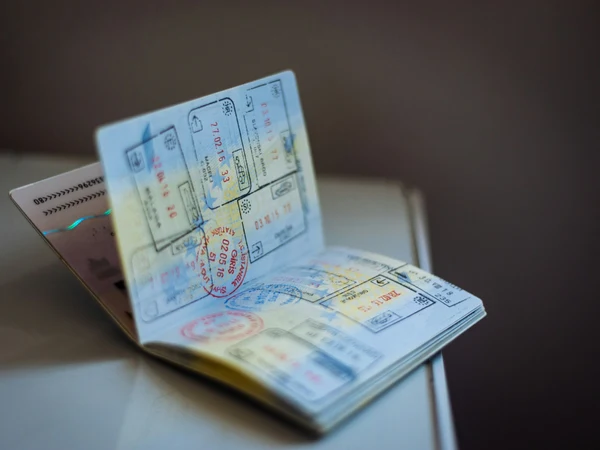
Carry the same valid passport used for reservations and check its validity, blank pages and physical condition against current official requirements. Eligibility for visa-free entry, a tourist visa or 240-hour transit depends on nationality, purpose, route and other conditions; transit normally requires onward travel to a third country or region. Do not infer eligibility from a friend's trip or an airline advertisement.
Keep offline copies of the flight itinerary, first accommodation, insurance details and emergency contacts. Save a scan of the passport separately from the original, while protecting personal data. The passport image here is a real travel photograph used to illustrate document preparation; it is not a sample of the visa or entry permission a traveler will receive. Border officers make the final admission decision.
Independent travel gives control over timing, meals and spontaneous stops, but the traveler owns every reservation, language issue and disruption. It works best with a compact route, working mobile data, offline addresses in Chinese and enough time to solve problems. Booking long-distance rail through the official China high-speed train guide can reduce unnecessary flights, although station size and security time must be included.
A private guide or small group can add value at complex heritage sites, on mountain routes or when a family-history visit requires local coordination. Compare exactly what is included: group size, guide language, shopping stops, meals, hotel category, cancellation terms and emergency support. A hybrid plan—independent city days with selected guided excursions—often balances freedom with interpretation.
Chinese food changes substantially by region. Build meals around local specialties, then add familiar staples such as rice, noodles, vegetables or steamed dishes. In Chongqing or Sichuan, ask how spicy the broth or sauce is before ordering; “less spicy” is not an allergy control. Travelers with allergies, halal requirements or a medical diet should carry a precise translated card and discuss stock, sauces and shared equipment. Choose busy, clean venues and eat meat, seafood and eggs thoroughly cooked.

Compare the total journey, not just the fare. A cheaper flight to a distant airport can lose half a day; a train may arrive closer to the center but use a station far from the hotel. Check passenger names and document numbers before payment, allow security time and avoid separate tickets with an unrealistically short connection. Save the airport or station name in Chinese because large cities may have several.
Choose a legitimate hotel that can register an international guest with the passport used for booking. Confirm room type, address, late-arrival policy, breakfast, accessibility and cancellation conditions directly when anything is unclear. Reserve refundable options while the route is still moving, then recheck each booking a week before travel. Do not send an unmasked passport copy through an unverified chat account.
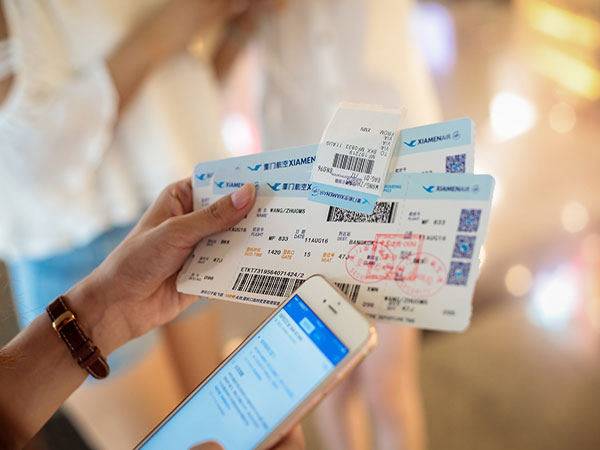
Start with a one-page list: passport and entry documents, payment backups, essential medicine in original packaging, chargers, mobile-data plan, weather layers and comfortable tested shoes. Check airline battery and baggage rules with the operating carrier. A smaller case is easier on station stairs, crowded trains and hotel changes.
Use the ten-day forecast to adjust layers, rain protection and sun protection, but prepare for local variation. Mountain routes need warmer and more weather-resistant clothing than a city at the same time of year. Keep medicine, valuables and one change of clothing in hand luggage rather than checked baggage.
Before leaving home, complete a final three-part check: documents, communications and route. Confirm the passport and permission to enter; test maps, payment and translation tools; then download reservations and Chinese addresses for offline access. The Southeast Asia to China travel tips page covers the next practical layer. Leave enough empty space in the schedule to rest, observe and change a plan—time to engage with a place is what turns logistics into travel.

From $ 3061

From $ 1568

From $ 1136
Editorial accountability
Hu Lei, CEO. The named owner is responsible for travel-planning accuracy and escalation of time-sensitive checks.
Yuntian Travel (Yunnan) Group is identified in its corporate profile as a licensed professional inbound travel service provider based in Kunming, China. Registration and travel-service documents can be requested before booking.
Page-specific references where cited, official destination, transport and entry notices, YUNSKY route-planning records, and direct provider confirmation before a booking is finalized.
Content is reviewed when rules, transport, access, pricing or route conditions change. Final availability and operating details are reconfirmed for each traveler’s dates.
Quality review: Page updated: