Your China & Yunnan Travel Experts


Reviewed August 27, 2026. Choosing transportation in China is a door-to-door calculation, not a contest between the fastest train and the shortest flight. Distance, terminal location, security, baggage, ticket flexibility, accessibility, weather and the next hotel all matter. A trip can combine flights for long cross-country sectors, high-speed rail for connected city pairs, metro for predictable urban journeys and taxis for luggage or late arrivals.
Foreign-passport holders can use the official English China Railway 12306 service for supported ticket functions, subject to current identity verification and sales rules. Passenger names and document numbers must match the travel document. Airlines set their own check-in and baggage terms. Recheck the operator, terminal and station shortly before travel because a large city may have several of each.
Use this guide to compare options for a specific route. The linked China transportation overview covers the wider network, while each booking should still be confirmed through its official provider.
Flying is often sensible when cities are far apart, the rail journey is overnight or the itinerary has a hard time limit. Compare the operating carrier, airport, local transfer, check-in deadline, baggage allowance and change terms—not only the advertised fare. A low-cost ticket can become poor value after checked luggage and a long airport taxi. Weather and air-traffic management can affect schedules, so avoid placing a separate-ticket international departure immediately after a domestic flight. The retained aircraft photograph illustrates the mode without claiming a particular airline, route or current fleet statistic.

China's high-speed network links many major cities, and G-, D- and C-prefixed services commonly appear in journey searches. Train category, speed and stopping pattern vary, so choose by the actual timetable. Conventional Z-, T- and K-prefixed services can serve places outside the fastest network and may offer overnight options. Use the official China high-speed train guide to understand stations, passport booking and boarding before purchasing.
The boarding document is the valid passport used for the reservation; an itinerary receipt is not a substitute. Allow time for station entry and security, especially at a large terminal or holiday period. Check the exact station name in Chinese because “South,” “West” and “East” stations may be far apart. Keep luggage within current railway rules and where you can manage it safely. The train photograph remains because it accurately shows a modern high-speed service in an urban setting.
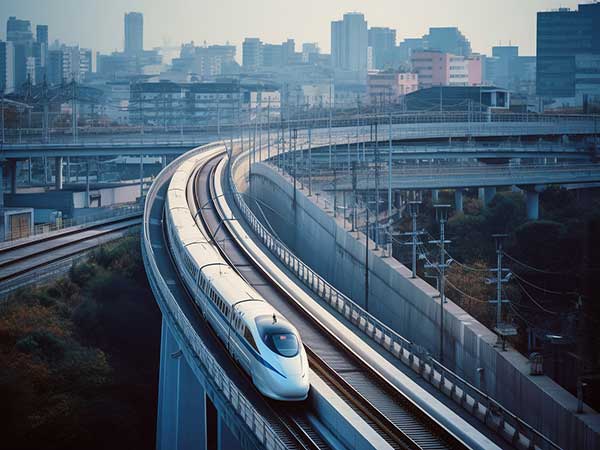
Compare one complete journey on the same date. These table points are decision prompts, not universal promises; station locations, weather, schedules and operator rules differ by route.
| High-speed Train | Flights | |
|---|---|---|
| Terminal location | Some stations are central; newer high-speed stations can be on the urban edge. Check the hotel-to-station route. | Airports are often outside the center, but distance and express-rail access vary greatly by city. |
| What you see | A window seat may show farms, rivers, mountains and expanding cities, depending on route, light and weather. | Views are usually clouds or distant terrain; takeoff and landing can offer a brief city perspective. |
| Pre-departure time | Follow 12306 and station guidance; security, passport checks, station size and holiday crowds affect the buffer. | Follow the operating airline and airport deadline; baggage drop, security and terminal transfers add time. |
| Movement on board | Passengers may move when permitted, but should remain seated during departure, arrival or staff instructions. | Seat belts and crew instructions apply; turbulence can restrict movement without warning. |
| Luggage after arrival | Carry-on luggage normally stays with the passenger, so pack only what can be stored and handled safely. | Checked bags have carrier limits and require collection; cabin baggage rules also apply. |
| Disruption risk | Rail is generally reliable but can still be delayed or suspended by weather, equipment or network conditions. | Flights can be affected by weather, air traffic, aircraft rotation and airport operations. |
As a working rule, rail is attractive for connected city pairs when its total journey is competitive and the stations suit the hotels. Flying gains value on much longer sectors or routes with inconvenient connections. Price both options with baggage and transfers included, then protect the more important appointment with a buffer. If choosing a train, note that a seat can sell out even when another service on the same route remains available; if flying, verify whether the ticket is operated by a different carrier than the marketing name.
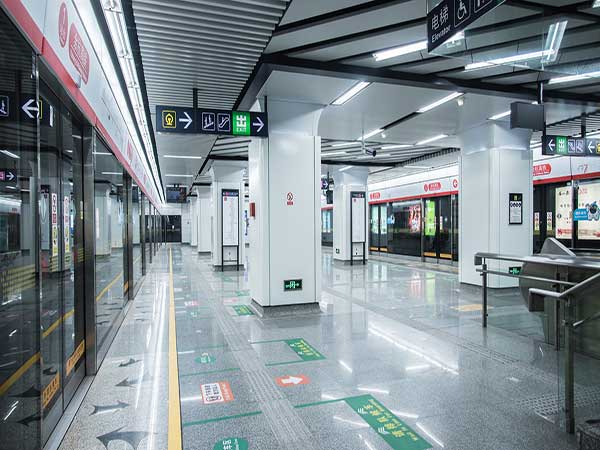
Beijing, Shanghai, Xi'an, Guangzhou, Chongqing, Chengdu, Kunming and many other cities have extensive urban rail, but route maps, fares, payment and operating hours are local. Single tickets, transport cards and eligible mobile QR codes may be available. Read the station name, line and exit number before entering; a transfer inside a giant interchange can take longer than the map suggests.
Metro is useful when road traffic is slow, yet it is not automatically easiest with large luggage, a stroller or reduced mobility. Check lift locations and accessible routes, avoid commuter peaks where possible and keep bags close during security and boarding. English station names are common on major systems, but the Chinese destination and hotel telephone number remain valuable backups.
A Yangtze cruise is an experience and accommodation block, not ordinary rapid transport between Chongqing and Shanghai. Most visitor itineraries focus on a defined Three Gorges sector, with route, vessel, embarkation point and excursions varying by operator and river conditions. Compare cabin, accessibility, included meals, shore visits, tipping and cancellation terms. Our Yangtze cruise guide helps place this slower journey in a wider China route. The retained river image correctly depicts a mountainous Three Gorges landscape.

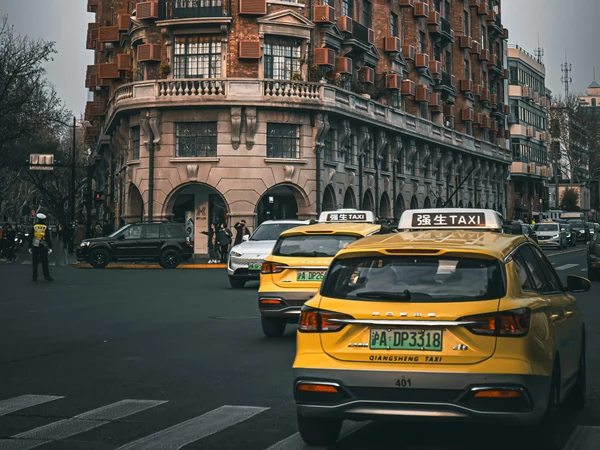
A metered taxi or established ride-hailing service can be practical with luggage, after the metro closes or where stations are distant. Use the official rank at airports and railway stations, confirm the vehicle and destination, and keep the address in Chinese. Payment options vary, so carry a backup. Traffic can erase any apparent time saving during commuter peaks. The new real photograph shows an operating Shanghai taxi and replaces a historically reused image; it does not suggest that every Chinese city uses the same color or fare.
Put every leg in one sheet: origin hotel, departure terminal, required document, scheduled time, baggage condition, arrival transfer and a fallback contact. Keep reservation screenshots offline and do not build a short self-connection between tickets that different providers are not obliged to protect. Travelers needing step-free access should contact the operator in advance rather than assuming every entrance or carriage arrangement is identical. For an early departure, check whether the metro is operating before the station arrival time and whether the hotel can arrange a licensed car. Families should note child-document and ticket rules with the operator rather than copying another passenger's booking.
The best combination is usually selective: fly the genuinely long sector, use high-speed rail where it saves door-to-door effort, take metro on a clear urban corridor and reserve a legitimate taxi for awkward luggage or late hours. Recheck live schedules and rules before each travel day. Store the Chinese name of every station and terminal, because showing “the railway station” is not precise enough in Beijing, Shanghai, Guangzhou or another multi-terminal city. This approach protects both sightseeing time and the calm needed to enjoy it.

From $ 3061

From $ 1568

From $ 1136
Editorial accountability
Hu Lei, CEO. The named owner is responsible for travel-planning accuracy and escalation of time-sensitive checks.
Yuntian Travel (Yunnan) Group is identified in its corporate profile as a licensed professional inbound travel service provider based in Kunming, China. Registration and travel-service documents can be requested before booking.
Page-specific references where cited, official destination, transport and entry notices, YUNSKY route-planning records, and direct provider confirmation before a booking is finalized.
Content is reviewed when rules, transport, access, pricing or route conditions change. Final availability and operating details are reconfirmed for each traveler’s dates.
Quality review: Page updated: