Your China & Yunnan Travel Experts


Reviewed August 28, 2026. A family trip to China is easier when documents, health, transport, food and a lost-child plan are prepared before the itinerary is filled. This guide expands the original tips with decisions parents can verify: legal entry and exit documents, physician-approved medicine, potable water, allergy communication, child ticket rules, photo consent, toilet supplies, stroller limits and safe restraints. Begin with the family trip planning guide, then adapt every step to the child's age and medical needs.

Families visiting the Forbidden City in Beijing
No destination or nighttime activity is risk-free. Save the hotel name and address in Chinese, give each child an emergency contact card, agree on a visible meeting point and photograph what the child is wearing each morning. In stations, markets and major attractions, keep younger children within reach and split adult roles before security or ticket gates. Use marked crossings, seat belts where available and licensed transport; stop an evening plan when the route, lighting, crowd or child's energy feels wrong. Carry passports or copies exactly as required by the attraction and keep originals secure.
Western chains exist in many large cities but are not a reliable meal plan in every district, station or scenic area. Bring an allergy card in Chinese naming the allergen, cross-contact risk and emergency response; confirm ingredients again at each meal because sauces, broths and shared oil may contain sesame, peanuts, shellfish, egg, dairy or wheat. Pack one familiar snack for transfer days, supervise hotpot and skewers, and choose busy, hygienic venues serving freshly cooked food.
Do not drink untreated tap water. Use sealed bottled water or water that has been safely boiled or treated, including for mixing infant formula when medically appropriate. Check seals, keep children hydrated in heat or at altitude and avoid unpasteurized products. The CDC travel guidance recommends careful food and water choices; individual advice from the child's clinician takes priority.
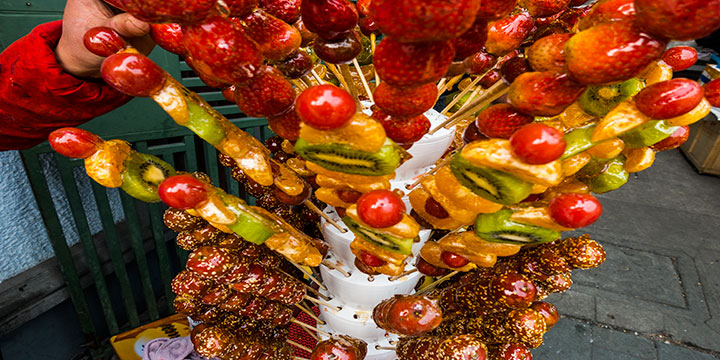
Sugar-coated fruit sold as a street snack in China
Schedule a pre-travel health visit early enough for routine vaccines, destination advice and prescriptions. Carry medicine in original labeled packaging, with copies of prescriptions and a clinician letter for controlled, injectable or unusual items. Confirm that every medicine is legal in China and in transit countries through official authorities; do not recommend adult cold, fever or allergy medicine to a child without professional dosing advice. Keep essential medicine in hand luggage, follow temperature requirements and know the nearest appropriate clinic and insurer contact. Pharmacies are not a substitute for diagnosis or emergency care.
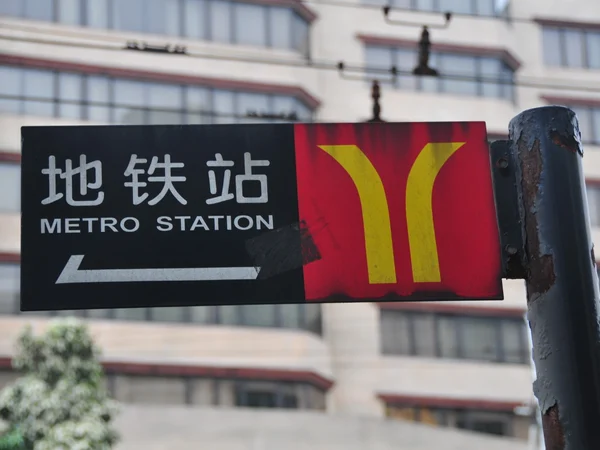
English signage is common at major airports, high-speed rail and many urban metro systems, but not universal in taxis, smaller stations, restaurants or rural attractions. Save Chinese names for the hotel, station, attraction, allergy and medical needs; download offline maps and translation; screenshot reservations; and carry a power bank. Pointing to a verified address is safer than relying on pronunciation or an unverified auto-translation.
A local guide can add context and solve disruptions, but families should still keep independent documents and emergency contacts. The China family travel tips cover pacing and logistics; before hiring, confirm guide identity, language, child experience, daily hours, inclusions and the process if the guide becomes unavailable.
Public facilities may offer squat toilets, seated toilets or both; paper, soap and dryers vary by location and time. Carry tissues, wipes, hand sanitizer and a small bag, while disposing of products according to posted rules. Show children how to lock the door, keep clothing clear and use a squat toilet without touching surfaces. Plan toilet stops before long transfers, and ask staff about accessible or family rooms rather than assuming they exist.
There is no single 1.2-meter rule for all attractions or transport. Eligibility may depend on age, height, seat use, nationality or the original identity document, and rail rules differ from museum or scenic-area rules. Check the dated official policy for every high-demand attraction and China Railway 12306, enter names and passport details exactly, and carry the document used to reserve. Never change a birth date or choose a discount without evidence; if the policy is unclear, ask the operator in writing before payment.
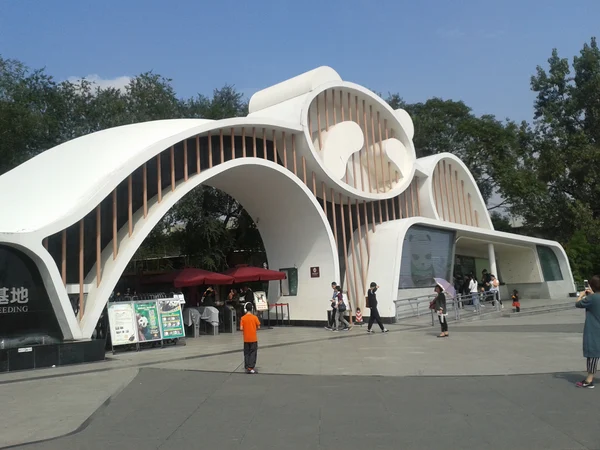
Visitors at the entrance of Chengdu Research Base of Giant Panda Breeding
Some people may politely request a photo, but novelty and friendliness do not override a child's boundary. Ask the child first, accept “no” immediately, keep the adult beside the child and do not allow strangers to lead the child away or post identifying details. Practice a simple refusal—“No photo, thank you”—and leave if attention becomes persistent. Parents should also ask permission before photographing local children, residents, worshippers or performers.
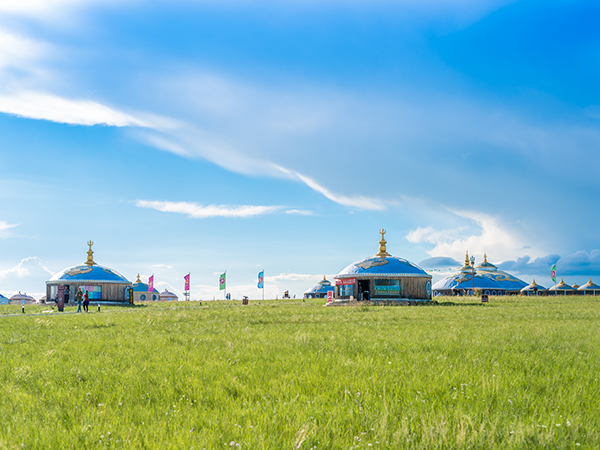
Hohhot and grassland stops require realistic road time, weather protection, animal-welfare checks and a named local host or licensed operator.
View route details only after checking the current season and child suitability >
A compact stroller helps in airports, museums and broad promenades but may be difficult on hutong stones, garden thresholds, mountain stairs and crowded old streets. Bring a carrier only if the adult and child already use it safely, protect the child from heat and check venue storage. Measure the folded stroller against rail, flight and vehicle limits; never leave medicine or passports in it.
Holding a baby in a moving car is not a safe substitute for a restraint. Request the correct rear-facing or forward-facing child seat for the child's height and weight, ask for a photo or specification before arrival, and verify installation and seat-belt compatibility each time. If a suitable restraint cannot be supplied, change the vehicle or route. Air, rail and coach restraint policies differ; check the carrier and operator rather than assuming a private tour solves the issue.
Professional help can reduce language and reservation friction, but parents remain responsible for documents, medical decisions and consent. Compare China family tours by daily transfer hours, hotel changes, reserved child seats, guide credentials, meal flexibility and emergency support—not by the number of attractions in the title.
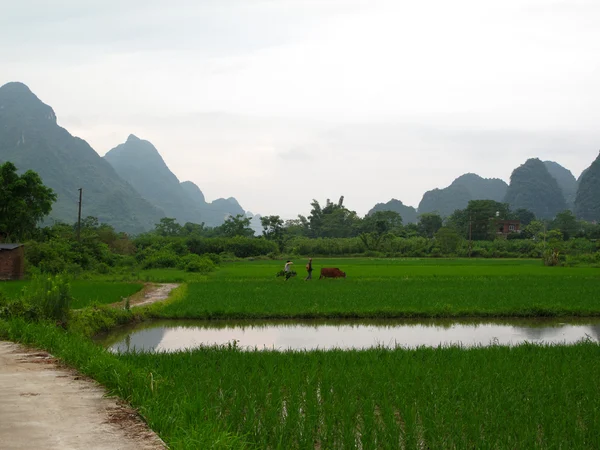
Yulong River countryside near Yangshuo, suitable for a carefully planned family cycling day
Before booking, write down each child's age, height, passport nationality, allergies, medicine, mobility, sleep pattern, heat and altitude tolerance. Then require the itinerary to show:
Read current China family tour options and use a tailor-made trip request only after defining those constraints. Recheck passport validity, visa or visa-exemption eligibility, consent documents for a child traveling with one parent or another guardian, medicine legality, insurer contacts and emergency numbers through official authorities. Entry, ticket and health rules can change after this review date.
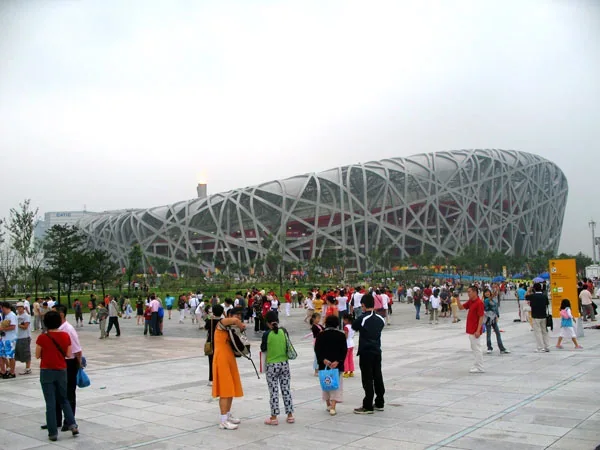
From $ 509
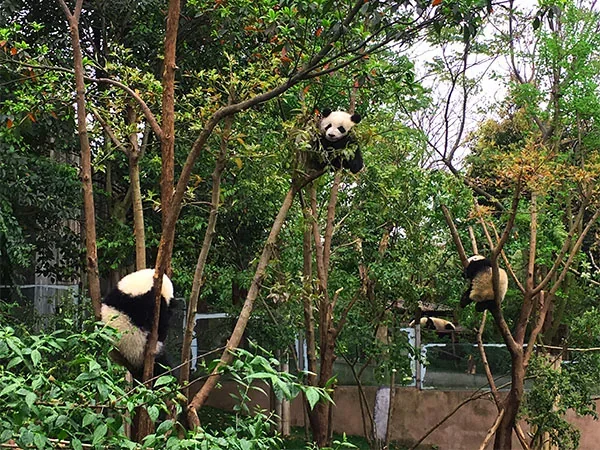
From on request
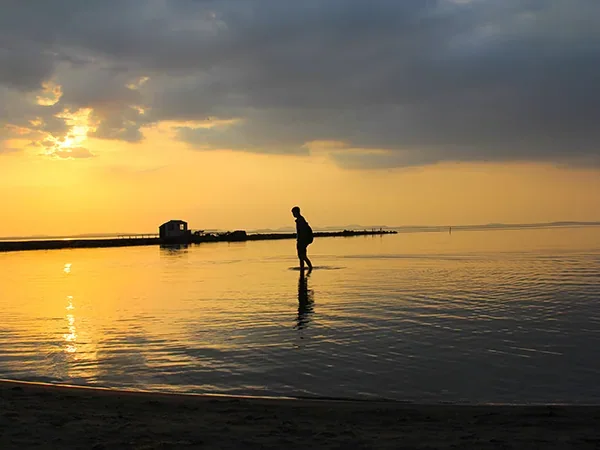
From on request
Editorial accountability
Hu Lei, CEO. The named owner is responsible for travel-planning accuracy and escalation of time-sensitive checks.
Yuntian Travel (Yunnan) Group is identified in its corporate profile as a licensed professional inbound travel service provider based in Kunming, China. Registration and travel-service documents can be requested before booking.
Page-specific references where cited, official destination, transport and entry notices, YUNSKY route-planning records, and direct provider confirmation before a booking is finalized.
Content is reviewed when rules, transport, access, pricing or route conditions change. Final availability and operating details are reconfirmed for each traveler’s dates.
Quality review: Page updated: