Your China & Yunnan Travel Experts


The Sui dynasty (581–618) inherited a north China already crossed by frontier lines built under earlier regimes. Rather than creating one entirely new wall, Sui governments repeatedly repaired, extended and reinforced selected corridors as relations with the Turkic khaganates changed. The term Sui Dynasty Great Wall therefore refers to several campaigns in different places, not a single masonry monument comparable with the best-known Ming sections near Beijing. This distinction matters when reading chronicles or identifying surviving earthworks: later rebuilding and erosion often make one dynasty difficult to isolate from another. Sui Dynasty Unified China Again
Walls of the Sui Dynasty
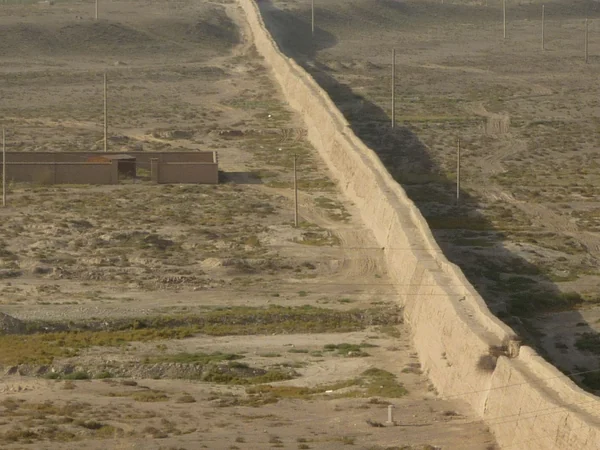
In 581, the new government ordered urgent frontier work while power was still being consolidated. Short deadlines in dynastic chronicles signal military urgency, but should not be converted into a claim that an entire permanent frontier was completed in a few days.
Further work reused eastern lines associated with Northern Wei and Northern Qi. Repairing an existing bank or ditch required fewer resources than locating, supplying and constructing a completely new barrier, which helps explain why Sui sources often describe repeated campaigns.
During Emperor Wen's reign, projects strengthened approaches around the Ordos loop and northern Shaanxi. Their role was to channel movement, support warning systems and protect routes to garrisons—not to seal every kilometre of frontier. The wider origin of the Great Wall article explains why such reused regional lines were normal.
Shanxi and neighboring provinces preserve many layers of frontier history, but a bank visible today cannot be assigned to the Sui from appearance alone. The reign of Emperor Yang brought further large mobilizations as the court faced changing northern alliances and pursued ambitious military and infrastructure programs. Exact labor totals in popular summaries vary by source and translation, so they should be treated as reported figures rather than precise modern counts. Whatever the number, the campaigns imposed heavy logistical demands for food, tools, transport and supervision.
A western campaign is also recorded toward areas that now lie in Qinghai and Gansu. Historical names do not always align neatly with modern borders, and the documented endpoint is not certain. Travelers should distinguish a chronicle's general direction from a confirmed, visitable route.
Xining is the modern spelling commonly used for the regional reference, but it does not turn every nearby earthwork into a securely identified Sui monument.
The Sui dynasty lasted less than four decades, yet its frontier projects form an important bridge between the divided northern regimes and the Tang period. Their value lies in showing continuity: governments repeatedly adapted older walls to new political conditions. For the broader sequence, compare the evidence-based Great Wall history overview. At a site, rely on current interpretation panels or archaeological publications rather than a visual guess about dynasty or date.
From $ 389

From $ 509

From on request
Editorial accountability
Hu Lei, CEO. The named owner is responsible for travel-planning accuracy and escalation of time-sensitive checks.
Yuntian Travel (Yunnan) Group is identified in its corporate profile as a licensed professional inbound travel service provider based in Kunming, China. Registration and travel-service documents can be requested before booking.
Page-specific references where cited, official destination, transport and entry notices, YUNSKY route-planning records, and direct provider confirmation before a booking is finalized.
Content is reviewed when rules, transport, access, pricing or route conditions change. Final availability and operating details are reconfirmed for each traveler’s dates.
Quality review: Page updated: