Your China & Yunnan Travel Experts

 Ask a Question
Religious travelers used Silk Road networks to seek texts, teachers and sacred places. They depended on guides, rulers, monasteries, ships and merchant routes, so pilgrimage was never separate from politics and infrastructure. Two important Chinese examples are Faxian and Xuanzang. Their records can be read alongside the history of later foreign exploration, practical temple visiting guidance, and the wider Tang Silk Road.
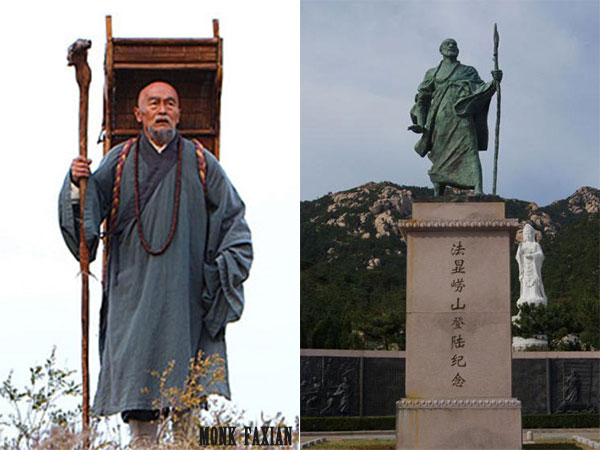
Faxian , also written Fa-hsien , was an Eastern Jin monk who left China around 399 to seek Buddhist disciplinary texts. Different romanizations refer to the same person.
His party traveled from Chang'an through the Gansu corridor and across difficult Central Asian terrain before reaching the Indian subcontinent. His account records danger and loss, but modern retellings should avoid inventing exact feelings or dialogue.
Faxian studied and copied texts in South Asia, then returned by sea, reaching China in the early fifth century. The mixed land-and-sea journey is a reminder that Buddhist transmission did not follow only one overland line.
Translations associated with his return and his travel record supplied information about Buddhist communities and geography. Exact counts of texts or volumes vary across summaries, so the historical importance is better explained through the works themselves.
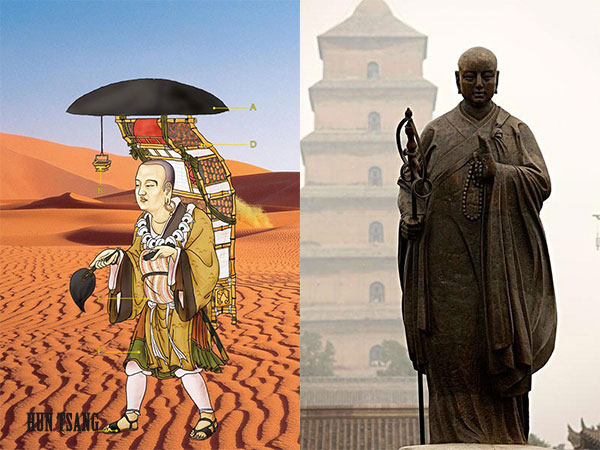
Xuanzang , formerly romanized in several ways including Hsüan-tsang , was a Tang monk who traveled to study Buddhist doctrine and obtain texts. His name should not be rendered as “Hun Tsang.”
He left Chang'an in the seventh century and traveled through the Gansu and Xinjiang oasis networks before continuing across Central and South Asia. Route details are reconstructed from historical sources and should not be converted into a modern day-by-day itinerary without evidence.
Xuanzang studied for years in South Asia, including at Nalanda, and engaged with several Buddhist philosophical traditions. Honorific titles in later narratives reflect religious memory as well as biography.
After returning to Chang'an in 645, he led major translation work. The Silk Road is documented in the Great Tang Records on the Western Regions, a text compiled from his journey with assistance at the Tang court. For travelers, monuments to Faxian and Xuanzang are starting points, not substitutes for reading. At temples and museums, distinguish an ancient object, a later commemorative statue and a modern devotional practice. Photography, clothing and access rules vary by active religious site, so check the current notice and follow local instructions. A route can connect Xian, Dunhuang and Turpan for historical context, but it cannot reproduce either monk's full pilgrimage within an ordinary holiday.
From $ 3510
From $ 3061

From $ 3683