Your China & Yunnan Travel Experts


The land Silk Roads did not decline everywhere at the same time. Individual corridors rose, shifted or lost importance as empires changed, wars disrupted travel, oasis water systems altered and maritime commerce expanded. Dunhuang's role, for example, changed after the first millennium, while other Eurasian routes continued much later. Read the full Silk Road chronology, compare ancient and recent infrastructure in the ancient versus modern network guide, and review the broader significance of the Silk Roads.
It is therefore misleading to claim that the road received one “death blow” after the Tang or disappeared for a single reason. The factors below interacted differently by century and region. A careful explanation distinguishes the decline of one oasis, the redirection of one land branch and the continuing exchange of goods and ideas.
Imperial control could protect, tax or restrict movement. When frontier authority fragmented, merchants might face new tolls, insecurity or closed passes; when a new power stabilized a region, traffic could return by another branch. Political borders were not a simple switch between open and closed.
Chinese foreign exchange included private commerce, state monopolies, tribute missions, diplomatic gifts and regulated markets. These categories overlapped. It is inaccurate to describe the entire imperial economy as hostile to technique or profit and then use that as a universal explanation for decline.
Later restrictions on particular ports or border trades matter in their own contexts, but policies separated by many centuries should not be combined into one continuous Silk Road decision.
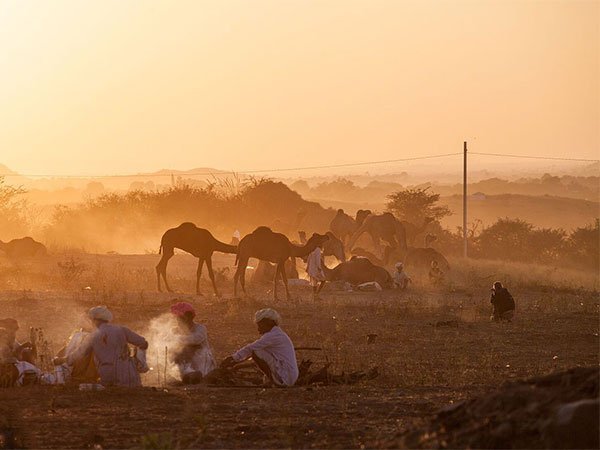
China's demographic and economic center moved increasingly toward the south over long periods, while major commercial cities and production zones developed along the Yangtze and coast. This altered the direction of demand and transport investment.
The change did not empty northwestern China or end overland trade. It made canals, river transport and ports more competitive for some goods and markets, especially when maritime shipping could carry bulk cargo more efficiently.
Overland routes crossed deserts, high passes and water-limited basins. Oases depended on rivers, springs and irrigation, making them vulnerable to channel changes, drought, sediment and local water management.
Environmental stress was not uniform across Eurasia. A claim that one climate shift buried the entire Silk Road ignores regional variation and the ability of travelers to reroute.
Archaeology around Loulan, Niya and other settlements combines environmental evidence with political and economic history. Sand preservation can make ruins appear suddenly abandoned even when decline occurred in stages.
Modern visitors should not use fragile desert ruins as proof of a simple ecological morality tale. Follow authorized paths and read site-specific research.
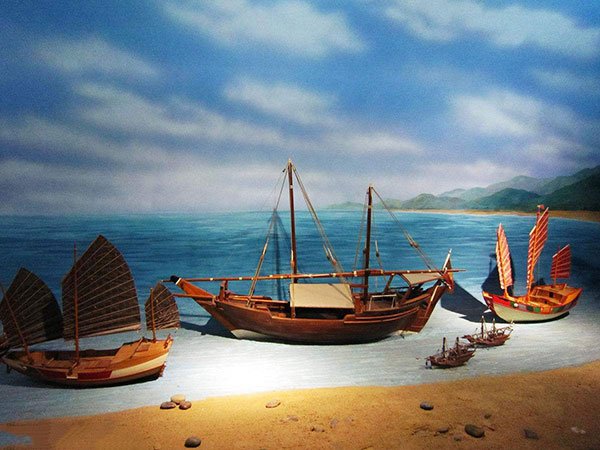
Knowledge of monsoon winds, improved shipbuilding, port institutions and expanding coastal markets made maritime routes increasingly effective for many cargoes. Sea transport could move larger volumes than pack animals, although it introduced different seasonal and navigational risks.
Ports such as Guangzhou and, in later periods, Quanzhou connected Chinese production with Southeast and South Asian networks. Their growth complemented as well as competed with land routes.
Maritime expansion redirected some commerce; it did not eliminate overland diplomacy, pilgrimage or regional trade.
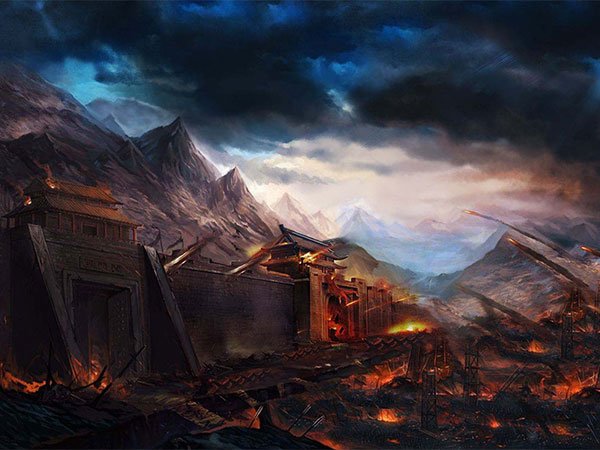
War could close a pass, damage irrigation, depopulate a settlement or make insurance and guards too costly. Its effect depended on duration and whether merchants could choose another corridor.
Tang, Tibetan, Turkic, Islamic, Mongol and later states controlled different parts of Eurasia at different times. A conflict in the Hexi Corridor cannot explain the history of every route from China to the Mediterranean.
Taxes and political fragmentation sometimes reduced traffic, but conquest could also create new large-scale connections. The Mongol period is an important reminder that the network experienced renewed integration after earlier disruptions.
The best conclusion is not that the Silk Road died. Long-distance exchange changed mode, geography and participants. That distinction helps travelers interpret ruins without mistaking a modern quiet landscape for proof that all contact ended.
From $ 3510
From $ 3061

From $ 3683
Editorial accountability
Hu Lei, CEO. The named owner is responsible for travel-planning accuracy and escalation of time-sensitive checks.
Yuntian Travel (Yunnan) Group is identified in its corporate profile as a licensed professional inbound travel service provider based in Kunming, China. Registration and travel-service documents can be requested before booking.
Page-specific references where cited, official destination, transport and entry notices, YUNSKY route-planning records, and direct provider confirmation before a booking is finalized.
Content is reviewed when rules, transport, access, pricing or route conditions change. Final availability and operating details are reconfirmed for each traveler’s dates.
Quality review: Page updated:
