Your China & Yunnan Travel Experts


Reviewed August 28, 2026. Mosques in China are active places of prayer, learning and community life as well as important works of architecture. Their histories follow different maritime and overland routes, so a single “first mosque” claim cannot explain the whole story. This guide compares twelve significant sites by city, architectural character and practical visitor relevance. Begin with the history of Islam in China for a broader timeline, and treat worship access, opening hours and photography as venue-specific matters that require a current check.
Chinese mosques do not share one fixed visual template. Historic compounds in Beijing, Xi'an, Hangzhou and Yangzhou often use courtyards, timber halls, tiled roofs and a strong central axis, while inscriptions, mihrabs and geometric or vegetal decoration identify the religious purpose. The absence of figurative imagery in prayer spaces reflects Islamic practice, but decorative choices differ by period and community.
Along the southeast coast, stone gateways and masonry preserve connections with maritime trade. In Xinjiang and parts of northwest China, earthen walls, timber columns, brickwork, domes, minarets and local ornament create distinct regional forms. Later rebuilding has introduced reinforced concrete and revival styles, so the visible façade may be much newer than the congregation's history.
Read each complex in layers: founding tradition, surviving fabric, later repairs and present use. A date associated with a community is not automatically the date of every building now standing. For a visit, wear modest clothing, keep prayer routes clear, remove shoes where instructed, avoid flash, and ask before photographing worshippers. Non-Muslim access can be limited during prayers or religious festivals.
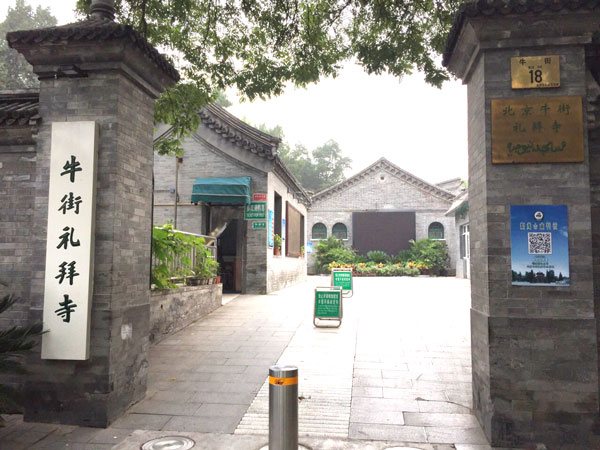
Niujie Mosque ( Beijing ): Niujie Mosque is the key historical mosque of Beijing's long-established Muslim quarter. Its courtyards and Chinese timber architecture reward a slower visit because the religious identity appears in Arabic calligraphy, orientation and interior function rather than in a large street-facing dome. Beijing's official English-language visitor information identifies the site as an important historic mosque.
Allow time for the surrounding Niujie neighborhood, but distinguish a living community from an attraction district. Confirm the visitor entrance and current access on the day, avoid the main congregational period on Friday, and do not enter prayer areas merely because another visitor has done so.
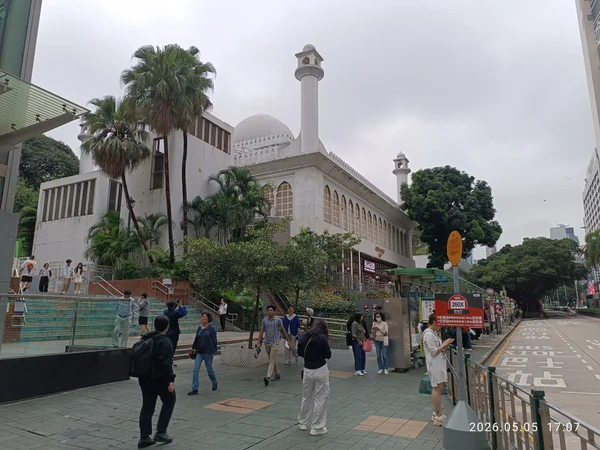
Kowloon Mosque and Islamic Centre stands beside Nathan Road in Tsim Sha Tsui, Hong Kong. The clean replacement photograph shows the real white-marble exterior and minarets without the former embedded title watermark. Its dense urban setting makes it easy to reach, yet it remains an operating religious centre rather than a photo stop.
Check the centre's current visitor guidance before entering, dress conservatively and leave the entrance unobstructed. Hong Kong has several Muslim congregations with different histories; this prominent building should not be used as a substitute for the full story of Islam in the city.

Id Kah Mosque ( Kashgar , Xinjiang ): Id Kah Mosque anchors Kashgar's old-city landscape and is recognized by its yellow-toned entrance, courtyard and timber prayer spaces. Its significance is religious, urban and historical. Describing it only through a superlative such as “China's largest” is less useful than understanding how the mosque relates to Kashgar's Muslim community.
Access conditions in Xinjiang can change, and a public square view does not imply entry to every interior. Verify the current local arrangement through your licensed operator or the venue, carry the identification required for the trip, and never photograph security procedures or worshippers without consent.
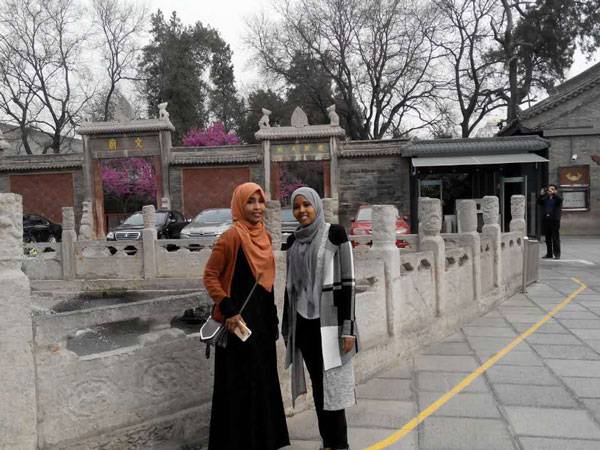
Great Mosque ( Xi'an ): The Great Mosque of Xi'an is one of China's best-preserved historic mosque compounds. Successive courtyards, pavilions, steles and a Chinese-style prayer hall reveal how an Islamic institution adapted to an imperial-city setting. The existing complex contains work from more than one period, so it should not be described as an untouched Tang building.
The mosque lies within the Muslim Quarter but offers a quieter architectural experience than the food streets around it. Follow posted boundaries, reserve enough time to read the courtyards, and pair the site with the Muslim cultures of Xinjiang guide only as a comparison, not as evidence that all Chinese Muslim traditions are the same.
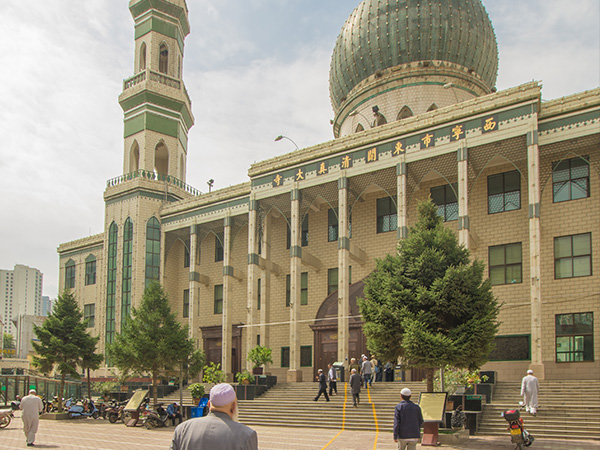
Dongguan Mosque ( Xining ): Dongguan Mosque has long served an important Muslim community in Xining. Its appearance has changed through reconstruction and recent alteration, which makes dated photographs especially important: a travel image may document a genuine earlier state without showing what a visitor sees today.
Confirm the current exterior, visitor access and prayer schedule close to departure. Xining's altitude is moderate compared with the Tibetan Plateau but can still affect rushed travelers, so avoid placing a tightly timed mosque visit immediately after a long journey.
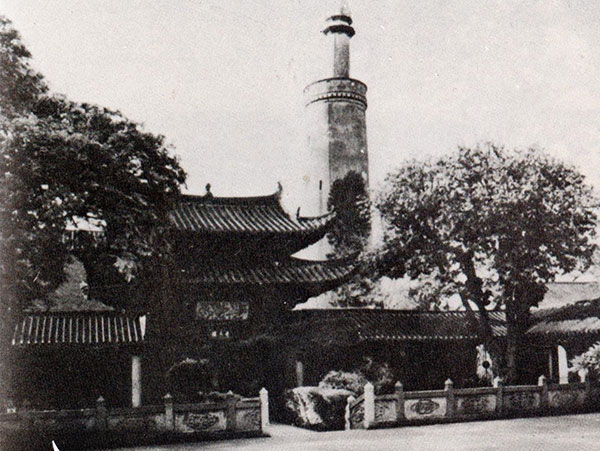
Huaisheng Mosque ( Guangzhou ): Huaisheng Mosque is associated with Guangzhou's maritime Muslim history and the landmark often called the Light Tower. Traditional founding stories reach back to the earliest centuries of Islam, but the chronology and surviving fabric have been debated; responsible interpretation separates community tradition from securely dated construction.
The retained historical photograph is useful evidence of an earlier appearance, not a live access guide. Verify whether general visitors may enter beyond the street view, and connect the mosque with Guangzhou's port history rather than presenting it as an isolated monument.
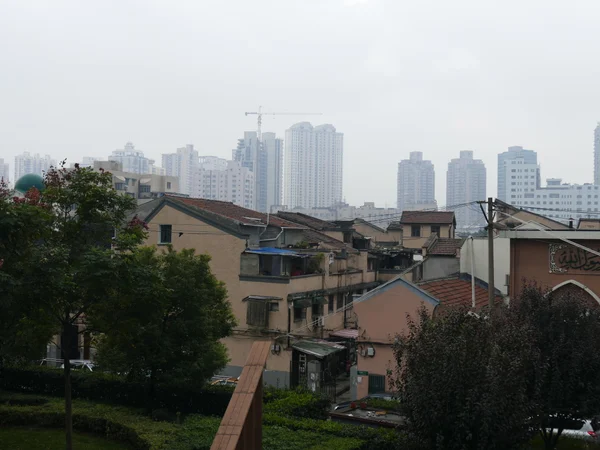
Xiaotaoyuan Mosque ( Shanghai ): Xiaotaoyuan Mosque is a major historic Muslim institution in central Shanghai. Its early twentieth-century exterior differs from the timber compounds of Xi'an and Beijing, illustrating how mosque design responded to a modern treaty-port city and the architectural language of its own period.
The replacement image is a clean real photograph without the former source watermark. Check current entrance arrangements and avoid promising public interior access; community services and prayer always take priority over sightseeing.
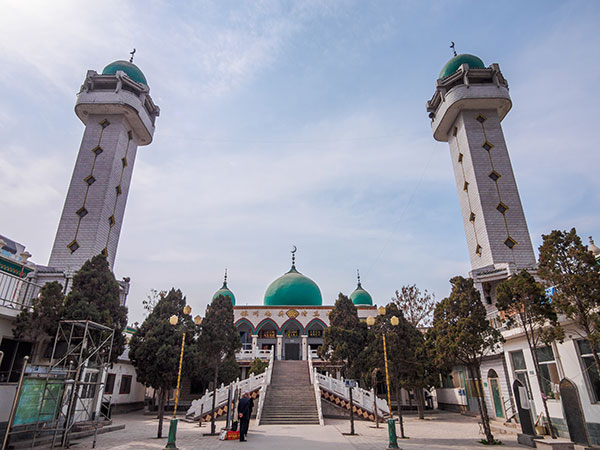
Nanguan Mosque ( Yinchuan ): Nanguan Mosque represents Yinchuan's visible Muslim heritage, but much of the building visitors recognize belongs to modern reconstruction rather than an unchanged ancient complex. It is best understood alongside Ningxia's Hui communities, regional food and other local religious sites.
Ask locally which areas are open and whether a visit conflicts with prayer. Do not infer a mosque's age from a revival-style dome, and do not use an old photograph to promise the current façade or interior arrangement.
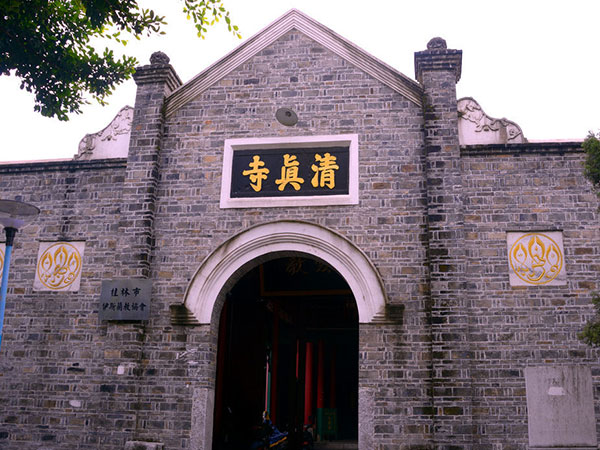
Chongshan Mosque (Guilin) is a compact historic mosque connected with Guilin's Muslim community. Its value lies less in scale than in showing how a congregation maintained religious life within a southern Chinese city better known to travelers for karst scenery.
Because small community mosques may have limited visitor facilities, contact the venue or a knowledgeable local guide before making a special journey. If entry is not invited, a respectful exterior view is a complete visit.
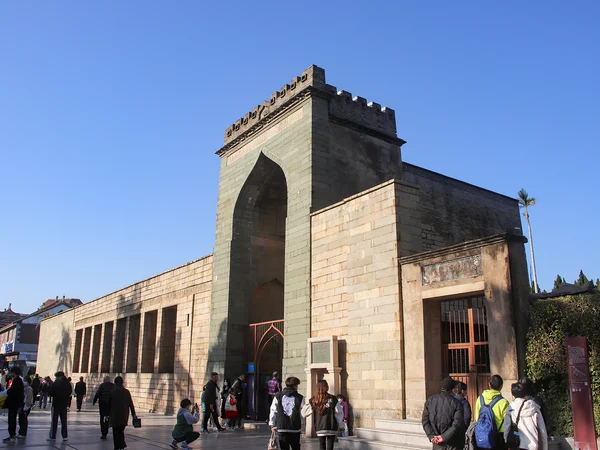
Qingjing Mosque (Quanzhou): Qingjing Mosque replaces the former Taipei entry so this mainland-China guide now follows a coherent geographic scope. The real replacement photograph shows its monumental stone gateway and courtyard. The complex is central to Quanzhou's maritime Islamic heritage and differs sharply from timber courtyard mosques farther north.
Treat the archaeological and museum-like areas separately from active worship space. Check the current ticket and opening notice, read on-site interpretation critically, and pair the visit with Quanzhou's port heritage rather than reducing it to a quick façade photograph.
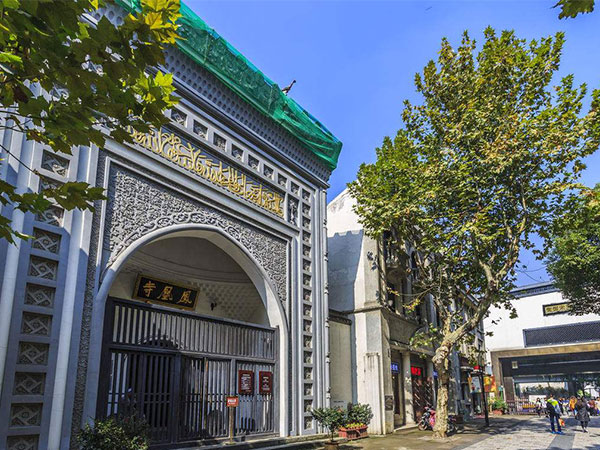
Phoenix Mosque ( Hangzhou ): Phoenix Mosque, also known as Fenghuang Mosque, reflects Hangzhou's historic Muslim community and the city's connections with long-distance trade. Rebuilding has altered the complex, but its prayer hall and roof forms remain important to discussions of Chinese Islamic architecture.
The surrounding commercial city can make the entrance easy to overlook. Verify current access, avoid prayer times and leave bags or tripods out of circulation routes. A quiet exterior observation is preferable to entering without clear permission.
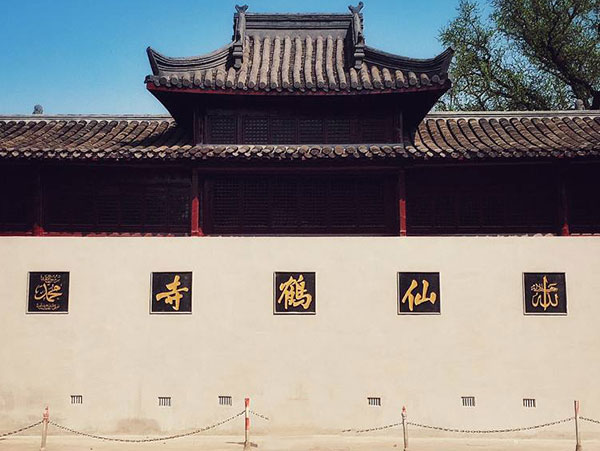
Xianhe Mosque ( Yangzhou ): Xianhe Mosque is associated with Yangzhou's Muslim history and the Grand Canal trading world. Its Chinese courtyard planning and layered repairs make it a useful counterpart to coastal stone sites and northwestern mosque traditions. Claims about a single founding moment should be read alongside evidence for later rebuilding.
Plan this as a community and architectural visit, not a checklist of relics. Confirm access locally, follow instructions at the prayer hall and never move objects or step across barriers for a clearer photograph.
There is no single evergreen number suitable for trip planning. Counts vary by year, source, administrative definition and whether a list includes only registered mosques or other Islamic religious sites. Repeating an undated national total creates false precision and can quickly become inaccurate.
For travel, the useful question is whether a specific mosque is active, accessible and appropriate for the intended purpose. Confirm its Chinese name, street address, congregation, current entrance and Friday or festival schedule through the venue or a current local authority notice.
Historic concentrations occur along Silk Road routes in Xinjiang, Gansu, Ningxia, Qinghai and Shaanxi, while long-established communities also exist in Beijing, Henan, Yunnan and many eastern cities. Distribution is broad, but local practices and architecture are not interchangeable.
Travelers seeking prayer space should ask a hotel to write the destination in Chinese and allow extra time; map pins and English names can be outdated. Those visiting for architecture should accept that sacred areas may be closed even when an exterior or courtyard is open.
For community context beyond buildings, read the Muslims in China overview. It explains why Hui, Uyghur and other Muslim communities should not be compressed into one cuisine, costume or regional stereotype.
Final check: verify access close to the visit, dress modestly, silence phones, seek consent for portraits and make no assumptions about women's prayer areas. These practical boundaries protect both the traveler's plan and the dignity of an active place of worship.
From $ 1226
From $ 2183
Editorial accountability
Hu Lei, CEO. The named owner is responsible for travel-planning accuracy and escalation of time-sensitive checks.
Yuntian Travel (Yunnan) Group is identified in its corporate profile as a licensed professional inbound travel service provider based in Kunming, China. Registration and travel-service documents can be requested before booking.
Page-specific references where cited, official destination, transport and entry notices, YUNSKY route-planning records, and direct provider confirmation before a booking is finalized.
Content is reviewed when rules, transport, access, pricing or route conditions change. Final availability and operating details are reconfirmed for each traveler’s dates.
Quality review: Page updated:
