Your China & Yunnan Travel Experts


Reviewed August 28, 2026. Islam reached China through several contacts rather than one documented founding ceremony. A Tang court record notes an embassy from the Arab caliphate in 651, while maritime archaeology, foreign-language accounts and later Chinese sources show Muslim merchants and residents in port cities. The 651 date is a useful milestone, not proof that a nationwide community appeared at once.
Chinese Muslim tradition also connects the first mission with Sa'd ibn Abi Waqqas, a companion of the Prophet Muhammad. Historians have not established that he personally traveled to China, so this guide presents the story as a respected community tradition rather than a verified itinerary. The distinction strengthens the history instead of diminishing the tradition.
The broader history of Islam in China begins with both sea and land routes. Guangzhou and Quanzhou linked the South China coast to the Indian Ocean, while Chang'an and other inland centres connected with Eurasian exchange. Movement was seasonal and multilingual, and not every foreign merchant settled permanently.
Huaisheng Mosque in Guangzhou is traditionally associated with the earliest Muslim presence. Its congregation is historic, but the visible prayer hall and other fabric reflect rebuilding. Travelers should separate the mosque's foundation tradition, the date of surviving structures and its present role as an active place of worship.
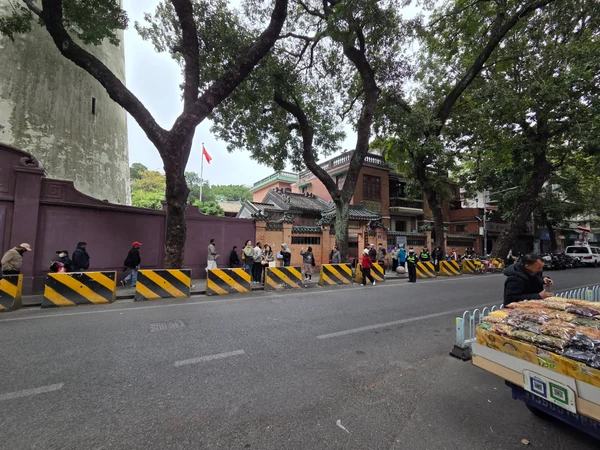
No single person can be credited with introducing Islam to every part of China. Diplomatic envoys represented courts; merchants maintained trade networks; sailors, interpreters and artisans created port communities; and families carried belief across generations. This distributed process is better supported than a one-founder narrative.
Tang records use names for Arab polities and foreign residents that do not map neatly onto modern national identities. Later retellings sometimes turn every Arab or Persian visitor into a missionary. It is more accurate to say that commerce and diplomacy made sustained Muslim religious life possible in selected cities. The surviving record also favors officials, major merchants and exceptional events; sailors, spouses, craftspeople and children are much harder to see. That imbalance is a reason for caution, not evidence that ordinary community life was absent.
The Silk Road merchant guide explains the practical networks behind that movement. Overland caravans and maritime shipping were complementary systems, and travelers should not imagine one continuous road carrying a single group from Arabia to Chang'an.
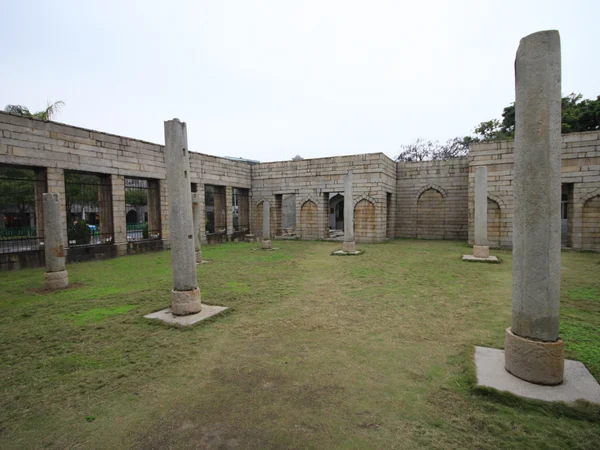
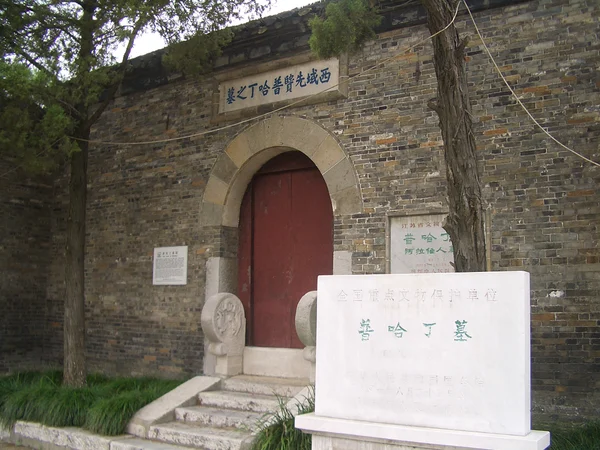
Real sites help test broad claims. Qingjing Mosque in Quanzhou preserves eleventh-century stonework, while the Puhaddin tomb complex in Yangzhou is associated with later Muslim memory. Each place documents a local chapter; neither proves every detail of a legendary first arrival.
Tang China hosted foreign merchant communities in major ports and the capital. Authorities regulated trade and sometimes allowed communities to manage aspects of worship and family life, but arrangements changed by city and period. Terms such as “foreign quarter” should describe an administrative setting, not a sealed colony cut off from Chinese society.
Guangzhou became a major maritime hub, and Chang'an attracted diplomats, traders and religious travelers from across Eurasia. Political upheaval and violence periodically disrupted those communities. Claims about exact population totals in a single city are debated and should not be repeated without identifying the original source.
For readers following the overland story, the Tang-era Silk Road guide adds the imperial and commercial background. It does not imply that all Muslim settlement came overland; coastal evidence is equally central to the period.
Under the Song, maritime trade expanded and Quanzhou became one of the great ports of the tenth to fourteenth centuries. UNESCO's Quanzhou heritage components demonstrate how docks, production sites, religious buildings and administration worked together. Muslim merchants were participants in that connected urban economy, not an isolated footnote.
Port authorities dealt with foreign trade, while resident families formed longer-lasting local ties. Intermarriage, language learning and property ownership helped some communities become rooted in China. The process varied by household, and descendants did not all adopt the same identity at the same pace. Cemetery inscriptions can preserve names, origins and religious formulas that narrative histories omit, yet a surviving stone may have been moved or recopied. Museum catalogues and archaeological context are therefore essential when using an inscription to date a settlement.
Qingjing Mosque's stone gateway and ruined prayer hall reveal an architectural language tied to the maritime Muslim world. By contrast, later Chinese mosque compounds often use timber courtyards. Seeing both prevents the mistaken idea that there is one timeless “Chinese mosque style.”
Travel takeaway: use Guangzhou, Quanzhou and Yangzhou as evidence-based stops, verify access to active mosques, and read archaeological interpretation alongside community tradition. The strongest Tang–Song story is not a list of legendary dates but a clear account of diplomacy, commerce, settlement and locally preserved heritage.
From $ 1226
From $ 2183
Editorial accountability
Hu Lei, CEO. The named owner is responsible for travel-planning accuracy and escalation of time-sensitive checks.
Yuntian Travel (Yunnan) Group is identified in its corporate profile as a licensed professional inbound travel service provider based in Kunming, China. Registration and travel-service documents can be requested before booking.
Page-specific references where cited, official destination, transport and entry notices, YUNSKY route-planning records, and direct provider confirmation before a booking is finalized.
Content is reviewed when rules, transport, access, pricing or route conditions change. Final availability and operating details are reconfirmed for each traveler’s dates.
Quality review: Page updated:
