Your China & Yunnan Travel Experts


The giant panda (Ailuropoda melanoleuca) is a bear native to China. Its familiar black-and-white coat is only the beginning of the story: diet, mountain habitat and highly specialized reproduction all shape how the species lives. This guide explains 13 useful facts and connects them to responsible viewing; our giant panda travel hub covers the broader planning context.
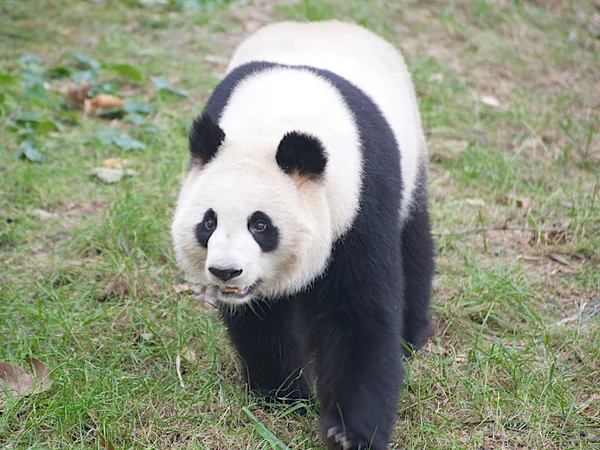
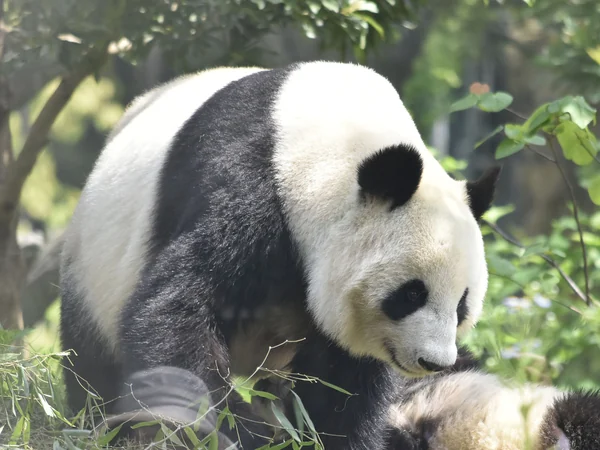
A broad head, rounded ears, powerful shoulders and contrasting fur make a giant panda easy to identify. The body is built for moving through dense bamboo and handling tough stems, not for constant speed. Individuals vary in face shape, markings and body condition, so keepers can often distinguish them without relying only on name boards.
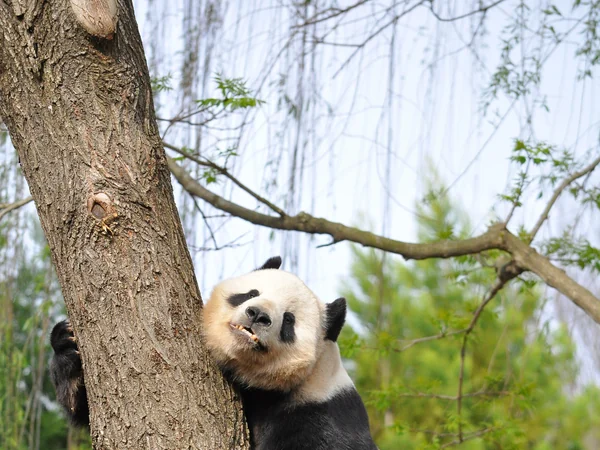
Adults are substantial bears, with males generally larger than females, but published measurements vary by sex, age and whether an animal lives in the wild or managed care. Strong forelimbs and curved claws help with climbing and manipulating bamboo. A modified wrist bone acts like a thumb, allowing the paw to grip stems while the panda feeds.
The coat is more than decoration. Research suggests the pale body can help an animal blend with snow while dark limbs merge with shade; facial markings may also aid recognition or signaling. Dense fur suits cool, damp mountain forests. These adaptations explain why an enclosure should provide shade, climbing structures and quiet retreat areas.
China's National Forestry and Grassland Administration has reported an estimated wild population of about 1,900. That figure is an official estimate rather than a live count, and it can change after new surveys. Captive-population totals change more frequently as cubs are born and animals move between institutions, so they should be checked with current conservation authorities.
Remaining wild populations occur mainly in fragmented mountain ranges across Sichuan, Shaanxi and Gansu. They depend on temperate forest with a reliable bamboo understory, water and connected movement corridors. A visitor facility is not the same as wild habitat: seeing a panda in a breeding center does not mean the surrounding tourist area is a place for independent wildlife tracking.
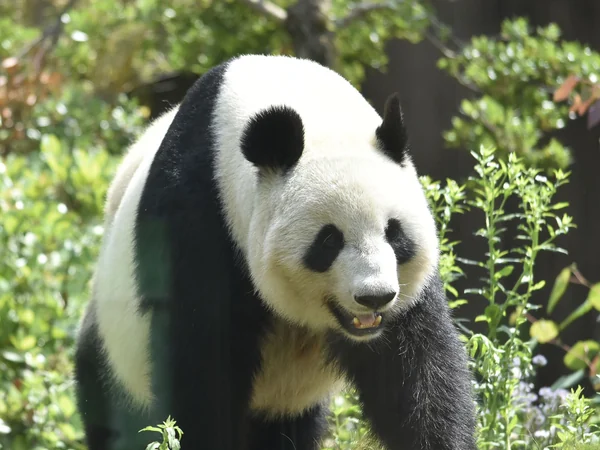
The IUCN lists the giant panda as Vulnerable. The change from Endangered reflected conservation progress, but it did not mean the species was secure. Habitat fragmentation, infrastructure pressure, climate-related shifts in bamboo and low reproductive rates remain important constraints. “Vulnerable” is therefore a reason to continue protection, not a declaration of recovery completed.
China established Giant Panda National Park to connect major habitat across Sichuan, Shaanxi and Gansu. Official descriptions place the park at more than 22,000 square kilometres and say it contains much of the wild population. Protection also includes forest restoration, monitoring, corridor management, community participation and carefully assessed reintroduction work. Learn how these places differ from visitor bases in our giant panda biology and conservation guide.
Wild giant pandas usually travel and forage alone outside the breeding season. Home ranges can overlap, and pandas communicate through scent marks and vocal signals rather than living in permanent groups. Exact range size varies with sex, habitat quality, bamboo availability and the method used by researchers, so one universal figure would be misleading.
Mountain elevation is only part of habitat selection. Bamboo species, seasonal food, slope, water, den sites and human disturbance all matter. Pandas may move up or down a mountain as plants change through the year. Fragmented corridors can restrict those movements even when apparently suitable forest remains nearby.
Giant pandas do not hibernate. Bamboo provides relatively little energy, so their strategy is to keep feeding and avoid unnecessary expenditure rather than store enough fat for a winter den. Cold or wet weather is normal in their habitat; at a managed facility, an animal may still choose an indoor area for privacy or temperature control.
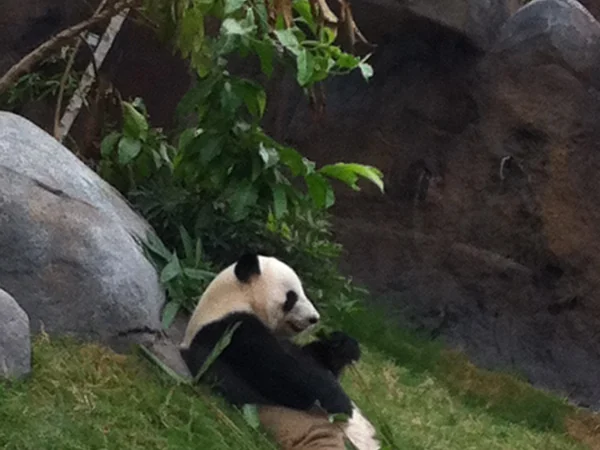
Feeding occupies many hours because the digestive system extracts limited nutrition from fibrous bamboo. Periods of activity and sleep occur throughout day and night rather than following a fixed tourist timetable. Weather, age, health, season and husbandry routines all affect what visitors see.
An Illustrative 24-Hour Pattern
Late night: alternate rest and short feeding periods
Pre-dawn: forage when conditions are cool
Morning: feed, climb or explore
Late morning: pause or sleep after feeding
Midday: activity often decreases in warm weather
Early afternoon: rest in shade or indoors
Late afternoon: another possible feeding period
Evening: move, scent-mark, feed and rest
This is a behavioral pattern, not a viewing schedule. Arriving near opening often improves the chance of activity, but no ethical facility can guarantee that a particular panda will be visible.
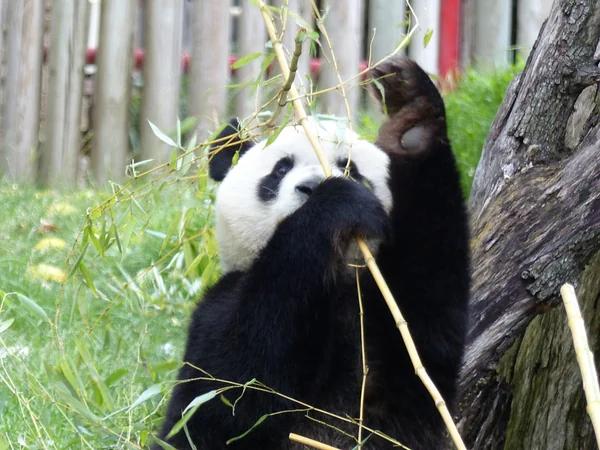
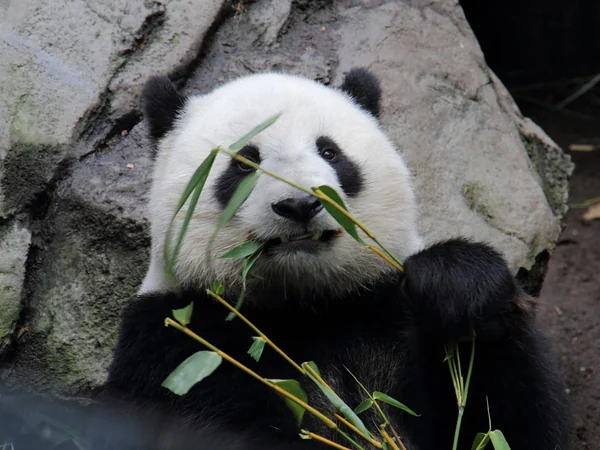
Bamboo makes up most of a wild giant panda's diet. Intake changes with body size and whether shoots, leaves or stems are available, so precise daily kilogram claims should be treated as ranges rather than rules. Sharp molars, strong jaw muscles and the wrist “thumb” support feeding, while low-calorie food explains the long eating periods and abundant fibrous droppings.
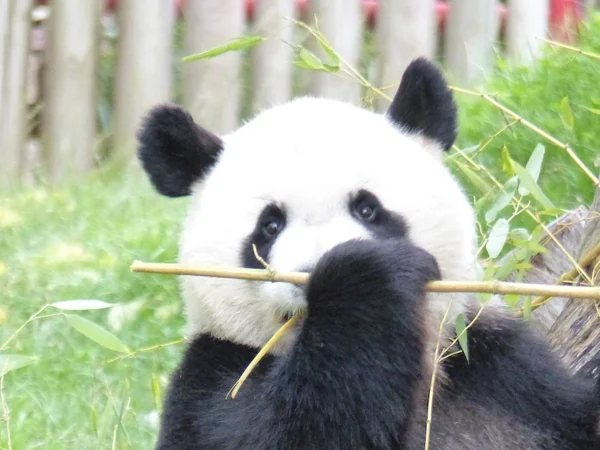
The giant panda belongs to the order Carnivora but is behaviorally specialized for bamboo. It can digest some animal matter and may occasionally consume other foods in the wild, yet bamboo dominates. Managed diets are formulated by specialists and can include nutritional supplements; visitors should never feed pandas or assume that human snacks are harmless.
Females are receptive for only a short period during the spring breeding season. Adults normally separate afterward, and the mother raises the cub. Breeding programs use hormone monitoring, behavioral observation and genetic planning, while field conservation must protect enough connected habitat for wild animals to encounter suitable mates.
Pregnancy length is difficult to predict because bears can experience delayed implantation. Births in managed populations commonly occur in late summer, but dates vary. Mothers select protected den-like spaces and rely on bedding and shelter rather than building a large permanent nest.
One or two cubs may be born, and twins are not unusual in managed care. A newborn is exceptionally small relative to its mother, which makes temperature control, feeding and maternal care critical. In the wild, a mother may be unable to raise both twins; breeding centers sometimes rotate cubs under professional supervision.
Modern cub care combines maternal behavior with veterinary and keeper monitoring. Practices have changed as research improved, so dramatic older stories should not be treated as a description of every current institution. The safest visitor rule is simple: remain quiet and allow staff to manage all contact.
Captive breeding is only one conservation tool. Maintaining genetic diversity, preparing suitable animals for possible release and protecting functioning ecosystems are separate challenges. A high birth count at a facility cannot compensate for habitat loss in the wild.
Wild lifespan is difficult to measure because individuals cannot all be followed from birth. Pandas in professional care may live into their twenties or beyond with consistent food and veterinary support. “Human age equivalents” are popular but not scientifically useful; life stage, health and individual history provide better context.
A good fact list should separate observable biology from internet trivia. For a closer look at cub development, continue to our baby panda guide.
The short tail is usually pale and can be easier to see when a panda climbs or turns.
Pandas can swim, although swimming is not a routine zoo display and should never be staged for visitors.
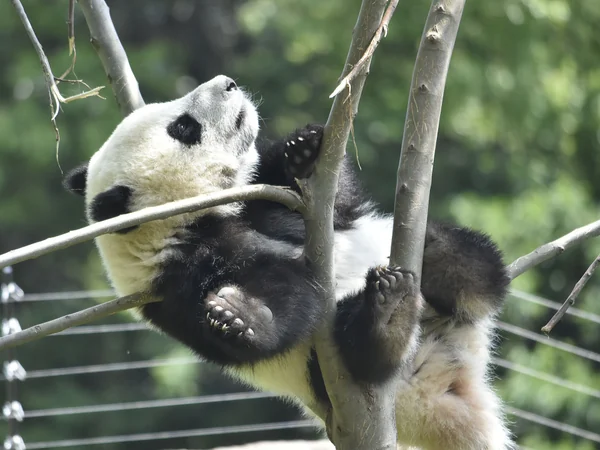
They are capable climbers; young pandas in particular may spend considerable time in trees or on platforms.
Bamboo dominates the diet, but quoting an exact percentage for every panda and season oversimplifies natural variation.
The giant panda has served as the emblem of WWF since the organization's early years.
Panda vision is adapted to its environment; calling it simply “underdeveloped” ignores the role of smell, hearing and spatial awareness.
Managed pandas can recognize familiar routines and voices, but claims about understanding a particular dialect are anecdotes, not a reliable biological fact.
A panda has five digits plus an enlarged wrist bone that functions as an opposable grip. It is often called a sixth finger, though anatomically it is not one.

From $ 389

From $ 509

From on request
Editorial accountability
Hu Lei, CEO. The named owner is responsible for travel-planning accuracy and escalation of time-sensitive checks.
Yuntian Travel (Yunnan) Group is identified in its corporate profile as a licensed professional inbound travel service provider based in Kunming, China. Registration and travel-service documents can be requested before booking.
Page-specific references where cited, official destination, transport and entry notices, YUNSKY route-planning records, and direct provider confirmation before a booking is finalized.
Content is reviewed when rules, transport, access, pricing or route conditions change. Final availability and operating details are reconfirmed for each traveler’s dates.
Quality review: Page updated: