Your China & Yunnan Travel Experts


Reviewed: August 26, 2026
August remains peak summer across much of China, with heat, humidity, concentrated rain and active tropical-cyclone risk often shaping the itinerary more than a monthly average. Plateaus and northern grasslands may be cooler but bring ultraviolet, altitude, storm and large day–night temperature changes. School summer holidays also increase demand on many trains and major attractions. Travelers arriving earlier should compare the July weather guide and verify every stop shortly before travel.
China has no useful single August temperature. Lowland cities can be very hot , while high-elevation destinations may require a warm layer after sunset. Humidity can intensify heat stress in eastern, central and southern cities, but a “feels-like” figure varies by hour and cannot be promised for a future trip. Follow local heat alerts and adapt outdoor time. Heat risk is personal : children, older adults, pregnant travelers and people with health conditions may need more conservative plans and medical advice.
Rainfall is operationally important. North China's main rain season, southwest monsoon rain and coastal storms can produce localized flooding, lightning, landslides or transport changes. Tropical cyclones are active in July–September, but their tracks and inland effects cannot be inferred from a monthly guide. For broader seasonal context, use the China climate guide
, then check the National Meteorological Center, local emergency notices and the operator responsible for each flight, train, cruise, road or scenic area. Recheck on transfer mornings: an alert issued overnight can matter more than the forecast saved during planning.
1. North China — Heat and Concentrated Summer Rain
Beijing, Tianjin and Hebei can have hot afternoons and humid spells, while thunderstorms or multi-day rain affect exposed heritage sites and roads. The practical decision is not a fixed range but whether heat, lightning or flood warnings are active. Use the cooler part of the day for walls and large palace grounds , and move to a museum or other indoor site when warnings or symptoms make exposure unsafe. Evenings can be more comfortable , but parks, waterfronts and mountain valleys still require current closure and lightning checks.
Image context: the adjacent Beihai Park photograph represents a Beijing summer setting, not live weather or crowd conditions. Large open parks offer shade only in parts, so carry water and map a nearby indoor stop before setting out.

2. East and Central China — Humid Heat with Storm Disruption
Shanghai, Hangzhou, Suzhou, Nanjing, Wuhan and Changsha often feel hotter than a dry-temperature reading suggests. Heat waves, afternoon convection and typhoon-related rain can all change plans. Water towns and gardens benefit from shade
, but stone bridges, waterfronts and old lanes become slippery in downpours. Keep long rail transfers and skyline viewpoints flexible; severe weather can affect cities far from a cyclone landfall. Do not place a weather-sensitive mountain return immediately before an international flight or the final train of the day.
3. South China — Heat, Heavy Rain and Tropical-Cyclone Risk
Guangdong, Guangxi, Fujian and Hainan can experience intense heat, high humidity, sudden rain and coastal wind. Do not rely on a typical city temperature to determine whether a beach, ferry, river or gorge is safe. The Guilin karst shown in the adjacent image may look lush after rain, but visibility, rafting and cycling conditions can deteriorate quickly.
Use only licensed boats and official open routes; never continue through a closure because the rain appears to have stopped. Upstream rainfall can change river conditions after skies clear at your location, and wet rural roads may remain hazardous.
Route rule : keep at least one indoor or easily rescheduled day on a southern itinerary.

4. Western China — Desert, Alpine and Plateau Contrasts
Qinghai, Tibet and Xinjiang should not be grouped as uniformly cool.
Travel rule: check the precise overnight stop, road and elevation; allow acclimatization and carry a warm layer in an accessible day bag. A sunny airport arrival does not establish conditions at a lake, pass or next-day road several hours away.
5. Southwest China — Milder Highlands, Wet-Season Roads
Yunnan, Guizhou and western Sichuan can provide relief from extreme lowland heat, but August remains within the rainy season.
Travel rule: do not enter mountain valleys after prolonged rain; keep rural transfers daylight-based and follow official landslide or flash-flood warnings. Choose a qualified driver or operator, agree on safe turnaround rules and avoid itineraries that depend on an unofficial shortcut.
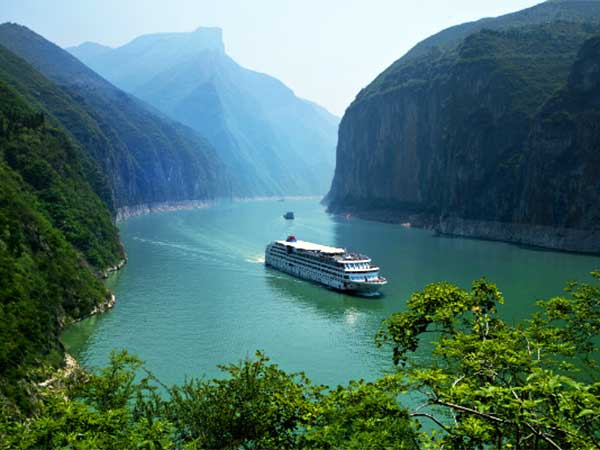
13 Days from the Li River to the Yangtze
Beijing, Xi'an, Guilin, Chongqing, a Yangtze cruise, Yichang and Shanghai
1. Changbai Mountain
What to expect: Forests, waterfalls and the crater-lake landscape are the appeal. Heavenly Lake visibility is never guaranteed; use the current scenic-area bulletin, carry a warm rain layer and do not build an important onward connection around the last shuttle. Stay behind barriers and treat a weather closure as final.
2. Jiuzhaigou Valley
What to expect: A managed sequence of valleys, forests, lakes and waterfalls. Reserve through the current official channel, follow shuttle and boardwalk controls, and keep a weather buffer for the long road transfer. The adjoining image is accurately tied to this destination, but lake color varies with light and is not a guaranteed viewing condition.

3. Qinghai Lake
What to expect: Open lake scenery and highland landscapes. Flower stages and cycling events are date-specific, so consult current local notices. Remain on marked access, protect wetlands and wildlife, and allow time for altitude adjustment. Do not approach birds or livestock for a closer photograph.
4. Hulunbuir Grasslands
What to expect: Wide grassland and river landscapes through established tourism areas. Ask before photographing people, avoid treating Mongol culture as a staged stereotype, select a responsible riding operator and keep vehicles off unapproved grassland tracks. Nights can be colder than city-based packing lists suggest.
5. Qingdao
Location: Shandong Province
Weather decision: coastal humidity, heat, rain and tropical-cyclone effects remain possible despite sea breezes.
What to expect: Urban beaches, historic streets and an annual beer festival whose exact dates, venues and entry arrangements must be verified. Follow beach warning flags and lifeguard instructions; coastal weather can change faster than an inland forecast suggests. Alcohol, heat and swimming are a poor combination, so separate festival and water activities.
6. Chengde Mountain Resort
What to expect: A large imperial landscape of lakes, pavilions and gardens that requires substantial walking. Confirm timed-entry and opening information, start early, use shade and retain an indoor alternative when lightning or intense rain develops. Allow enough time to understand the site's Qing imperial and multi-ethnic historical context rather than treating it only as a cool-weather park.
Editorial accountability
Hu Lei, CEO. The named owner is responsible for travel-planning accuracy and escalation of time-sensitive checks.
Yuntian Travel (Yunnan) Group is identified in its corporate profile as a licensed professional inbound travel service provider based in Kunming, China. Registration and travel-service documents can be requested before booking.
Page-specific references where cited, official destination, transport and entry notices, YUNSKY route-planning records, and direct provider confirmation before a booking is finalized.
Content is reviewed when rules, transport, access, pricing or route conditions change. Final availability and operating details are reconfirmed for each traveler’s dates.
Quality review: Page updated: