Your China & Yunnan Travel Experts


Reviewed: August 26, 2026
September is a transition month, not a nationwide start of autumn. Northern and highland routes can become cooler and drier, while the lower Yangtze and South China may remain hot, humid and exposed to tropical-cyclone rain. Use the August weather guide if the trip begins earlier, then check each destination forecast before departure.
China's scale makes a national average unreliable. The China climate guide helps explain the seasonal pattern, but it cannot predict a particular week. September often improves walking comfort in the north, while southern heat and coastal storm risk can continue.
Best planning approach: combine region-specific forecasts, flexible outdoor days and current official weather warnings, holiday, permit, road and scenic-area notices
1. North and Northeast China
Beijing, Tianjin, Hebei, Shanxi and the Northeast often become more comfortable in September, but warm spells, storms and poor-visibility days still occur. Autumn color is controlled by elevation and weather, not the calendar alone.
2. East and Central China
Shanghai, Nanjing, Wuhan, Hangzhou, Suzhou and Huangshan can remain warm and humid, especially early in the month. Typhoon-related wind or rain may affect rail, flights, waterfronts and mountain routes even without a nearby landfall.
The adjacent Wuzhen image accurately shows a canal-town setting; it does not guarantee low crowds, sunset light or flower timing.

3. South China
Guangdong, Guangxi, Fujian and Hainan can stay hot and humid. September remains within the active tropical-cyclone season, so coastal, ferry, beach and river plans require daily official checks.
4. Western China
Tibet, Qinghai, Gansu and Xinjiang include large deserts, basins and high mountains. September can bring clearer intervals and cooler nights, but snow, frost, rain or road controls may arrive early at elevation. “Stable weather” is never a permit or access guarantee.
5. Southwest China
Yunnan, Sichuan, Guizhou and Chongqing remain climatically diverse. Highland cities may feel comfortable, while basins stay warm and mountain roads remain exposed to rain, rockfall or landslide controls.

| Region | Destination | Why consider it | Typical pattern | Best use | Critical check | Decision fit |
| Northwest | Kanas and Hemu, Xinjiang | Early autumn color can begin in birch and alpine landscapes, but timing varies. | Mild days Cold nights Fast mountain changes |
Lake viewpoints and marked walks | Confirm current border-area controls, road access and lodging through official channels. | Best for flexible landscape trips |
| Allow weather and transfer buffers. | ||||||
| Southwest | Daocheng Yading, Sichuan | High alpine scenery with early seasonal color possible. | Cool days Cold nights Rain, frost or snow possible at elevation |
Short, conservative walks after acclimatization | High altitude, long transfers and route controls require medical and operational planning. | Best for experienced high-altitude travelers |
|
Do not make Milk Lake the minimum definition of success. Turn around for symptoms or weather. |
||||||
| Southwest | Lijiang and Shangri-La, Yunnan | Historic towns and highland landscapes with cooler evenings. | Mild in Lijiang Cooler at higher stops |
Old-town heritage and designated nature routes | Check altitude, roads and community photography expectations. | Best for a paced culture-and-landscape route |
|
Visit Songzanlin only under current visitor rules. Use marked Pudacuo routes and leave no waste. |
||||||
| North China | Beijing | Improving walking comfort and strong heritage depth. | Mild to warm days Cooler evenings and occasional rain |
Hutongs, museums and a weather-selected Great Wall day | Timed entry, air quality and the late-September holiday build-up. | Best for first-time city and history travel |
| Choose the wall section by access and ability, not a “must-do” label. | ||||||
| Northwest | Gannan, Gansu | Plateau scenery and living Tibetan Buddhist communities. | Cool days Cold, windy intervals |
Established village and monastery routes | Long drives, altitude, local access and respectful behavior; do not photograph worship without permission. | Best with a knowledgeable local operator |
| Attend religious activity only where visitors are welcomed. | ||||||
| South China | Guilin and Yangshuo, Guangxi | Karst scenery with somewhat easier outdoor pacing than peak summer on suitable days. | Warm and humid Showers or cyclone-related rain possible |
Official Li River services and countryside routes | Verify river levels, cycling surfaces and transport changes. | Best for a flexible multi-night stay |
| Use licensed boats and avoid closed riverbanks. | ||||||
| East China | Hangzhou and Wuzhen, Zhejiang | Canal, lake and garden landscapes as late summer transitions. | Warm days Humidity and rain still possible |
West Lake, museums and designated canal-town walks | Osmanthus bloom and sunset are not guaranteed; verify entry and transport. | Best for culture with indoor alternatives |
| Tea visits require an authorized host and respect for working fields. | ||||||
| Northeast | Arxan, Inner Mongolia | One of China's earlier autumn-color areas, subject to annual timing. | Cool days Cold mornings and possible early frost |
Forest and volcanic-lake routes when open | Remote transport, fire controls and current park access require advance confirmation. | Best for flexible road-based nature travel |
| Use only regulated hot-spring and park facilities. | ||||||
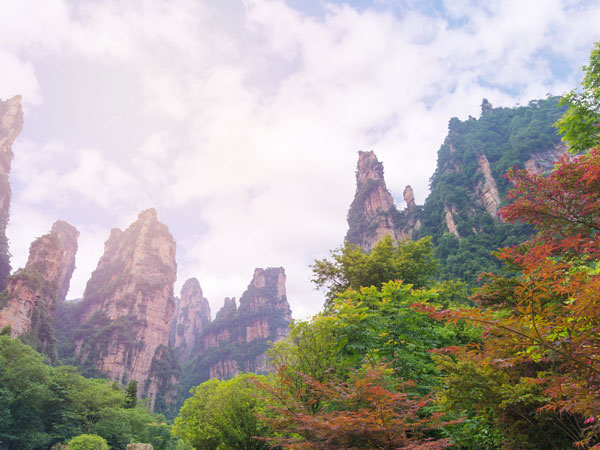
| Central China | Zhangjiajie, Hunan | Forested sandstone pillars can be atmospheric in mist, but clear views are not guaranteed. Warm to mild | Rain and fog possible Official shuttles, valleys and open viewpoints |
Wet steps, crowds and cableway or trail changes. | Best for travelers with a weather buffer | Treat the glass bridge as optional, not essential. |
|
Use elevators or trails according to ability and current operation. Keep a valley alternative. |
||||||
| Tibetan Plateau | Lhasa and Nyingchi, Tibet | Historic, religious and mountain landscapes during a seasonal transition. | Mild sunlit periods Cold nights and possible rain or early snow at height |
Potala Palace and monastery visits with scheduled entry | International visitors must verify current Tibet permits and organized-tour rules; altitude requires conservative pacing. | Best for medically prepared, well-paced travelers |
| Ask before photographing people or religious practice. | ||||||
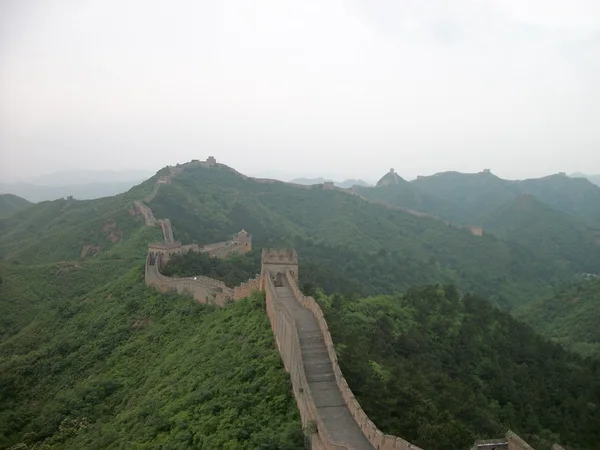
11 Days Beijing, Xi'an, Zhangjiajie and Shanghai
Beijing, Xi'an, Zhangjiajie and Shanghai
Pack for the route rather than the month: breathable layers, a light warm layer, a rain shell, shoes with grip, sunscreen, water and protected essential medication. Add real insulation for western mountains and high plateaus. Keep one schedule buffer:
weather, timed-entry or transport changes are easier to absorb when every day is not fixed. In 2026, the official Mid-Autumn Festival holiday ran September 25–27. National Day followed October 1–7, with Sunday September 20 designated as a workday. This is dated 2026 context: future travelers must check the current State Council holiday notice before buying inflexible tickets.
For the following peak, read the October weather guide. Reserve critical trains and timed attractions early when a published holiday overlaps the route, but avoid claiming any hour will be crowd-free.
Prepare communication before leaving Wi-Fi: download an offline-capable translation tool, save hotel names and addresses in Chinese, keep operator contacts available, and test your map and payment setup before a remote transfer.
Respect is practical travel planning: follow temple photography rules, ask before photographing people, stay on open paths, protect wetlands and working fields, and treat regional communities as contemporary and diverse—not as scenery for a checklist.
Editorial accountability
Hu Lei, CEO. The named owner is responsible for travel-planning accuracy and escalation of time-sensitive checks.
Yuntian Travel (Yunnan) Group is identified in its corporate profile as a licensed professional inbound travel service provider based in Kunming, China. Registration and travel-service documents can be requested before booking.
Page-specific references where cited, official destination, transport and entry notices, YUNSKY route-planning records, and direct provider confirmation before a booking is finalized.
Content is reviewed when rules, transport, access, pricing or route conditions change. Final availability and operating details are reconfirmed for each traveler’s dates.
Quality review: Page updated: