Your China & Yunnan Travel Experts


Reviewed August 27, 2026. China can be an excellent destination for many older travelers, but the honest answer is conditional. Its major cities offer extensive rail and air networks, deep cultural collections, varied landscapes and a wide choice of daily activities. At the same time, historic thresholds, long station walks, uneven paving, heat, altitude, crowds and digital booking can affect comfort. Use this article as a decision framework, then compare the best China destinations for senior travelers by the traveler's interests and actual access needs. Age is not a reason to exclude China, and a marketing label is not evidence that every day is accessible.
International gateways and a large high-speed rail network make multi-city travel possible without a long sequence of road journeys. China's railway rules require necessary human service for older passengers who need help, and national transport guidance calls for clearer accessible routes, staffed windows, assistance and wheelchairs. Those policies are useful, but station layout and availability still vary. Compare the full hotel-to-hotel journey in the China transportation guide for senior travelers, including the terminal, entrance, lifts, passport ticket record, luggage and pickup point.
Metro systems can be efficient, while taxis or a pre-arranged vehicle may reduce difficult transfers. The nearest metro entrance may have stairs, and a private vehicle may not reach a pedestrian site gate. Request airline or railway assistance in advance when appropriate, reconfirm it, and write down every handoff. Independence and support are not opposites: the best arrangement gives the traveler clear choices and a reliable fallback.
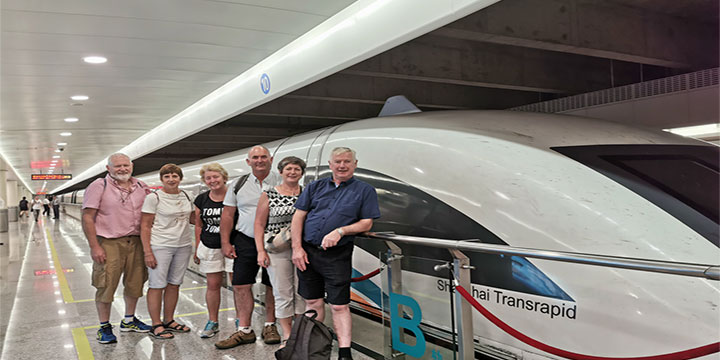
Older travelers using a modern airport transfer in China
Beijing's dry winter, Shanghai's humid summer, Guilin's rain, Harbin's cold and the altitude of Lhasa or western mountain regions require different planning. A blanket April-to-November recommendation hides heat, storms, holidays and local seasonal closures. Use the best and worst times to visit China as a first comparison, then check historical climate patterns and a short-range forecast for every stop.
Travelers sensitive to heat, cold, air pollution or altitude need a specific backup: a museum morning instead of an exposed plaza, a lower-altitude route instead of a rapid ascent, or a rest day after a long flight. CDC guidance notes that rapid travel to high sleeping altitudes can cause illness regardless of fitness. Discuss high-altitude plans and chronic conditions with an appropriate clinician before booking nonrefundable arrangements.
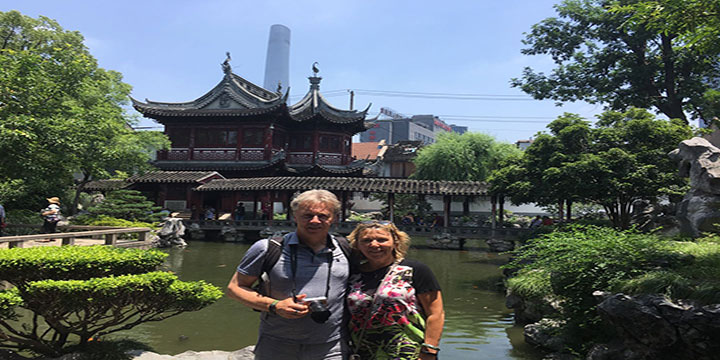
Older travelers visiting a traditional garden in comfortable spring weather
A first trip can combine imperial history in Beijing, archaeology in Xi'an, museums and neighborhoods in Shanghai, panda conservation in Chengdu or karst scenery near Guilin. The advantage is not the number of attractions; it is the ability to choose one meaningful focus each day. Build a route around the traveler's curiosity, then remove stops that add transfers without enough value.
Natural areas also range from level waterfront walks to steep stone mountains. Ask for distance, ascent, stair count, surface, shade, toilets and return options. Cable cars and shuttle buses may reduce part of a climb but rarely remove every queue or step. In high-altitude regions, acclimatization and medical planning matter more than age-based reassurance.
Culture can be experienced while seated: museum interpretation, a teahouse, calligraphy demonstration, river view or neighborhood meal can complement outdoor sites. Avoid turning minority communities, religion or everyday life into a checklist of performances. Respect photography rules, local etiquette and conservation boundaries.
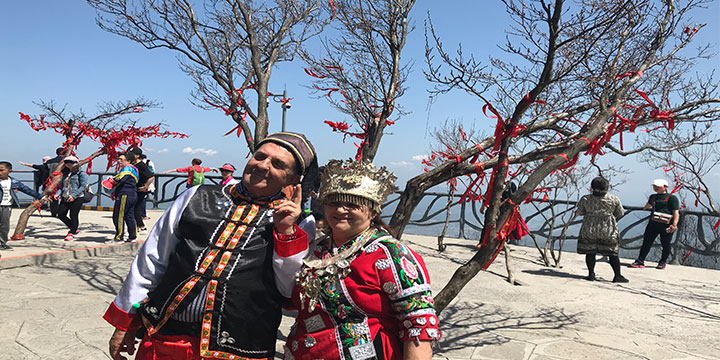
Older travelers meeting local people during a culturally focused China journey
Chinese cooking offers soft textures, rice and noodle dishes, tofu, vegetables, steamed foods, soups and small shared portions, alongside spicy, salty, sweet and fried dishes. No regional cuisine is automatically unsuitable, and no famous dish is mandatory. Record allergies, chewing or swallowing needs and medical diets separately; ask about ingredients and preparation rather than using age as shorthand.
WHO's food-safety principles remain practical: choose food cooked thoroughly and served hot, keep raw and cooked items separate, and use safe water. Travelers should follow their clinician's guidance for fluids, glucose, kidney or heart conditions. Book the arrival meal close to the hotel, order fewer dishes first and keep translation cards for allergies without claiming they can eliminate kitchen cross-contact.
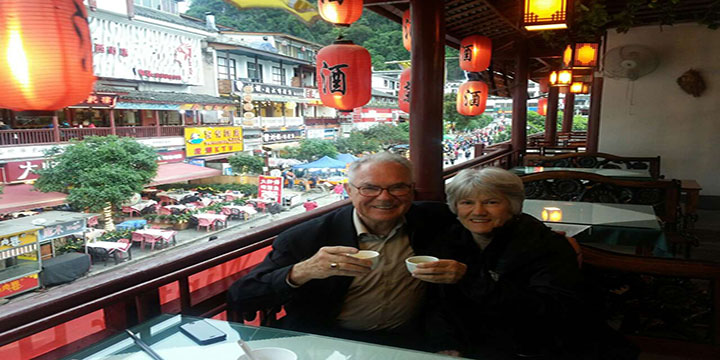
Older travelers sharing a seated meal at a restaurant in China
Gentle tai chi observation or instruction, a dumpling class, painting, a park walk, photography, a boat ride or a countryside visit may suit different interests. Ask whether seating, shade, toilets and step-free access are available and whether the session can be shortened. Cycling, long wall walks and mountain routes should be selected by recent ability, surface and traffic—not offered simply because someone is “young for their age.” Keep one unscheduled half-day after major transfers so optional activities stay optional.
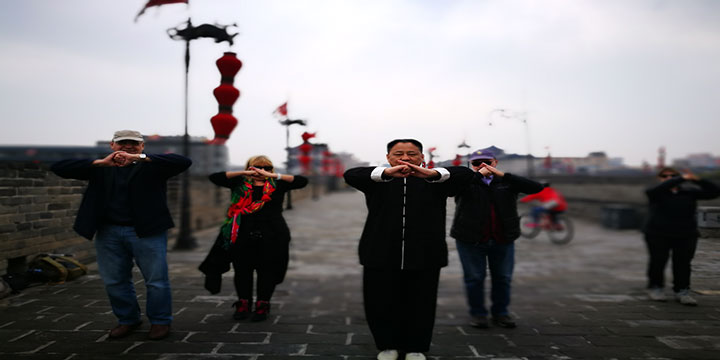
A morning tai chi session on Xi'an City Wall
The answer is yes when the desired experiences outweigh the transfers, climate and access demands—and when the itinerary protects sleep, medicine routines, meals and recovery. Before paying, test one representative day on paper: curb-to-gate walking, steps, toilets, meal timing, weather alternative and the route back to the hotel. Verify important access directly because “accessible” is not one uniform standard.
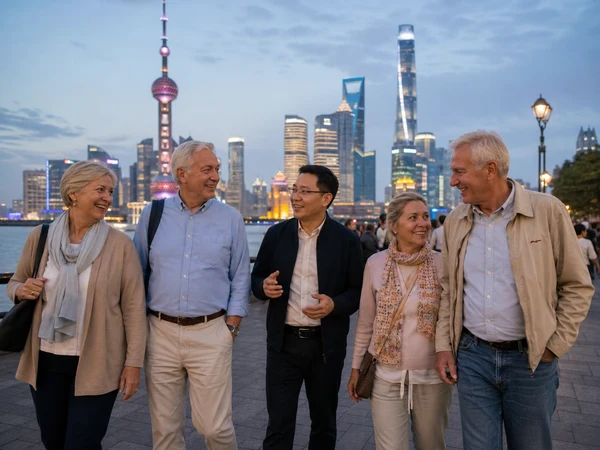
Older travelers enjoying an evening walk with a local host on Shanghai Bund
If neither example fits, request a personal China itinerary built from interests, walking tolerance and verified access. A good plan does not promise a problem-free country; it makes assumptions visible, confirms the important ones and preserves a dignified way to change course.

From $ 1599

From on request

From $ 23332100
Editorial accountability
Hu Lei, CEO. The named owner is responsible for travel-planning accuracy and escalation of time-sensitive checks.
Yuntian Travel (Yunnan) Group is identified in its corporate profile as a licensed professional inbound travel service provider based in Kunming, China. Registration and travel-service documents can be requested before booking.
Page-specific references where cited, official destination, transport and entry notices, YUNSKY route-planning records, and direct provider confirmation before a booking is finalized.
Content is reviewed when rules, transport, access, pricing or route conditions change. Final availability and operating details are reconfirmed for each traveler’s dates.
Quality review: Page updated: