Your China & Yunnan Travel Experts



The Hexi Corridor is the long passage between the Tibetan Plateau and the deserts farther north, leading west from the Yellow River region toward Dunhuang and Xinjiang. It concentrated movement because mountain water supported a chain of settlements in an otherwise arid zone. Calling it an “artery” is useful, but traffic still followed several local roads and changed with security and water.
The Yellow River marks the eastern geographic context around Lanzhou, while the corridor extends through a sequence of oasis basins rather than one continuous green valley.
Within Gansu and toward Xinjiang , Wuwei, Zhangye, Jiuquan, Jiayuguan and Dunhuang formed important stops. Compare their positions on the Silk Road map, then examine how the corridor fits the wider routes in China. Climate varies along the sequence, so use the Silk Road climate guide for trip timing rather than assuming one temperature for the whole corridor.
During the Han dynasty , Zhang Qian traveled through regions that later became central to Han westward policy. Commanderies and garrisons strengthened imperial presence, while local communities and neighboring powers remained active participants. The corridor carried soldiers, envoys, monks and migrants as well as merchants, so its history cannot be reduced to commercial caravans.

Today the Hexi Corridor is an inhabited transport and agricultural region served by rail, road and airports. Qilian Mountain snow and glacier-fed water support oasis farming, cities and wetlands. Water allocation and ecosystem protection are therefore central to the corridor's modern future.
Environmental conditions differ by basin. Glaciers, grassland, rivers, desert margins and wetlands respond differently to climate and human use. Avoid repeating an old statistic about retreat or desert movement unless its date, location and monitoring source are identified.
Agriculture includes grains, fruit and grapes in suitable areas, but production does not make every stop a wine destination. A winery visit should be confirmed separately and presented as a modern regional activity rather than an ancient Silk Road tradition.
Rail travel makes a multi-stop route practical, while distances remain substantial. High-speed and conventional services do not stop at every heritage site, and station names may differ from the attraction's name. Build transfers into the day plan.
Conservation requirements at caves and earthen ruins may limit access, photography or the number of open areas. Check each site's current notice rather than copying permanent hours into an evergreen guide.
A good journey balances indoor interpretation with landscape: use museums to understand chronology, then read passes, irrigation and oasis settlement in the field.

The corridor is a core component of many Silk Road tours . A practical sequence may connect Lanzhou or Xining with Zhangye, Jiayuguan and Dunhuang, then continue by rail or air toward Turpan and Urumqi. Allow enough time for station transfers and the large distances between western Gansu sites.
Main attractions along the Hexi Corridor:
Mogao Caves (Dunhuang): a major Buddhist cave complex preserving murals and sculpture from multiple periods. Reservation products, cave access and photography rules can change; confirm them before travel.
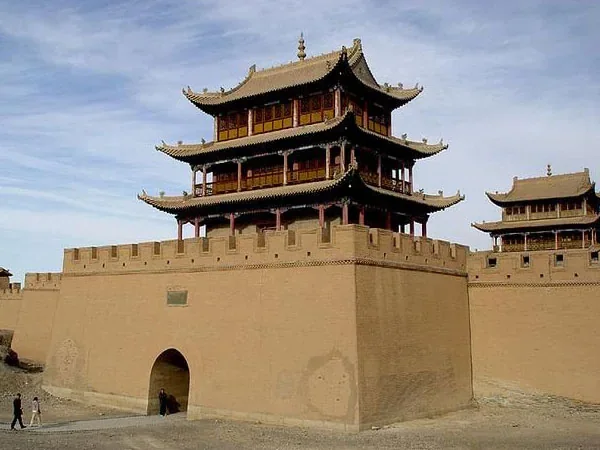
Jiayuguan Pass (Jiayuguan city): a major Ming Great Wall fortress east of Dunhuang. It is later than the early Han Silk Road and should be interpreted within Ming frontier defense.
Yumen Pass (west of Dunhuang): a Han-period frontier pass landscape associated with routes toward the Western Regions. Site conditions are exposed, and a vehicle transfer is normally required.
Yangguan Pass (southwest of Dunhuang): another historic gateway used to explain southern route branches. Distinguish reconstructed visitor displays from surviving archaeological features.
Yulin Grottoes (Guazhou): a cave complex connected artistically and historically with Dunhuang. It is a separate excursion and should not be described as a neighborhood of Mogao.
West Thousand Buddha Caves (southwest of Dunhuang): caves along the Dang River with murals related to the wider Dunhuang tradition. Access arrangements and the caves open to visitors require current confirmation.
From $ 3510
From $ 3061

From $ 3683
Editorial accountability
Hu Lei, CEO. The named owner is responsible for travel-planning accuracy and escalation of time-sensitive checks.
Yuntian Travel (Yunnan) Group is identified in its corporate profile as a licensed professional inbound travel service provider based in Kunming, China. Registration and travel-service documents can be requested before booking.
Page-specific references where cited, official destination, transport and entry notices, YUNSKY route-planning records, and direct provider confirmation before a booking is finalized.
Content is reviewed when rules, transport, access, pricing or route conditions change. Final availability and operating details are reconfirmed for each traveler’s dates.
Quality review: Page updated:
