Your China & Yunnan Travel Experts



Xian, as an ancient capital for 13 dynasties, is your gateway to ancient Chinese civilization. In its 3,100 recorded years of evolution, it has been home to 13 dynasties, including the Zhou, Qin, Han, the Sui, and Tang dynasties, periodically from the 11th century B.C. to the early 10th century AD. As one of the most important cradles of Chinese civilization, it marked the start of the famous “Silk Road” that linked China with central Asia and the Roman Empire.

Xian, or Changan as it was called in ancient times, is known as the city of “Everlasting Peace.” Located between rivers and mountains in the center of the fertile Guanzhong Plain in Shaanxi Province, Xian – the provincial capital – was a natural place to nurture the nation civilization.
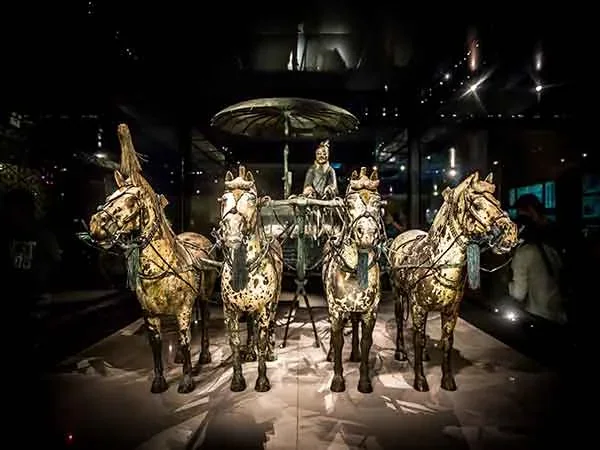
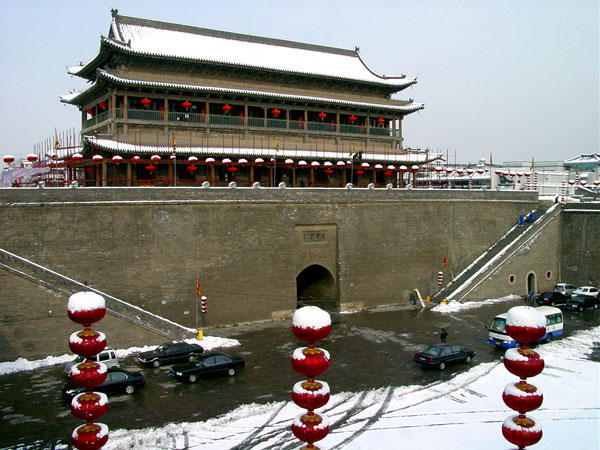
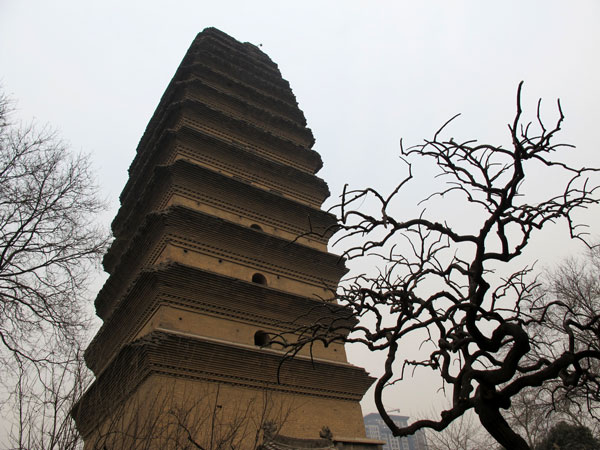
Touring in Xian, you can breathe the historical air from all the must-see spots. major attractions in Xian include the Qin Terracotta Army – “the 8th wonder of the world”, the Big Wild Goose Pagoda – the most outstanding landmark of Xian, Banpo Neolithic Village Museum – the remains of a 6,000 year-old village once home to a matriarchal clan community, and the Xian City Wall which stretches round the old city.
Today Xian is a vibrant, modern city, but surrounded by history, even underfoot! So there can be no underground railways due to the obligation to preserve the wealth of ancient treasure still awaiting discovery.
Basic Information
• Chinese Name: 西安
• Location: located in the southern part of the Guanzhong Plain
• Dialing code: (+86) 029
• Zip code: 710000
• Area: Xian has an area of 9,983 sq km
• Main attractions in Xian: Terracotta Warrior, Xian City Wall, Big Wild Goose Pagoda, Small Wild Goose Pagoda, The Bell Tower, etc.
Administration Distribution
Administrative Division: Xian is officially divided into 9 districts which occupied nearly 3600 square kilometers, and 4 counties that including many famous scenic spots.
Population: The population of Xian is 7.16 million. Half of the people live on the outskirt of the city.
Geography
Xian is at 33 degrees 39 N and 107 degrees 40 E, is the capital of Shaanxi province, in the southern part of the Guanzhong Plain. As the transport and communication center in northwest China, Xian has played the role in linking the east and the west, and the south and the north of the country. With the Qinling Mountains to the south and the Weihe River to the north, it is in a favorable geographical location surrounded by water and hills.
History
As early as 1 million years ago, Lantian Man had settled here; 7000 years ago(during Yangshao culture period), the prototype of city wall had appeared in this place; in 2008, Gaoling Yangguanzhai sites of Xi'an unearthed the city relics in the late Neolithic Age more than 6000 years ago, which was elected to the top of China's archaeological discoveries, this is the earliest city sites so far found in China.
In the Neolithic Age, about 6,000 years ago, excavations show that a matriarchal clan was formed at Banpo village in the region. Thousands of years later, the Zhou Dynasty kings established their capital in settlements only a few miles from the present-day city. In 231 BC, Qin Shi Huang, the first emperor of unified China, set about enlarging the settlement of Xiangyang, about 15 miles northwest of the city. This town, established under earlier Qin rulers as the capital, became heavily populated, so that in 213 BC, Qin Shi Huang decided to move his court to the south bank of the Wei River. A vast palace was begun. However, work was never completed in his lifetime. Some years later when the Qin fell to the Han (206 BC), this and most of the other palaces were destroyed. The conqueror, Liu Bang, first emperor of the Han Dynasty, also established the site of his capital only a few miles north of modern Xian.
Climate
Xian is situated in the center of the Guanzhong Plains, surrounded by mountains in the south and the Wei River in the north. Xian is also a city blessed with a pleasant climate most of the year round and it is possible to pleasurably visit this city at almost any time of the year.
The coldest month here is January, with an average temperature of 0°C although Xian has only a minimal snow level. The hottest and most unpleasant month is June, with an average temperature of 26 °C.
The summers here can also be very dry so make sure you have plenty of drinking water with you when you go sightseeing! The average temperature for the year is 13 °C.
♦ Spring (March to May): temperature is moderate, but it is a little cool with rains. A thin coat is enough.
♦ Summer (June -August): temperature in summer is usually above 30 degrees, with strong sunshine. Sun protection is necessary, such sunglasses, hats, umbrellas, etc. T-shirts with skirts, shorts or slacks are the best choice for summer when the temperature can be rather high. Summer is the rainy season, especially in May and June.
♦ Autumn (September to October): autumn is windy and cool. Temperature difference is a little large. So a thick coat is necessary.
Tourism


Transportation
As the transport and communication center in northwest China, xian has played the role in linking the east and the west, and the south and the north of the country.
Air Transportation: Xian Xianyang International Airport is the biggest international airport in northwest China. Till now, there are 20 Airlines operated more then 150 routes started from Xian. Everyday, there will be over 400 flights operated at this airport.
Train Transportation: There are two train stations operate in Xian, the Xian Railway Station and the South Station (former Changan Station).The Xian Railway Station is the biggest train center in western China, which also joint with 6 main train lines that cross through Southwest China. And, it is a stopover station for train from and back to Lhasa, the famous holy city.
 Airport
Xian Xianyang International Airport
♦ Address: Weicheng District, Xianyang, Shaanxi
♦ Official website: http://www.xxia.com/
 Rail
Metro System
Till now (2018-4-15), Xian has three metro lines operating. Metro Line 1 opened on September 15, 2013, is a west-east railway connecting west Houweizhai(后卫寨)and east Fangzhicheng(纺织城). It has 19 stations. If you are going to Drum Tower, this is your line.
Metro Line 2,the first Metro line opened to the public on September 16, 2011, is a north-south railway connecting North Railway Station(北客站) to Weiqu Nan (韦曲南). It has 17 stations and it crosses with the line 1 at the Drum Tower station in the downtown city. City wall tour site is also connected by line 2.
Metro Line 3, opened on November 8, 2016, runs from northeast (Baoshuiqu 保税区) to southwest (Yuhuazhai 鱼化寨). It has 26 stations and the famous Giant wild goose tower can be reached through line 3.
Six lines are planning to be finished around 2020.
Editorial accountability
Hu Lei, CEO. The named owner is responsible for travel-planning accuracy and escalation of time-sensitive checks.
Yuntian Travel (Yunnan) Group is identified in its corporate profile as a licensed professional inbound travel service provider based in Kunming, China. Registration and travel-service documents can be requested before booking.
Page-specific references where cited, official destination, transport and entry notices, YUNSKY route-planning records, and direct provider confirmation before a booking is finalized.
Content is reviewed when rules, transport, access, pricing or route conditions change. Final availability and operating details are reconfirmed for each traveler’s dates.
Quality review: Page updated: