Your China & Yunnan Travel Experts


Great Wall construction between the fourth and sixth centuries was concentrated in northern regimes facing shifting rivals and frontiers. The phrase “Northern and Southern Dynasties Great Wall” therefore describes several separate projects rather than one wall built by a unified dynasty. The period followed the fragmentation of the Han dynasty and overlapped with a much wider sequence of Three Kingdoms, Jin and Sixteen Kingdoms histories.
From 420 to 589, southern courts and northern dynasties coexisted. Political names, capitals and borders changed repeatedly, so modern maps can make the chronology look simpler than it was. Northern rulers used walls, forts, garrison towns and campaigns to protect capitals, farmland and communication corridors. Later builders sometimes repaired or followed these alignments, complicating archaeological attribution.
Most surviving remains are earthen or heavily altered. Dating depends on excavation, documents and landscape survey rather than appearance alone.
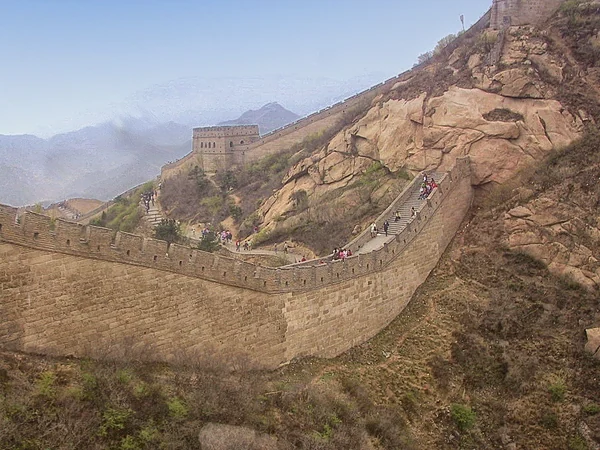
The Northern Wei was founded by the Tuoba branch of the Xianbei and established Pingcheng, near modern Datong, as an early capital. Conflict and negotiation with the Rouran shaped frontier policy.
In the early fifth century, Northern Wei rulers built a long northern wall and fortified positions across parts of present Hebei, Shanxi and Inner Mongolia. UNESCO-linked documentation records a major project around 423, but exact endpoints and kilometre totals vary between sources and survey definitions. Six garrison towns north of the capital became important military and settlement centres.
After Northern Wei divided, Eastern Wei constructed or repaired shorter defensive lines in the mid-sixth century. Popular accounts attach a precise 543 date and route in Shanxi, but travelers should treat exact modern county mapping cautiously unless supported by current archaeological documentation.
Northern Qi, founded in 550, invested heavily in frontier works against northern rivals and also in internal defensive lines facing other states. Construction and repair occurred in multiple campaigns rather than one thirty-year project.
Northwestern sectors protected approaches across Shanxi.
Other works repaired earlier Northern Wei positions near key passes and corridors.
Long eastern extensions connected mountain defenses toward the Bohai side, though exact correspondence with later Shanhaiguan lines remains a matter for site-specific study.
Additional inner lines created defense in depth around routes through Shanxi.
Taihang mountain sectors used topography to control approaches between plateau and plain.
Repeated repair shows that earthen walls required maintenance and that frontier pressure changed rapidly. Many later Ming defenses reused related corridors; visual similarity alone cannot date a ruin.
Northern Zhou replaced Western Wei and later absorbed Northern Qi territory. In the late sixth century it repaired inherited northern defenses rather than creating one wholly separate wall. This reuse links the period to subsequent Sui construction; compare the Sui Great Wall guide. For neighboring chronologies, see the Jin Great Wall, while the Great Wall history overview keeps these distinct systems in sequence. Surviving earthworks are fragile: visit marked heritage sites and avoid assigning an unlabelled ridge to a dynasty from appearance alone.
From $ 389
From $ 509

From on request
Editorial accountability
Hu Lei, CEO. The named owner is responsible for travel-planning accuracy and escalation of time-sensitive checks.
Yuntian Travel (Yunnan) Group is identified in its corporate profile as a licensed professional inbound travel service provider based in Kunming, China. Registration and travel-service documents can be requested before booking.
Page-specific references where cited, official destination, transport and entry notices, YUNSKY route-planning records, and direct provider confirmation before a booking is finalized.
Content is reviewed when rules, transport, access, pricing or route conditions change. Final availability and operating details are reconfirmed for each traveler’s dates.
Quality review: Page updated: