Your China & Yunnan Travel Experts


Qin built more than one frontier line as its territory and threats changed. Early defenses in the west and northwest cannot simply be equated with the later imperial project ordered after unification. Wei State was one important rival in the east. Qin fortifications west of the Yellow River helped defend approaches across northern Shaanxi, although popular route descriptions often claim greater precision than the surviving evidence supports.
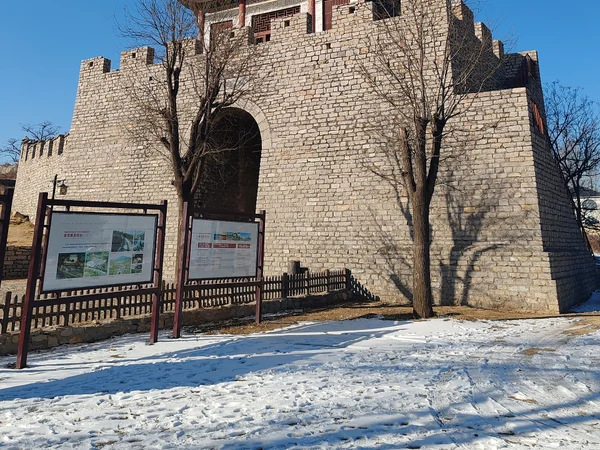
Zhao used walls on more than one front. Southern lines addressed rivalry with neighboring states, while northern lines related to the steppe frontier and the reforms associated with King Wuling. These systems were separated in purpose and geography; presenting them as one continuous “Zhao Great Wall” hides that distinction. Remains and proposed routes occur in parts of Hebei, Shanxi and Inner Mongolia. Many are low earthworks rather than a walkable brick wall, and access may cross protected or rural land. Zhao's military adaptation included cavalry as well as fixed defenses. A wall could delay movement and protect selected corridors, but mobile forces were still necessary.
Zhongshan was smaller than the major powers but occupied strategically important territory between larger neighbors. Fortifications attributed to it show that wall building was not limited to the seven dominant states. The historical geography is complex because borders changed and later construction reused earlier terrain. Shanxi and Hebei preserve multiple defensive layers; a traveler should not assume that every ridge bank belongs to Zhongshan without local interpretation.
Wei controlled territory around the Yellow River and faced pressure from Qin and other neighbors. Sources distinguish walls in different sectors, including the Hexi area west of the river and defenses farther east or south. These lines protected farmland, routes and political centers as well as a simple boundary. Their remains are fragmented, and the modern provincial map should not be projected directly onto Warring States borders.
A wall associated first with Zheng and later with Han illustrates reuse after conquest. The same earthwork could acquire a new strategic meaning when territory changed hands. Sites near present-day Xinzheng belong within a wider landscape of capitals, settlements and transport routes rather than an isolated wall attraction.

From $ 389
From $ 509

From on request
Editorial accountability
Hu Lei, CEO. The named owner is responsible for travel-planning accuracy and escalation of time-sensitive checks.
Yuntian Travel (Yunnan) Group is identified in its corporate profile as a licensed professional inbound travel service provider based in Kunming, China. Registration and travel-service documents can be requested before booking.
Page-specific references where cited, official destination, transport and entry notices, YUNSKY route-planning records, and direct provider confirmation before a booking is finalized.
Content is reviewed when rules, transport, access, pricing or route conditions change. Final availability and operating details are reconfirmed for each traveler’s dates.
Quality review: Page updated: