Your China & Yunnan Travel Experts


Reviewed August 27, 2026. The best things to do in China for senior travelers are experiences that remain worthwhile when pace, seating, weather and access are made explicit. Age alone does not define ability. Use this list to choose activities by actual surface, distance, steps, altitude, transfer time and recovery—not by a vague “easy” label. Confirm current opening, reservations and assistance directly with the operator.
The Great Wall guide compares sections, but the exact entrance and tower matter more than the name. Mutianyu often has cable-car choices; these reduce climbing but do not remove every slope, step, queue or transfer. Ask which cable car, where the vehicle stops, whether the route has handrails, and how a traveler can turn back.
Choose a cool, clear part of the day, wear tested footwear and keep the goal modest: one memorable viewpoint is enough. Carry treated water, agree on a turnaround time and avoid separating a traveler from essential medicine. A wheelchair or cane requires direct confirmation of surfaces and boarding. Do not describe any wall section as universally accessible.
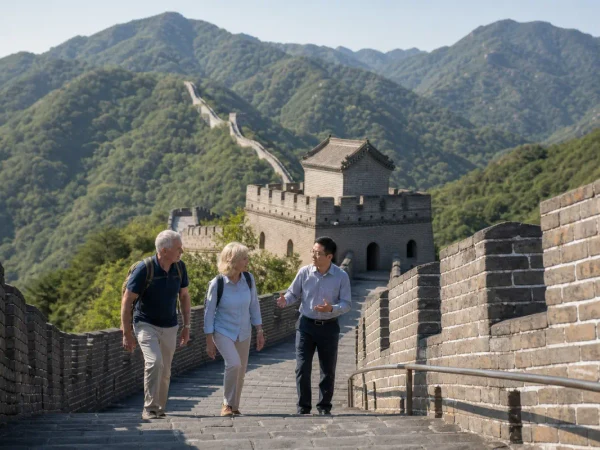
Older travelers walking at a measured pace on the Mutianyu Great Wall
The museum complex near Xi'an rewards good interpretation. Arrange the transport and entrance in advance, then prioritize the pits that answer the traveler's questions about the Qin empire, workshop production and conservation. Crowds, standing time and long indoor distances can be more tiring than the drive.
Ask about official wheelchairs or assistance, build in seats, and avoid placing another major site after the visit. Large bags, security procedures and current ticket reservations should be checked before departure. A hands-on replica workshop can be interesting if it is clearly identified as a modern activity rather than an authentic excavation experience.
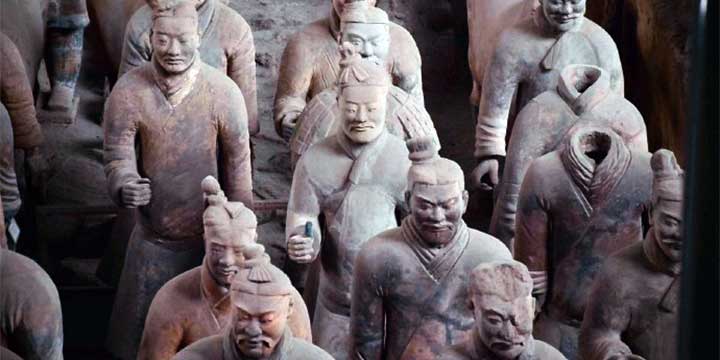
Terracotta warriors viewed at the Emperor Qinshihuang mausoleum museum
Shanghai works best when a day has a clear theme: the Bund and river history, a museum collection, or a garden and old-city story. Crossing the metropolis repeatedly wastes energy. Official guidance notes that accessibility varies at older venues, so request the exact lift, entrance and vehicle point.
A guided museum visit offers depth with seating and climate control. Pair it with a short level waterfront segment or tea break instead of stacking several distant landmarks. Reserve popular museums in advance where required, and keep an indoor alternative for rain or heat. This approach reveals modern China and treaty-port history without treating the skyline as the whole city.
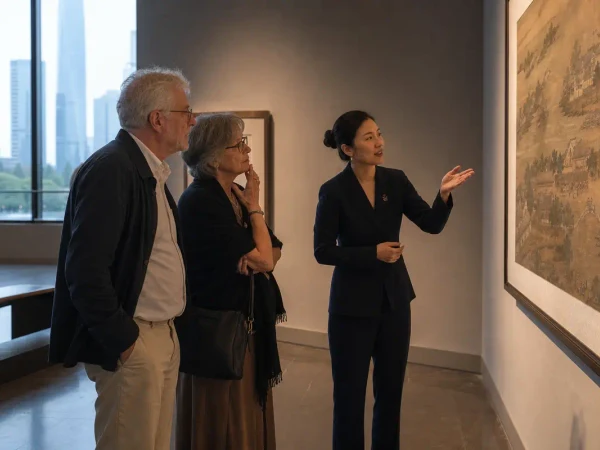
Older visitors discussing Chinese art with a museum interpreter in Shanghai
Visit a recognized panda facility early, when cooler conditions may support more activity, and check the current opening and shuttle arrangements. The China panda guide explains the species and destinations. No operator can guarantee a close encounter, cub viewing or a particular behavior. Hands-on keeper or volunteer programs change and may have health, age or welfare restrictions. Verify directly rather than building a trip around outdated advertising. Do not feed, touch or call to animals unless an authorized keeper explicitly directs an approved activity. For most visitors, a well-interpreted observation route is the responsible experience. If walking tolerance is limited, identify the priority enclosures, internal transport and exit before arrival. Combine the morning with a seated teahouse or museum afternoon.
A giant panda resting on a tree branch at a Chengdu conservation facility

Best practice: quiet observation, current facility rules and no promised contact.
A Guilin-to-Yangshuo cruise provides long periods of seated karst viewing, but boarding, stairs, deck access, toilets and the road return determine whether it is a good fit. Ask for photographs or measurements of the vessel route when mobility is important. River level, weather and operations can change.
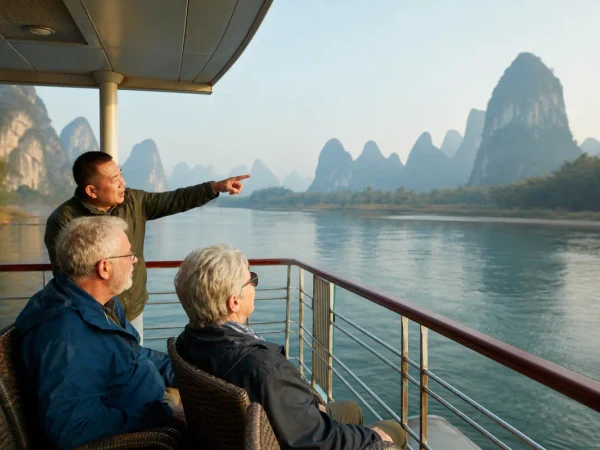
Choose an indoor seat with optional deck time, protect against sun and slippery surfaces, and keep the return drive realistic. Confirm whether lunch is included and whether dietary needs can be met safely. A short city-lakes cruise or riverside viewpoint may be a better alternative for someone who cannot manage the gangway.
Older travelers viewing Guilin karst peaks from a shaded Li River cruise deck
Pingyao, Lijiang, Dali and Jiangnan water towns preserve very different urban histories. Choose by the traveler's interests and by surface: cobbles, bridges, drainage channels, thresholds and vehicle restrictions can turn a small town into a demanding walk. Stay near an accessible edge rather than assuming a central lane is convenient.
Use a local guide or museum to explain who lives there now, what has been restored and how tourism changed the place. Photograph respectfully, avoid blocking residents, and prefer one well-chosen route over collecting several similar towns.

Traditional rooftops and mountain setting of Lijiang Old Town
China's officially recognized ethnic groups have distinct languages, histories, religions and contemporary lives. Avoid presenting communities as a single “minority culture” or promising staged authenticity. Choose locally led museums, craft cooperatives, markets or village visits that explain consent, photography rules and where visitor fees go.
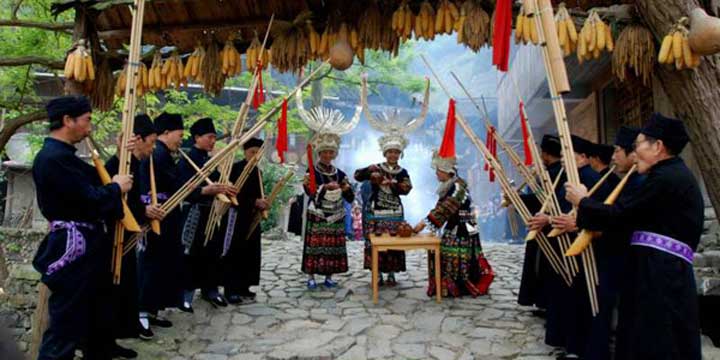
A cultural welcome in a Guizhou village, photographed with permission
Possible regional focus points include:
Zhangjiajie, Huangshan, Huashan, Taishan and Emei have different elevations, stairs, cable cars, shuttle systems and weather. A cable car may still involve queues and steep approaches. Ask for the complete route from vehicle to viewpoint and back. At high sleeping altitude, CDC guidance emphasizes gradual ascent; fitness does not prevent altitude illness.

Zhangjiajie sandstone pillars viewed from a protected scenic overlook
A dumpling class can combine food history, hand skills and conversation while seated. Confirm allergies, ingredients, kitchen access and whether participants will eat the filling they handle. Explore the Chinese cuisine guide first, then ask the host about regional fillings instead of calling one recipe universally authentic.
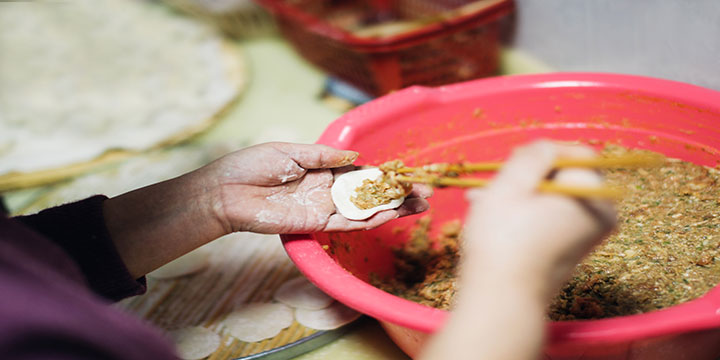
Hands shaping dumplings during a hosted cooking lesson in Xi'an
A seated performance can be an excellent cultural evening, but late finishes, stairs, loud sound and the return transfer still matter. Confirm duration, interval, accessible seating, restroom route and cancellation policy. Do not schedule a show after the hardest walking day merely because it involves sitting.
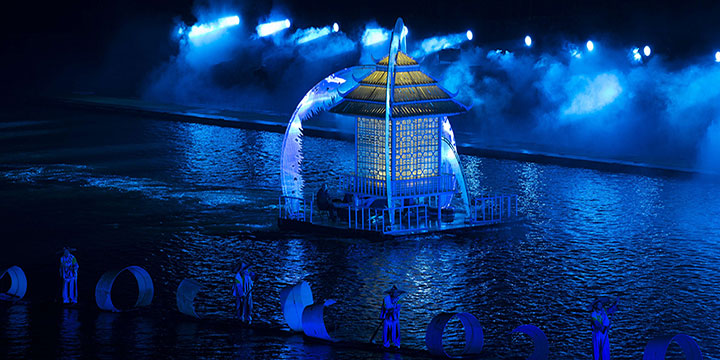
Outdoor performance on the Li River near Yangshuo
Before booking, describe walking tolerance, stairs, balance, hearing, vision, altitude history and required equipment without reducing the person to an age. Ask the operator to state distances, surfaces, seats, toilets and exit options. request a paced activity plan that makes optional experiences genuinely optional.

Older travelers comparing China activities with a tour planner
A balanced trip leaves room to stop. The goal is not to complete all ten activities. It is to choose the few that remain meaningful, safe enough and enjoyable for this traveler.
From $ 1599

From on request

From $ 23332100
Editorial accountability
Hu Lei, CEO. The named owner is responsible for travel-planning accuracy and escalation of time-sensitive checks.
Yuntian Travel (Yunnan) Group is identified in its corporate profile as a licensed professional inbound travel service provider based in Kunming, China. Registration and travel-service documents can be requested before booking.
Page-specific references where cited, official destination, transport and entry notices, YUNSKY route-planning records, and direct provider confirmation before a booking is finalized.
Content is reviewed when rules, transport, access, pricing or route conditions change. Final availability and operating details are reconfirmed for each traveler’s dates.
Quality review: Page updated: