Your China & Yunnan Travel Experts


The Silk Roads became more closely connected with Han imperial policy from the late second century BCE, especially under Emperor Wu. This did not create trade across empty territory. Central Asian societies, steppe networks and earlier exchange routes already existed. Han missions, military expansion, commanderies and diplomacy made Chinese court contact more direct, while merchants and intermediaries determined how goods actually moved.
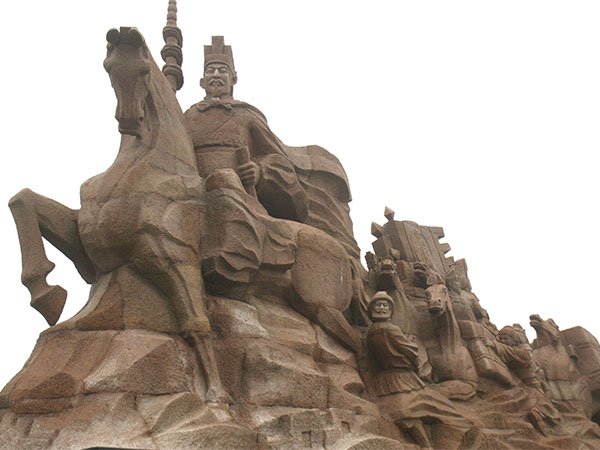
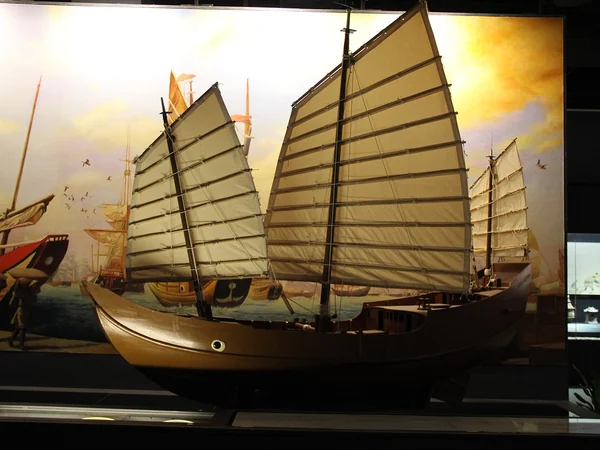
During the Han dynasty , coastal and overseas contacts developed alongside overland routes. Historical texts describe diplomatic and commercial movement through the Yellow Sea, the South China Sea and onward toward Southeast and South Asia. The surviving evidence is uneven, so it is safer to speak of multiple maritime connections than three fixed lines operating like modern shipping routes.
One coastal network connected ports along the South China coast and Gulf of Tonkin, including Hepu in Guangxi . It supported regional movement as well as connections toward mainland Southeast Asia; it was not one scheduled route with a fixed northern and southern terminus.
Northern and eastern coastal travel linked ports in Shandong with the Korean Peninsula and the Japanese archipelago. These East Asian routes should not be collapsed into the Indian Ocean network simply because both involved sea travel.
Southern maritime connections also developed from locations in Guangdong . Xuwen and Hepu are frequently discussed in relation to early Han overseas exchange. Hepu is in Guangxi—not Zhejiang—and later ports such as Quanzhou belong to different chronological phases. Monsoon knowledge, ship design, local pilots and transfer markets all shaped the movement of pearls, glass, aromatics and textiles.
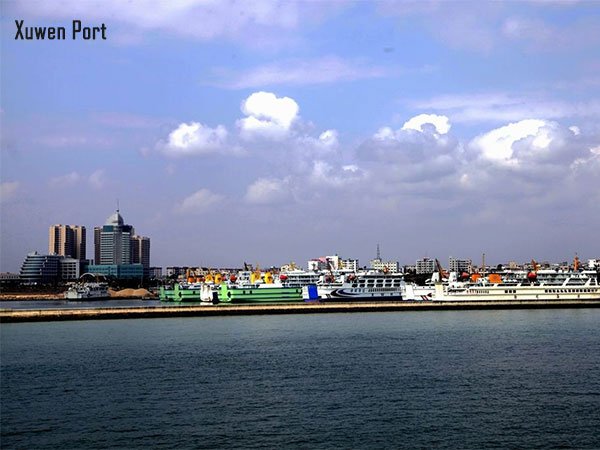
Xuwen on the Leizhou Peninsula and Hepu on the Gulf of Tonkin are important to discussions of southern Han sea routes. Their locations offered access toward mainland and island Southeast Asia, but neither should be marketed as the only “first port” of the Maritime Silk Road without defining the source and period. Guangzhou, Ningbo and Quanzhou became prominent in other eras.
A useful trip interpretation compares port archaeology, ship or cargo evidence and later urban development. Confirm whether a museum gallery or site is open before building an itinerary around it; coastal heritage displays can change while the historical geography remains.
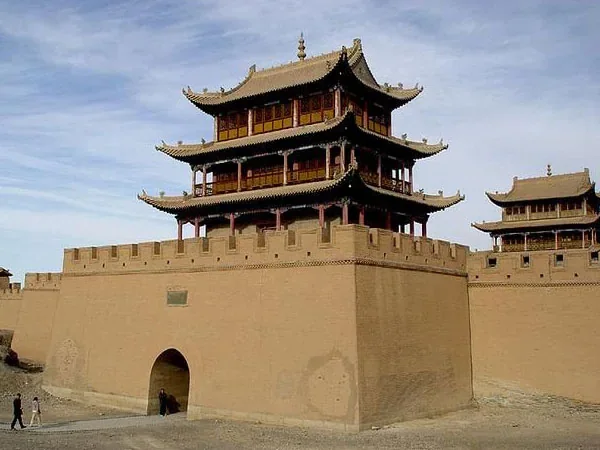
Emperor Wu sent Zhang Qian , whose missions in the second century BCE supplied the Han court with knowledge about polities and routes west of the Yumen Pass . His journeys were diplomatic and strategic, not a modern commercial survey. Read the dedicated account of Zhang Qian's missions and place them within the broader Silk Road chronology.
Han control of the Hexi Corridor and frontier commanderies changed the political conditions for travel. Silk, horses and other valuables moved through diplomacy, taxation and regional markets. Roman demand for silk belongs to this wider relay system; it does not mean regular direct caravans operated between the Han capital and Rome.
Chinese texts record an embassy claiming to represent Da Qin in 166 CE. Historians debate the identity and status of that mission, so it should not be described without qualification as the first direct state contact with Rome. Maritime and overland networks both relied on intermediaries.
The Han legacy is therefore institutional and geographic as much as commercial: commanderies, passes, records and diplomacy connected China more deeply with existing Eurasian systems.
Visitors can trace that history through Xian, the Hexi Corridor, Dunhuang and museum collections, while distinguishing a Han object from a later Tang, Song or Ming monument. Current galleries, excavation displays and access rules should be confirmed before travel.
From $ 3510
From $ 3061

From $ 3683
Editorial accountability
Hu Lei, CEO. The named owner is responsible for travel-planning accuracy and escalation of time-sensitive checks.
Yuntian Travel (Yunnan) Group is identified in its corporate profile as a licensed professional inbound travel service provider based in Kunming, China. Registration and travel-service documents can be requested before booking.
Page-specific references where cited, official destination, transport and entry notices, YUNSKY route-planning records, and direct provider confirmation before a booking is finalized.
Content is reviewed when rules, transport, access, pricing or route conditions change. Final availability and operating details are reconfirmed for each traveler’s dates.
Quality review: Page updated:
