Your China & Yunnan Travel Experts


Silk Road itineraries may include Buddhist cave complexes, active monasteries, mosques, Daoist or folk-religion temples and historical ruins. These places do not share one universal rulebook. First identify whether the site is active worship space, an archaeological monument, a museum-managed cave or a mixed complex. Posted notices and staff instructions take priority because access and photography rules can change by hall, cave, ceremony and conservation condition. Dress in clean, modest clothing that covers shoulders and avoids very short hems when entering active religious spaces. Site-specific requirements may be stricter. Remove hats when requested. Shoe removal is not universal in Chinese Buddhist temples, so follow the local practice rather than assuming. Move quietly around worshippers and ceremonies. Do not step between a person and the altar for a photograph. Ask before photographing clergy, worshippers or private devotional activity. Consent matters even when general photography is permitted. Flash, tripods and interior photography are often restricted in painted caves because conservation and crowd management differ from ordinary sightseeing. Do not touch murals, sculpture, manuscripts, prayer objects or painted surfaces. Oils, abrasion and accidental impact cause lasting damage. Avoid pointing feet toward an altar or climbing onto thresholds, platforms and statues for a better angle. Incense and offerings are optional unless a site clearly states otherwise. Never imitate a ritual merely for a staged photograph. If invited to participate, observe first and follow a host's instruction without blocking others. Donations should use the designated box or official channel. Avoid unverified people soliciting money outside the site. Food, smoking and loud phone use are inappropriate in worship halls and protected interiors. Children should remain close to an adult because courtyards may contain burners, steps and crowded thresholds. Accessibility varies in historic compounds. Stone steps, uneven paving and high thresholds may limit wheelchair access. A guide can explain iconography, patronage and chronology, but visitors should distinguish documented history from local legend. The Silk Road monks guide provides historical context for pilgrimage and translation. Active religious communities are not performances preserved for tourism. Allow normal worship to continue without interruption. Rules based on gender, health or ritual status vary by tradition and site. Do not repeat unsupported claims that menstruation or pregnancy universally bars entry. When uncertain, ask a staff member a simple question and accept the answer without argument. Keep tickets and reservation information accessible; timed entry may apply at conservation-managed sites. Leave enough time to visit slowly. Respectful attention usually provides more value than rushing through every hall.
These principles protect both living practice and fragile heritage.
Read the entrance notice, check whether the building is open to non-worshippers, silence the phone and store food. A courtyard open to visitors does not guarantee access to every hall.
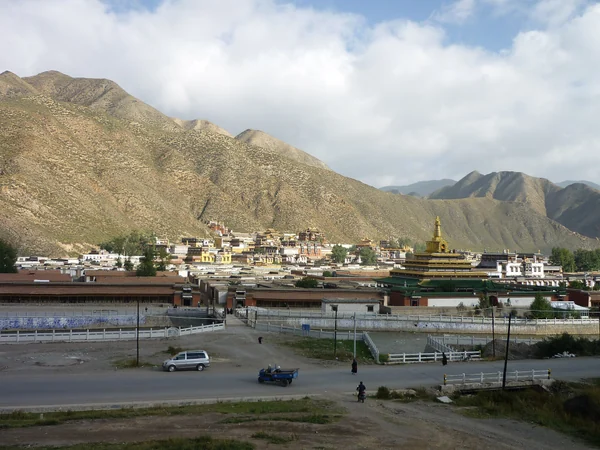
Buddhist sites on China's Silk Road range from active monasteries to cave complexes with no resident monastic community. At an active temple, circumambulation may follow a local direction and worshippers may bow or offer incense. Visitors are not required to copy them. Statues and altars should not be touched. Do not sit on platforms reserved for clergy or ritual objects.
Vegetarian dining halls, when available, have their own hours and conduct rules. Confirm rather than assume a meal is included. Labrang, Ta'er and other monasteries belong to specific Tibetan Buddhist traditions; terminology and visitor routes differ. The Tang Silk Road guide explains how Buddhist exchange shaped Chang'an and Dunhuang without treating every surviving site as Tang.
At Mogao, Yulin and similar caves, conservation rules determine which spaces open and whether photography is allowed. Dark interiors are deliberate conservation environments, not a reason to use unauthorized flash. Murals may contain imagery from several periods. A guide or catalog can separate original work, repainting and restoration.
Avoid leaving coins, written notes or other objects on protected sculpture unless the site provides a designated practice. Prayer wheels and other ritual objects should be used only where visitor participation is clearly permitted. Monastic debate, chanting and ceremonies may have limited visitor access. Observe from the assigned area.
Portrait photography requires consent even when a monk is in a public courtyard. A monastery is also a residence and workplace. Do not enter doors marked private. Responsible behavior supports the continuity of the community as well as preservation of its buildings.
Mosques in Xinjiang and elsewhere may limit visitor access during prayers or to particular areas. Dress modestly, remove shoes where instructed and never photograph worshippers without permission.
Islamic architecture on a Silk Road itinerary should be interpreted as living regional heritage, not an exotic backdrop.
Non-Muslim access differs by site, so confirm at the entrance and accept a restriction without attempting to enter through another door.
Practices vary among Daoist, local and mixed temples. Follow the hall's signs, avoid blocking divination or offering areas, and do not assume Buddhist etiquette applies unchanged.
Ask whether photography is allowed before raising a camera inside a hall. A crossed-camera symbol may apply even without an English notice. Use a quiet voice and avoid debates about belief with worshippers. Questions are better directed to an authorized guide or public information desk.
The Chinese philosophy and religion guide introduces major traditions while recognizing regional variation. Do not geotag restricted interiors or share images that reveal people in private worship without consent.
Choose captions that name the actual site, tradition and object when known. Avoid calling every religious building a “temple”; mosque, monastery, grotto and ancestral hall describe different institutions.
Before publishing a rule as universal, confirm it with the specific site and current date. Respect is practical: observe, ask, keep distance and leave the place as you found it.
From $ 3510
From $ 3061
From $ 3683
Editorial accountability
Hu Lei, CEO. The named owner is responsible for travel-planning accuracy and escalation of time-sensitive checks.
Yuntian Travel (Yunnan) Group is identified in its corporate profile as a licensed professional inbound travel service provider based in Kunming, China. Registration and travel-service documents can be requested before booking.
Page-specific references where cited, official destination, transport and entry notices, YUNSKY route-planning records, and direct provider confirmation before a booking is finalized.
Content is reviewed when rules, transport, access, pricing or route conditions change. Final availability and operating details are reconfirmed for each traveler’s dates.
Quality review: Page updated:
