Your China & Yunnan Travel Experts



Types of Chinese Fans
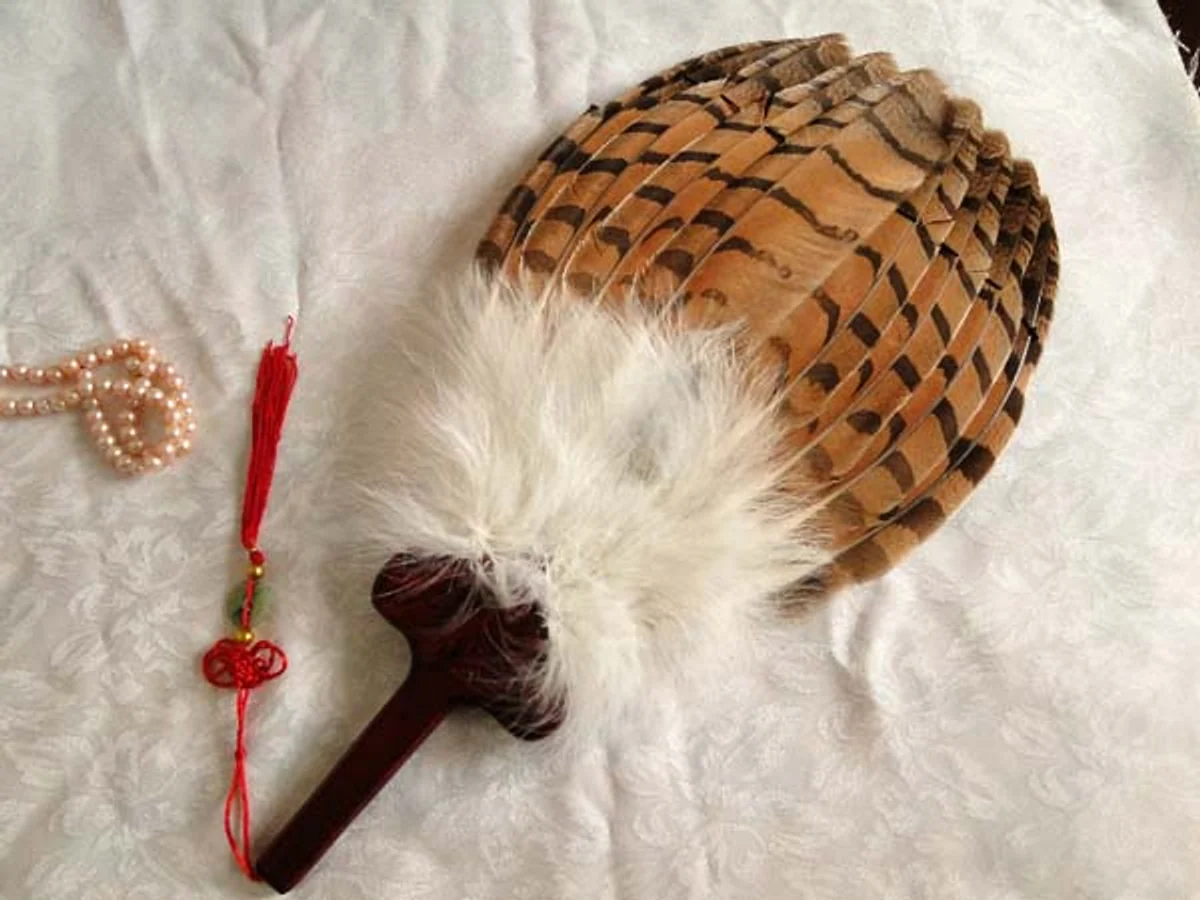
Fixed fans can use a rigid bamboo or wood frame covered with silk, gauze or paper. Folding fans are assembled from pivoted ribs and a pleated leaf; brisé fans rely mainly on linked sticks without a continuous leaf. Feather and palm-leaf fans form further categories. Materials affect weight, airflow, durability and the techniques available to the decorator.
Function also matters. Fans have been used for cooling, ceremony, dance, theatre, processions, interior display and gifts. Oversized decorative fans are modern display objects, not evidence that every historical fan had a ritual role. Regional pages such as the Rongchang paper fan guide show how one locality developed its own materials and production identity.
Chinese fan
History
Fixed fans appear in early Chinese visual and archaeological records, although fragile materials make a simple invention date difficult to prove. Round silk fans became closely associated with courtly and elite life in later periods. Folding fans entered China through wider East Asian exchange and became especially prominent among Ming and Qing scholars. This distinction is more accurate than claiming that one unchanged fan form began in a single ancient dynasty.
Fan leaves offered a compact format for landscapes, flowers, birds, poems and correspondence. The curve and folds alter composition: a painter must place forms across ribs, while a calligrapher adjusts spacing as the leaf widens. Embroidery could decorate fixed silk fans, but painting, weaving, carving and embroidery are separate techniques and should be identified correctly.

Chinese fan
Inscribed Fans
Stories about Wang Xizhi transforming an ordinary fan with his calligraphy express the value attached to artistic authorship. They are best presented as literary tradition rather than a verified market transaction. Surviving fan paintings and inscriptions show that fans could circulate as gifts, commissions and works collected separately from their original frames. Museum albums often preserve only the fan-shaped leaf.
A famous signature can greatly affect value, which also makes fan leaves vulnerable to later attributions and forged seals. Reliable dating considers paper or silk, mounting, pigments, calligraphy, seals and provenance together. Condition matters too: repeated opening strains folds, and prolonged display can fade paper and textile. Valuable historic fans should be handled and conserved professionally.
Hangzhou, Suzhou, Rongchang and Yangshuo are among places connected with distinctive fan traditions. The Yangshuo painted fan guide can be combined with Guilin tourism planning, while Hangzhou offers strong museum context for fan painting and calligraphy. Confirm workshop access before travel, ask whether the object is hand-painted or printed, and check rib alignment and hinge movement without repeatedly opening a delicate piece.

Chinese fan