Your China & Yunnan Travel Experts



Characteristics and making process of Chinese cloisonne
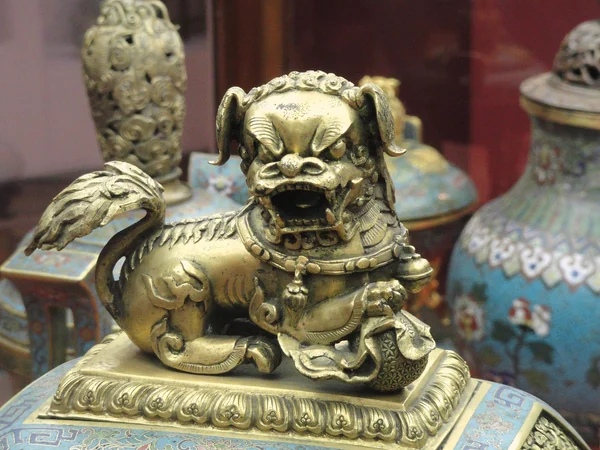
A maker first forms a copper or other metal body, then bends and attaches thin wires to outline the pattern. Enamel paste is placed inside the cells and fired. Because enamel settles or shrinks, filling and firing may be repeated until the surface reaches the intended level. Grinding and polishing reveal the wire network, and exposed metal may be gilded. The number of firings is not fixed for every object; scale, enamel, repair and workshop practice all matter. The close-up below helps visitors see why surface and wire should be read together.
Stories and terminology
Legends about a palace fire producing the first cloisonne vase are part of later storytelling, not reliable evidence for the technique's invention. Material and art-historical study instead points to exchange with western and Islamic enamel traditions and to adaptation in China during the Yuan and early Ming periods. Presenting the legend as legend preserves its cultural interest without replacing evidence.

Chinese cloisonne detail
History of Chinese cloisonne
Chinese sources record cloisonne by the Yuan period, while the earliest securely dated Chinese examples belong to the Ming Xuande reign. Foreign influence contributed to the technique, but the route, workshops and timing remain subjects for careful scholarship. Chinese makers transformed imported knowledge through local vessel shapes, lotus scrolls, auspicious imagery and court patronage.
Chinese cloisonne in the Ming dynasty (1368–1644)
High-quality early Ming works include dishes, censers, jars, ritual vessels and furnishing objects. Turquoise or blue grounds are prominent, often combined with red, yellow, white, green and dark blue enamels. The label “Jingtai” became important in connoisseurship, but quality cannot be authenticated from a blue ground or a reign name alone.
Chinese cloisonne in the Qing dynasty (1644–1911)
Qing court workshops expanded the range of forms, colors and mixed-media combinations. Temple and palace settings used enamel for ritual objects and furnishings; museum visitors can compare examples at thePalace Museum in Beijing. The collection context matters because a palace object, an export ware and a modern workshop piece may use related techniques for different audiences.
Twentieth- and twenty-first-century makers continued the craft through workshop production, restoration, exhibition and new designs. Modern pieces can be technically demanding and artistically valuable; age is not the only measure of merit. Contemporary enamel colors and forms may differ from court precedents while retaining the defining relationship between metal cells and fired enamel.

Modern Chinese cloisonne
As a major historical production and collection center,Beijingis the most practical city for travelers who want to compare palace examples with present-day work. Use the Beijing tours hub to plan enough time for collections and workshops instead of treating the craft as a quick shopping stop.
Factory and workshop visitsA demonstration may show body forming, wire bending, enamel filling, firing, polishing or gilding, but few short visits cover every stage. Ask which steps occur on site and whether the person demonstrating is the maker of the finished object. Addresses, museum displays and visitor access can change, so confirm directly before travel. For court context, the ancient Chinese architecture guide explains how decorative objects functioned within larger ritual and palace spaces.
Cloisonne as a diplomatic and cultural object
Cloisonne has been used for court furnishings, religious objects, export, exhibitions and official gifts. A specific diplomatic gift should be identified by event and documentation rather than generalized into a permanent role for the entire craft. Its modern visibility reflects both heritage preservation and changing design markets.
1. Buy for documented workmanship and design, not an unsupported claim of antiquity. For practical context, read the YunSky cloisonne shopping guide.
2. Weight, roughness and color cannot authenticate age. Old and new objects vary, and repairs or artificial patination may be difficult to recognize.
3. Check for stable enamel, intentional wirework, a level base and secure fittings. Small pits may result from firing, but cracks, loose enamel and sharp edges need explanation.
4. Request a receipt and maker or workshop information. Significant antiques may be subject to cultural-property and export controls; obtain qualified advice before purchase.

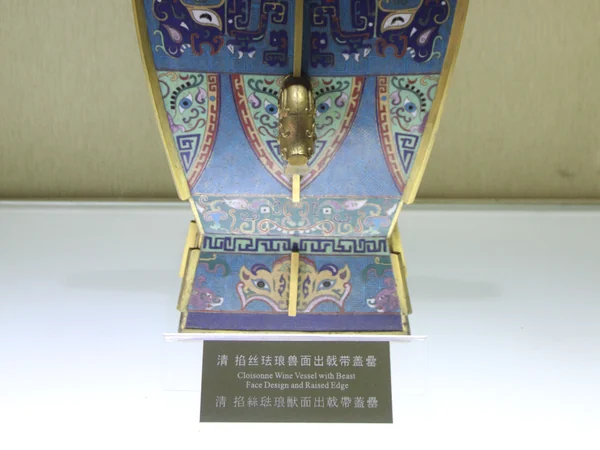
Finished Chinese cloisonne vessel
Editorial accountability
Hu Lei, CEO. The named owner is responsible for travel-planning accuracy and escalation of time-sensitive checks.
Yuntian Travel (Yunnan) Group is identified in its corporate profile as a licensed professional inbound travel service provider based in Kunming, China. Registration and travel-service documents can be requested before booking.
Page-specific references where cited, official destination, transport and entry notices, YUNSKY route-planning records, and direct provider confirmation before a booking is finalized.
Content is reviewed when rules, transport, access, pricing or route conditions change. Final availability and operating details are reconfirmed for each traveler’s dates.
Quality review: Page updated: