Your China & Yunnan Travel Experts



“Old Shanghai furniture” is an informal umbrella, not a dynasty, protected designation or single workshop style. It can refer to imported furniture, locally made adaptations, Chinese hardwood pieces used in Shanghai homes, Art Deco hotel fittings, or later nostalgia products evoking the city between the mid-19th century and 1949. A reliable description therefore names the maker, building, owner, material and date when known. M+ preserves a circa-1929 desk from the Cathay Hotel—today's Peace Hotel—as a documented example; one hotel object is stronger evidence than a generic claim that every dark-wood sofa is “Shanghai style.”
How a Port City Shaped Furniture and Interiors
Shanghai's manufacturing and design culture developed through Chinese craft traditions, industrial production, global trade and unequal treaty-port conditions. Consumers encountered imported forms and materials while local workshops adapted them to apartments, shops, clubs, offices and hotels. The result was plural: classical Chinese rooms, European revival interiors, Art Deco suites and hybrids could coexist in the same city.
British and American settlement areas later combined as the International Settlement, while a separate French Concession developed its own institutions and built environment. These histories affected land, labor, commerce and taste, but furniture cannot be attributed simply by naming a concession. A label should connect an object to an address, firm, archival photograph or documented owner.
The New Culture era and May Fourth debates changed publishing, education and ideas about modern life, yet they did not single-handedly create a furniture style. Housing patterns, department stores, hotels, factories, design firms, advertising and new middle-class consumption provide more direct evidence for how rooms and products changed.
In the 1920s and 1930s, Art Deco became highly visible in Shanghai architecture and interiors. The Cathay Hotel desk documented by M+ extends the building's Egyptian-influenced geometric program in wood. Other interiors used different motifs, so “Shanghai Deco” should be tied to a specific object or building rather than reduced to red wood plus Western curves.
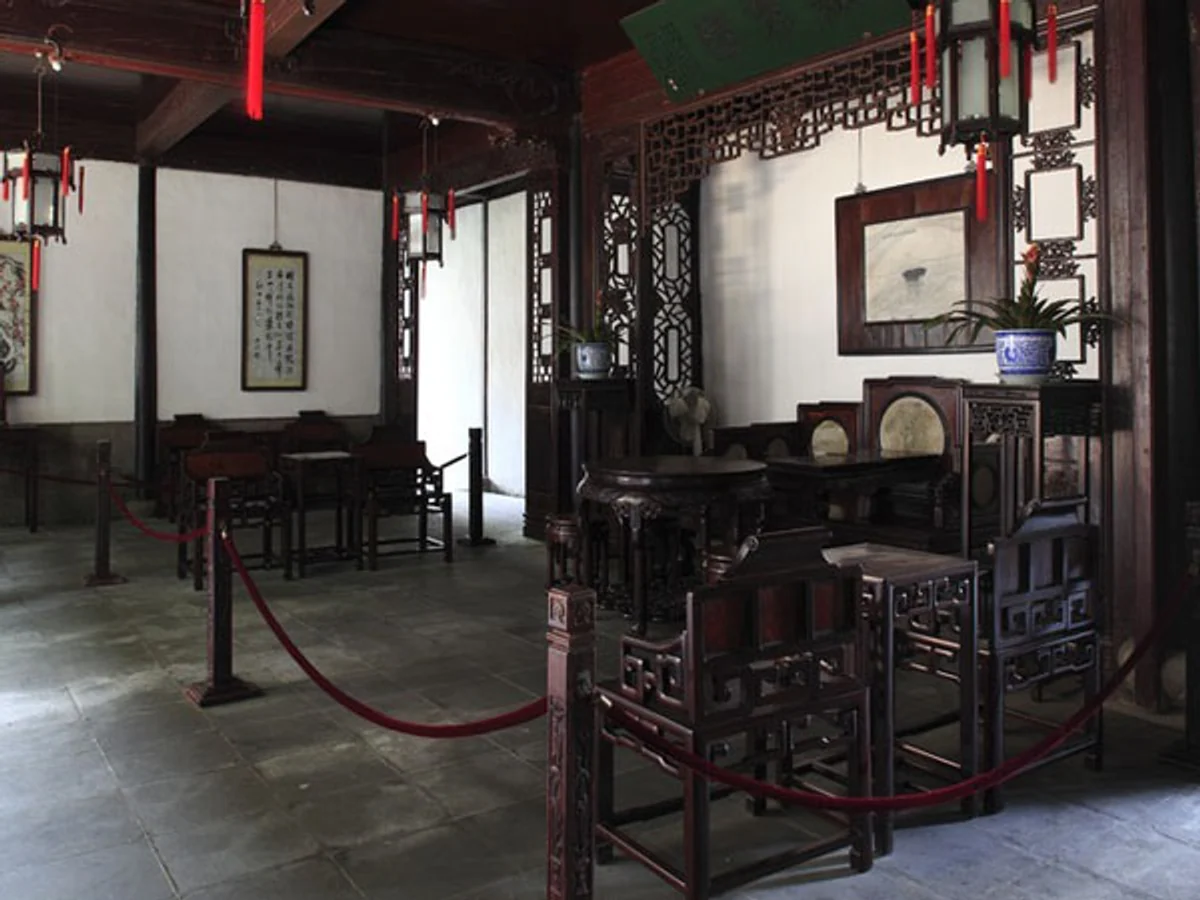
Old Shanghai furniture belongs to a documented room, maker or history—not a color formula
A Visual and Evidence Checklist
First identify the function: hotel desk, radio cabinet, wardrobe, dining suite, upholstered armchair or Chinese-style tea table. Then examine construction, hardware, veneer, upholstery and finish. Geometric stepped profiles may support an Art Deco reading, while Chinese lattice, joinery or auspicious motifs may indicate a different lineage. Mixed features are evidence to investigate, not proof of hybridity by themselves.
Material claims require the same caution used for traditional Chinese furniture. Dark stain does not prove hongmu, and replacement upholstery can transform the visual period. Compare old photographs and catalogued objects, check whether dimensions suit the claimed setting, and record repairs rather than erasing them.
For buying, ask for provenance before accepting stories about a vanished mansion or famous club. Building inventories, maker labels, invoices, family photographs and conservation reports are valuable; vague oral history should be identified as such. Distinguish Chinese objects from European chinoiserie using our Chinese antique cabinet guide. Travelers can see surviving Art Deco architecture and museum collections while exploring Shanghai, but opening hours and displays change—check the institution's official site before visiting. Never export a suspected cultural relic or controlled timber without current documentation.
Editorial accountability
Hu Lei, CEO. The named owner is responsible for travel-planning accuracy and escalation of time-sensitive checks.
Yuntian Travel (Yunnan) Group is identified in its corporate profile as a licensed professional inbound travel service provider based in Kunming, China. Registration and travel-service documents can be requested before booking.
Page-specific references where cited, official destination, transport and entry notices, YUNSKY route-planning records, and direct provider confirmation before a booking is finalized.
Content is reviewed when rules, transport, access, pricing or route conditions change. Final availability and operating details are reconfirmed for each traveler’s dates.
Quality review: Page updated: