Your China & Yunnan Travel Experts



“Chinese rosewood furniture” is a useful search phrase but not one precise historical material category. English rosewood, Chinese hongmu, huanghuali and individual botanical species do not map neatly onto one another. Color alone is unreliable because age, finish, lighting and replacement parts alter appearance. A responsible description starts with the object's form, construction, documented date and identified wood. The traditional Chinese furniture overview places hardwood pieces beside lacquered, softwood and mixed-material furniture rather than treating one luxury material as the whole tradition.
Fine hardwood furniture often uses frame-and-panel construction and carefully fitted joints, but slogans such as “no nails and no glue” are too absolute. Original makers could use adhesives, metal fittings and concealed reinforcement where function required them, and later repairs may add more. Quality lies in how the structure distributes weight, allows panels to move and remains serviceable—not in passing a simplistic nail test.
Names, Origins and Historical Development
Hongmu is best treated as a regulated or trade category defined by applicable standards, not as the botanical name of one tree. Huanghuali is commonly associated with Dalbergia odorifera in museum catalogues, while zitan usually refers to another valued dark hardwood tradition. Common names can cross species and markets; request the scientific identification and supporting method when material affects price or legality.
During the later Ming period, imported and southern hardwoods, sophisticated urban workshops and established carpentry traditions supported furniture with balanced proportions, visible grain and disciplined joinery. Surviving museum objects demonstrate variety, so “Ming furniture” should not be reduced to one chair profile. Read the evidence-led Ming dynasty furniture guide for dated examples and period limits.
Qing court and regional workshops continued earlier forms while also producing larger, denser and more elaborately decorated pieces. Carving, inlay and mixed materials can be important, especially in some 18th-century court furniture, yet restrained Qing objects also exist. Style transitions overlap: a museum may date an object “late Ming–early Qing” when evidence does not justify an artificial border.
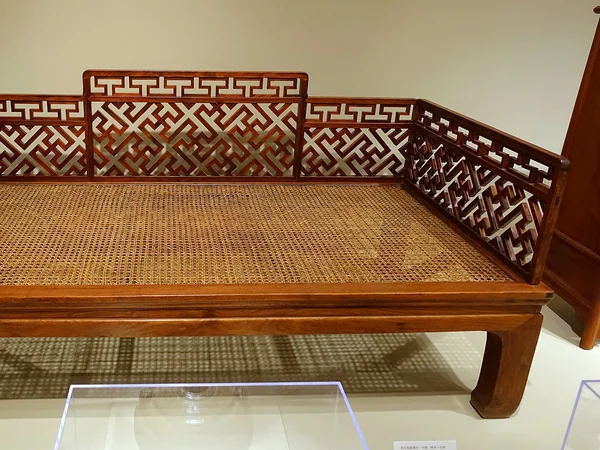
How Rosewood Furniture Is Described
Construction and sales descriptions usually distinguish how much of an object uses the named material. Terminology differs by country and standard, so the written specification matters more than a translated marketing label.
Solid or all-primary-wood construction means the named wood is claimed for the principal components. Verify secondary woods, drawer linings, back panels and later replacements instead of assuming every hidden part matches.
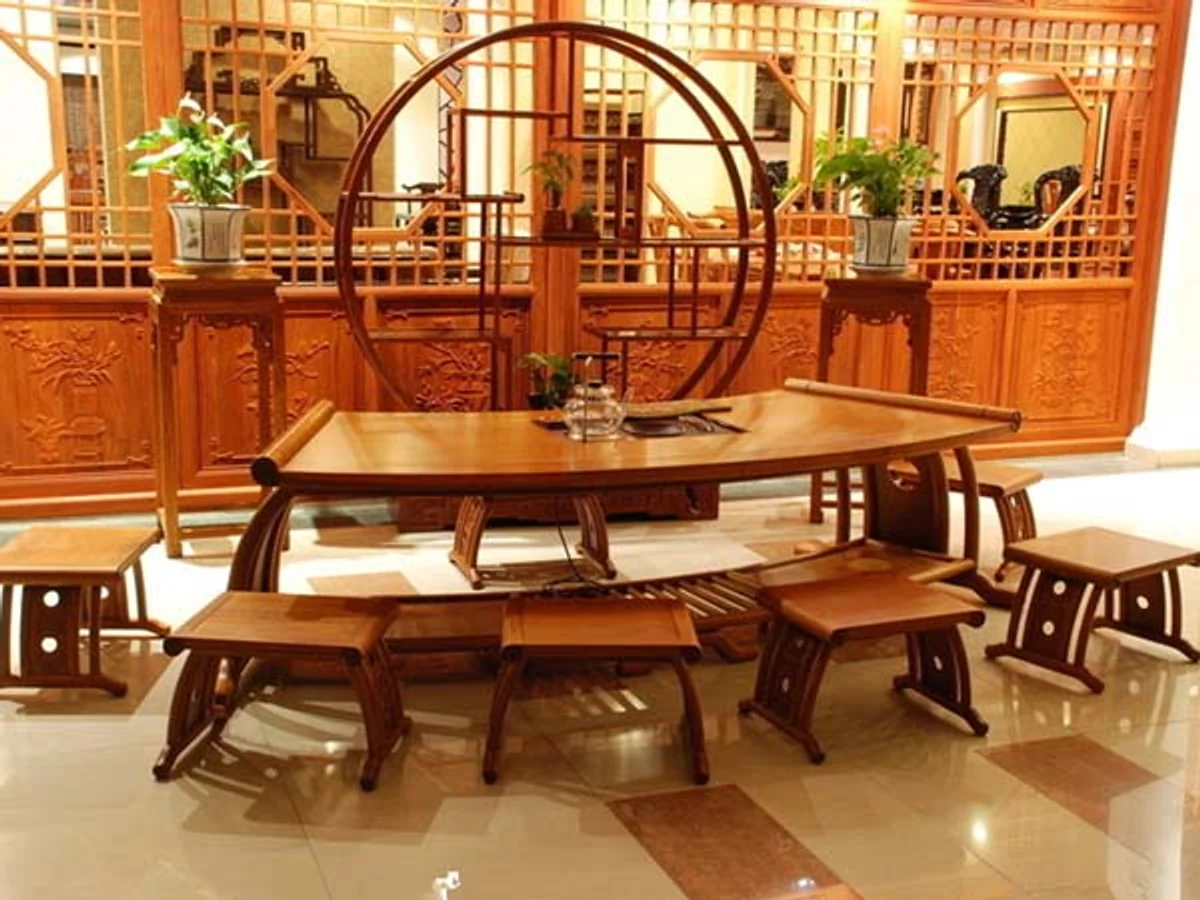
Huanghuali armchair showing the restrained lines associated with Ming furniture
Primary-visible-part construction may use the named hardwood on frames and surfaces while employing another suitable timber internally. This is not automatically deceptive when disclosed accurately; it becomes a problem when a seller implies solid construction.
Veneered or wrapped construction uses a thin decorative layer over a core. Historic veneer can be legitimate craftsmanship. Ask whether the description refers to veneer, edge banding, a modern surface layer or a later restoration, and have lifting or cracking assessed before transport.
Supply and trade require care. Slow growth and high demand have put pressure on several rosewood-associated taxa. CITES listings and national controls can apply differently by species, specimen, date and movement. Do not rely on a generic “antique” claim; check current official rules with the relevant authorities before an international purchase or shipment.
Five Questions for Evaluating Quality
Assess an object as a combination of function, material, workmanship, condition and history. Monetary value is outside the scope of a travel guide and can change with attribution, documentation, restoration and market demand.
1. Does the design work? Sit only when a responsible owner or museum permits it. Otherwise inspect whether rails, stretchers, panels and feet relate coherently and whether later movement has opened joints.
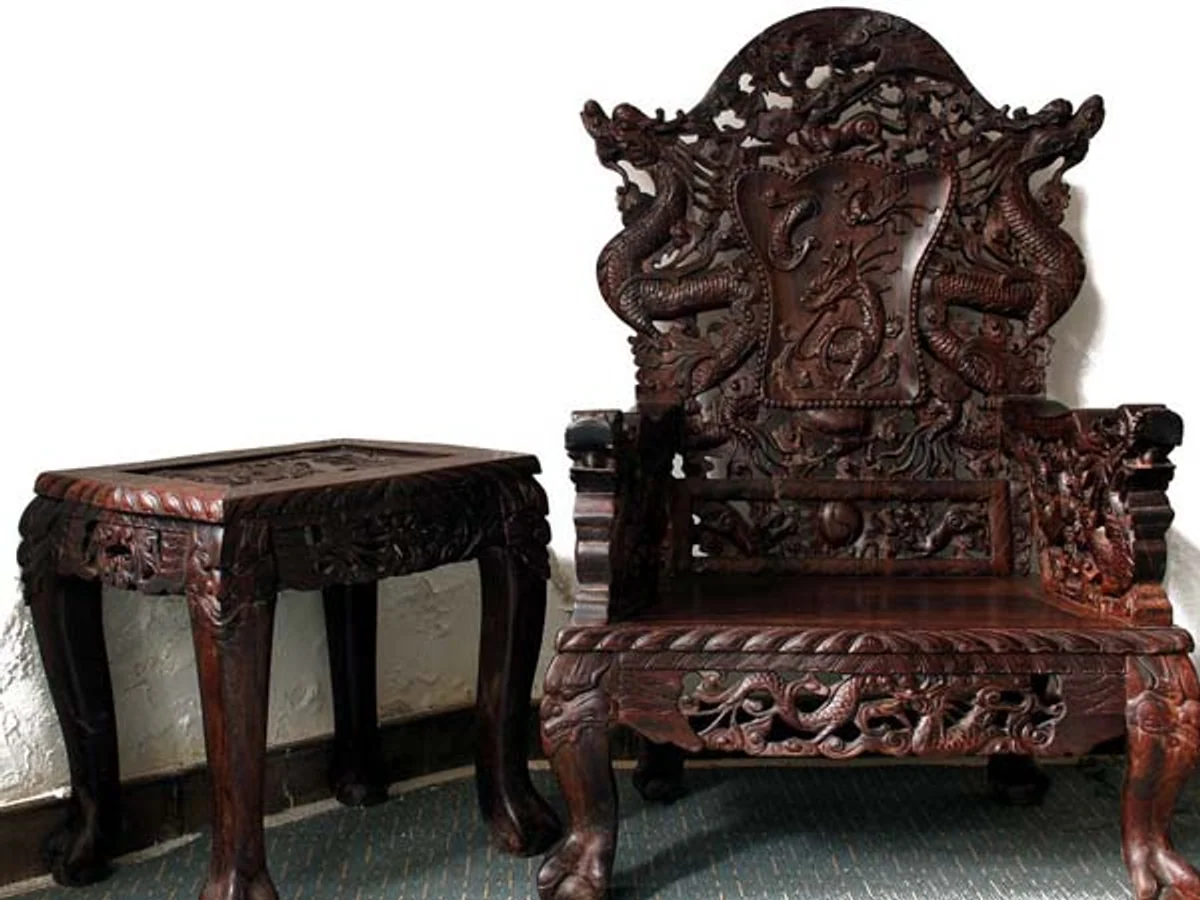
Chinese hardwood furniture should be judged by documented construction, not by red color alone
2. Does the form have evidence? Compare proportions and details with catalogued objects, while remembering that later makers deliberately revived Ming and Qing styles.
3. Is the structure understandable? Well-resolved joinery can be admired without romanticizing it. Look for replaced members, new screws, filler, cut-down legs and stress around joints.
4. Is the material identified? Ask which parts were tested, whether identification is visual or scientific, and whether the invoice uses a botanical name. A vague “rosewood” label is not enough for a high-value claim.
5. Is the history documented? Provenance, old photographs, collection labels, conservation reports and lawful trade records matter more than a seller's story. Our Qing furniture guide helps compare ornate court-associated work with regional and everyday examples, but an independent specialist should assess any proposed acquisition.
Editorial accountability
Hu Lei, CEO. The named owner is responsible for travel-planning accuracy and escalation of time-sensitive checks.
Yuntian Travel (Yunnan) Group is identified in its corporate profile as a licensed professional inbound travel service provider based in Kunming, China. Registration and travel-service documents can be requested before booking.
Page-specific references where cited, official destination, transport and entry notices, YUNSKY route-planning records, and direct provider confirmation before a booking is finalized.
Content is reviewed when rules, transport, access, pricing or route conditions change. Final availability and operating details are reconfirmed for each traveler’s dates.
Quality review: Page updated: