Your China & Yunnan Travel Experts


March is a transition month rather than a single nationwide spring season . Southern and eastern cities may be mild and flowering while the north still has cold nights and the plateau remains wintry. A late cold wave, rain band or dust event can change a route quickly. Compare with the February weather guide if the journey begins early in the month. north and northwest can be dry, windy and dusty; the south and lower Yangtze often become wetter. Use destination forecasts for packing and keep one flexible day. Travelers arriving late in the month can also compare the April weather guide.
March brings longer daylight and more outdoor options, but “spring” advances at different speeds. Elevation and latitude matter: Harbin can still look wintry, Beijing may alternate between warm sun and cold wind, Shanghai can be damp, and South China may enter a wetter pattern. Climate normals are planning averages, not a forecast.
Route-level planning ranges:
Weather risks: Northern and northwestern China can experience spring wind and blowing dust, while southern rain can affect visibility and walking conditions. Review the China climate guide, then check local official alerts. Flowering dates depend on accumulated warmth, rain and wind, so no calendar window guarantees peak bloom. This page was reviewed on 26 August 2026 using WMO climate-normal guidance and China Meteorological Administration seasonal-hazard material.
a. North China — Beijing, Tianjin and Harbin
Beijing and Tianjin usually warm through March but can still receive a sharp cold front. Harbin remains colder and may retain snow. Dry wind, dust and a large daily temperature range favor layered clothing, eye protection and flexible outdoor timing.
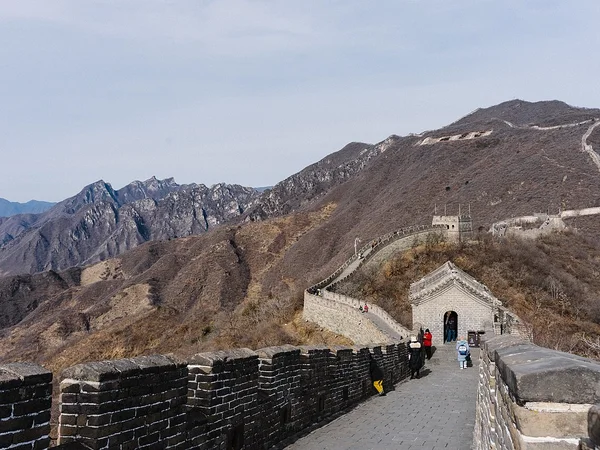
Travel decision: The Great Wall and large palace complexes involve long, exposed walks. Choose the clearest, least windy day, carry water and protect skin from sun and dry air. A clear morning photograph is not a promise of good conditions later in the day.
b. Central China — Xi'an, Zhengzhou and Wuhan
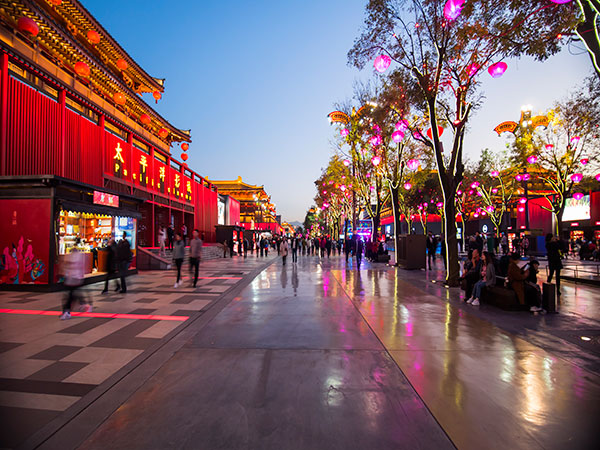
Central cities can combine mild afternoons with cold mornings and occasional rain. Xi'an's walls and archaeological sites are rewarding in cool weather, while Wuhan's blossom season can draw large crowds. Plan timed entries and a museum alternative instead of building the day around one weather-sensitive view.
c. East China — Shanghai, Hangzhou and Suzhou
The lower Yangtze often feels springlike, but showers, mist and damp evenings are common enough to affect gardens and waterfront views. Pack a light rain shell and shoes with grip. Keep blossom gardens for a dry window and use historic interiors, museums or teahouses when rain persists.

d. South China — Guangzhou, Guilin and southern Yunnan
Warmer temperatures do not guarantee clear skies. Humidity and rain increase in many southern locations, and Guilin's karst scenery can alternate between atmospheric mist and obscured views. Build more than one viewpoint into the route and never enter a closed trail after heavy rain.
e. West and Northwest — Chengdu, Tibet and Xinjiang
Conditions vary sharply across this broad area. In March, Chengdu is often cool and cloudy with occasional rain rather than reliably sunny. Tibet has cold nights, intense ultraviolet exposure and high-elevation travel constraints; confirm permits, road status and gradual scheduling. Xinjiang can still be cold, while strong winds or dust affect some routes. An apricot-blossom trip needs current bloom and access reports, not a fixed annual date.
1. Wuxi, Jiangsu — Yuantouzhu at Taihu Lake
Yuantouzhu occupies a peninsula on Taihu Lake. Its cherry collection draws heavy demand when peak bloom and weekend travel coincide. Confirm the current bloom bulletin, ticket rules and any night-viewing schedule; arrive at a reserved time and avoid touching branches or stepping into planted areas.
2. Ili, Xinjiang — Apricot Blossom Areas
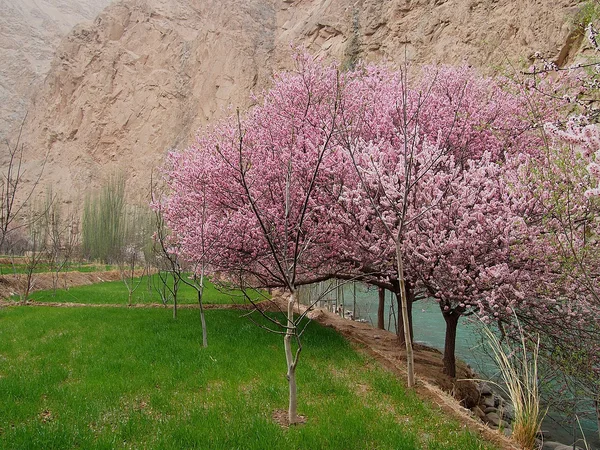
Wild and cultivated apricot landscapes appear briefly and are spread across a large region. The replacement image shows genuine apricot trees in Xinjiang rather than the unrelated lavender field formerly used here. Check road access, local bloom reports and land-use rules, and do not enter orchards or village property without permission.
3. Xingyi, Guizhou — Wanfenglin
Wanfenglin combines cultivated fields with a karst-peak landscape. Rapeseed flowering is part of an agricultural setting, not permanent scenery. Use marked viewpoints, keep drones within current site and aviation rules, and avoid blocking farm access for photographs.

4. Wuhan, Hubei — Wuhan University
The campus is a place of study as well as a blossom attraction. Entry, identity checks and reservation systems can change during peak weeks. Use the university's current visitor notice, keep noise low and choose public garden alternatives if campus access is restricted.
5. Xitang, Zhejiang — Xitang Ancient Town
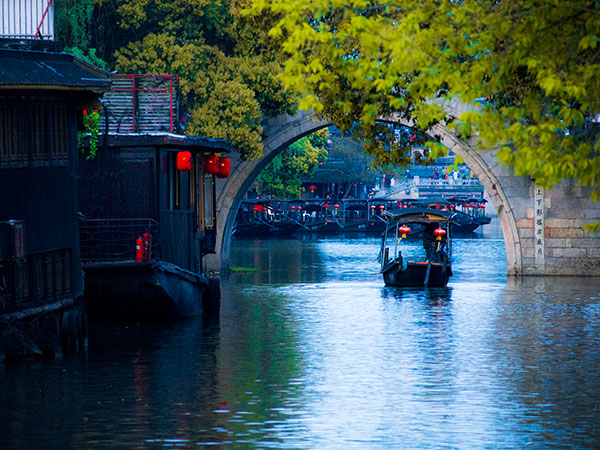
Willows and seasonal flowers complement Xitang's canals and historic lanes, but the value of the visit is the townscape rather than a guaranteed bloom. Early or late hours are calmer for walking; respect residential doorways and use designated waterside routes.
6. Nyingchi, Tibet — Peach Blossom Landscapes
Nyingchi can pair peach blossom with high-mountain scenery. Exact festival dates and valley access change each year, and Tibet travel requires current permits and organized arrangements for most international visitors. Keep altitude adaptation and road conditions ahead of a photographic schedule.
7. Wuyuan, Jiangxi — Rapeseed Fields
Wuyuan's yellow fields sit among working villages and Huizhou-style architecture. Confirm which viewing areas are open, buy tickets through official channels and avoid trampling crops for a photograph. Rain can create mud and low cloud, so pack traction and a weatherproof camera plan.
9 Days Best Scenery Trip Around Shanghai
Shanghai, Tongli, Suzhou, Hangzhou and Huangshan
| Region | Destination | March Weather | Why Visit in March | Best For |
| East China | Hangzhou (Zhejiang) | 8–18°C, mild | Early spring scenery, West Lake blossoms | Leisure travel, photography |
| East China | Suzhou (Jiangsu) | 7–16°C | Classical gardens in spring bloom | Culture, couples |
| East China | Wuxi (Jiangsu) | 8–17°C | Famous cherry blossoms at Yuantouzhu | Flower lovers |
| East China | Shanghai | 8–17°C | Comfortable sightseeing weather, fewer crowds | City breaks |
| South China | Guangzhou (Guangdong) | 15–23°C | Flower fairs, Lingnan spring atmosphere | Culture & food |
| South China | Shenzhen | 16–24°C | Urban parks in bloom, coastal walks | Modern city travel |
| Southwest China | Kunming (Yunnan) | 10–22°C | Peak flower season, pleasant climate | Flower viewing, leisure |
| Southwest China | Luoping (Yunnan) | 10–20°C | Rapeseed flower fields at their best | Photography |
| Southwest China | Dali (Yunnan) | 8–20°C | Clear skies, spring lakeside scenery | Relaxation, couples |
| Southwest China | Lijiang (Yunnan) | 3–18°C | Snow mountains + spring sunshine | Nature & photography |
| Central China | Wuhan (Hubei) | 8–18°C | Cherry blossoms at Wuhan University | Flower viewing |
| Central China | Jingzhou (Hubei) | 8–18°C | Ancient city walls and spring countryside | History lovers |
| North China | Beijing | 2–13°C | Plum blossoms, fewer tourists than peak seasons | Cultural sightseeing |
| North China | Pingyao (Shanxi) | 0–15°C | Mild weather, quieter ancient town | History & architecture |
| Northwest China | Xi'an (Shaanxi) | 3–14°C | Spring festivals and historic sites | Culture & history |
| Southeast China | Xiamen (Fujian) | 13–20°C | Spring seaside climate, flower parks | Relaxed city breaks |
Editorial accountability
Hu Lei, CEO. The named owner is responsible for travel-planning accuracy and escalation of time-sensitive checks.
Yuntian Travel (Yunnan) Group is identified in its corporate profile as a licensed professional inbound travel service provider based in Kunming, China. Registration and travel-service documents can be requested before booking.
Page-specific references where cited, official destination, transport and entry notices, YUNSKY route-planning records, and direct provider confirmation before a booking is finalized.
Content is reviewed when rules, transport, access, pricing or route conditions change. Final availability and operating details are reconfirmed for each traveler’s dates.
Quality review: Page updated: