Your China & Yunnan Travel Experts



Chinese ceramics include low-fired earthenware, high-fired stoneware and porcelain, along with many regional bodies, glazes and decorative techniques. The category covers cooking and storage vessels, architectural components, tomb objects, sculpture, tea wares and court commissions. Its history is not a straight line from “simple pottery” to “perfect porcelain”; different ceramic traditions continued side by side for different needs.
The earliest Chinese ceramics and development in different historical periods.
Pottery was produced in China before settled farming, but individual archaeological finds have specific dates and contexts. It is safer to follow excavated evidence than to repeat one universal “first” date. Clay choice, temper, forming method, firing atmosphere and intended use all affected the finished object.
Neolithic communities in several regions developed distinct ceramic traditions. Painted vessels are associated with sites in the Yellow River region and northwest China, while fine black pottery is strongly associated with later Neolithic cultures in eastern China. These labels describe archaeological traditions, not a single national style. The image below should be read with its museum date and provenance.

Early Chinese pottery
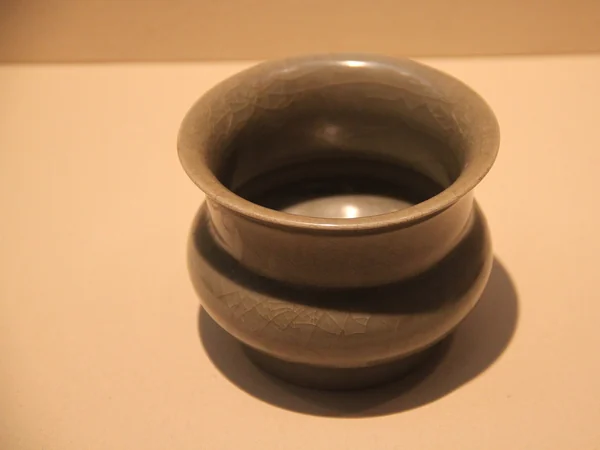
By the Shang and Zhou periods, specialist production, higher firing temperatures, controlled kiln atmospheres and glazed stonewares expanded the technical range. Some high-fired wares are described as proto-porcelain, but the boundary between stoneware andporcelaindepends on body composition, vitrification, firing and scholarly convention. Later kilns developed celadon, white wares, sancai, black glazes, blue-and-white and many other traditions. The rise of major production centers also connected ceramics with domestic trade and overseas exchange.Jingdezhenbecame especially important for porcelain, though it was never China's only ceramic center. Visitors can compare kiln technology, raw materials and finished wares at the Jingdezhen Ceramics Museum.
Longquan celadon
The categories of Chinese ceramics
Ancient painted pottery
Painted pottery uses mineral pigments or slips to create designs on the vessel surface. Yangshao-period examples include bowls and jars with geometric, fish, human or animal motifs, but forms and decoration vary by site and phase. A museum label should identify the culture, approximate date, material and find context rather than simply calling the object “prehistoric.”
Important painted-pottery collections can be seen in museums nearXi'an, Lanzhou, Zhengzhou and other archaeological regions. Banpo is associated with Yangshao culture, but older descriptions of every settlement as a “matriarchal society” go beyond what one pot can demonstrate. If ceramics are the focus of your trip, combine museum study with a current Jingdezhen tour plan rather than trying to treat all periods in one day.
Majiayao, Dawenkou, Daxi, Qujialing, Qijia and other archaeological cultures produced their own vessel forms and decorative systems. Some pieces came from burials, while others relate to settlement life. Function must be inferred from excavation evidence; it is inaccurate to describe all painted pottery as funerary ware.

Painted pottery
Black pottery
Black pottery can result from a reducing firing atmosphere that limits oxygen and changes the clay body's color. Longshan-associated eggshell-thin black goblets demonstrate extraordinary control, but black wares range widely in thickness and function. The dark surface is a technical result, not evidence that every vessel was made by one identical smoking method.
White Pottery
Ancient white pottery used pale, kaolin-rich clay bodies and is especially associated with late Neolithic and Shang contexts. It should not automatically be equated with later porcelain: whiteness alone does not establish vitrification, translucency or firing temperature.The Imperial Palace Museumand other archaeological museums hold white wares from several periods. Read the object's material and date before comparing it with later Dehua or Jingdezhen porcelain.

White pottery
Stamped pottery
Stamped or impressed decoration is made by pressing tools, paddles, mats or molds into a clay surface. Repeated geometric patterns can help identify a production tradition, but impressions may appear on earthenware and stoneware from different regions and dates. Examine the body, firing and form together with the pattern.
How to protect antique Chinese ceramics and porcelain
Museum objects and privately owned ceramics require different levels of care. Do not touch displayed works unless a museum explicitly provides a handling object. For any piece represented as antique, provenance, condition and lawful export matter more than a seller's verbal age claim.
1. Keep a ceramic on a stable, level surface away from edges, vibration and direct traffic. Supports should be inert and fitted by a conservator for a valuable or damaged object.
2. Do not lift a vessel by a handle, rim, spout or repaired projection. Clean, dry hands may be appropriate for some stable ceramics, while gloves are required in other collections; follow the institution or conservator's instructions.

Ceramics in a museum display
3. Never test an object's age by scratching, tapping or applying liquid. Old repairs, salts, flaking glaze and unstable pigment may be difficult to see without examination.
4. Routine dusting and washing advice is unsafe for archaeological or valuable ceramics. Seek professional conservation guidance. Travelers who want to see production as well as collections can compare the museum with the Jingdezhen and Huangshan route; confirm current workshop and kiln access before travel.
Editorial accountability
Hu Lei, CEO. The named owner is responsible for travel-planning accuracy and escalation of time-sensitive checks.
Yuntian Travel (Yunnan) Group is identified in its corporate profile as a licensed professional inbound travel service provider based in Kunming, China. Registration and travel-service documents can be requested before booking.
Page-specific references where cited, official destination, transport and entry notices, YUNSKY route-planning records, and direct provider confirmation before a booking is finalized.
Content is reviewed when rules, transport, access, pricing or route conditions change. Final availability and operating details are reconfirmed for each traveler’s dates.
Quality review: Page updated: