Your China & Yunnan Travel Experts



Glaze color comes from mineral colorants in a lead-rich glaze applied over a pale body or slip. Objects were generally fired more than once, allowing the colored glazes to run and mingle. Faces and some details could remain unglazed and receive cold-painted pigment, much of which has disappeared. Because lead glaze is involved, visitors should not use decorative replicas for food unless they are certified for that purpose.
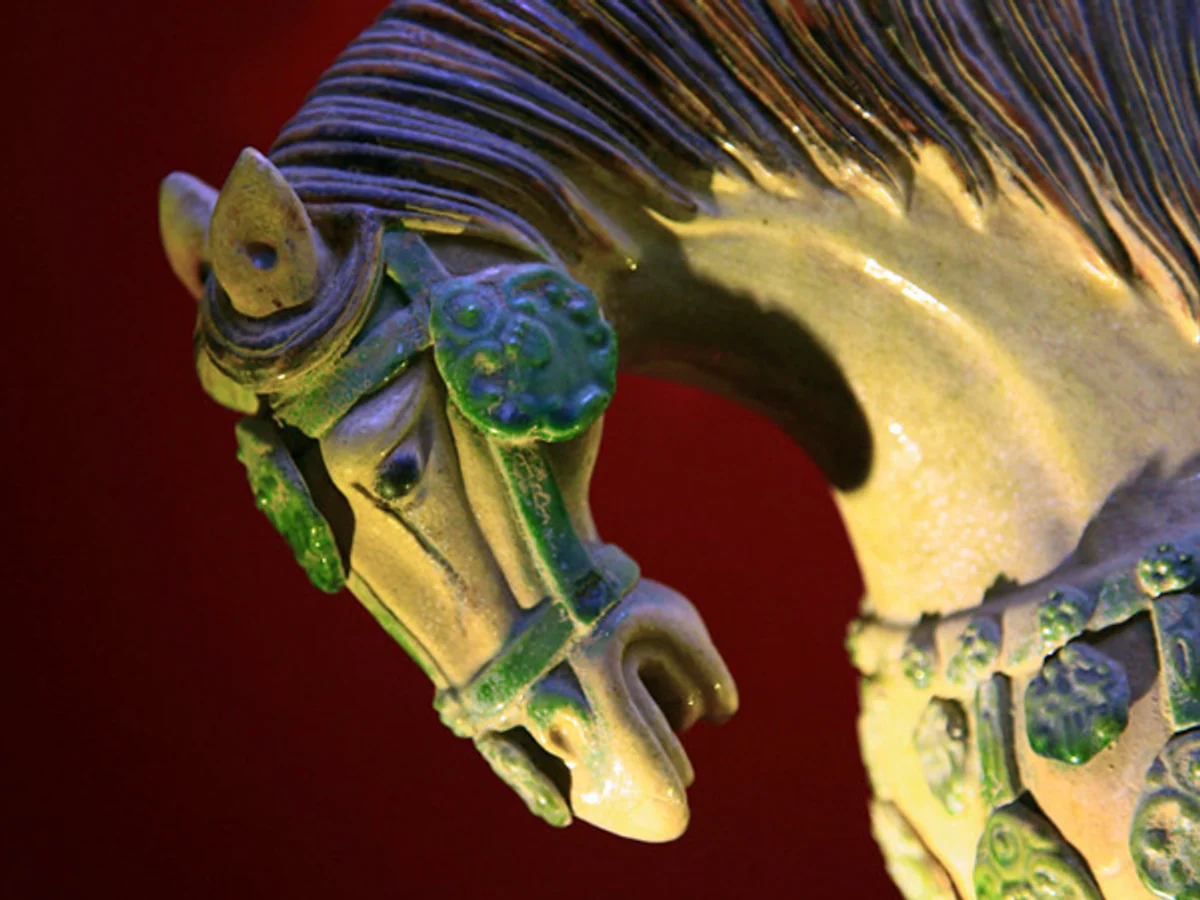
Tang sancai ceramics
Cultural Background
Sancai figures provide evidence for Tang clothing, animals, music and funerary ideas, but they cannot support sweeping claims about every woman's dress or body ideal. Tomb assemblages were shaped by rank, region, workshop and family choices. Museum labels should distinguish excavated context from an object acquired without archaeology.
Camels and foreign-looking riders reflect the Tang empire's far-reaching exchange with Central and West Asia. Chang'an and Luoyang were cosmopolitan capitals connected to overland and maritime networks, yet each figure is a crafted representation rather than a portrait of a specific visitor. Compare the imagery with broader Tang metalwork, murals and textiles before drawing conclusions.
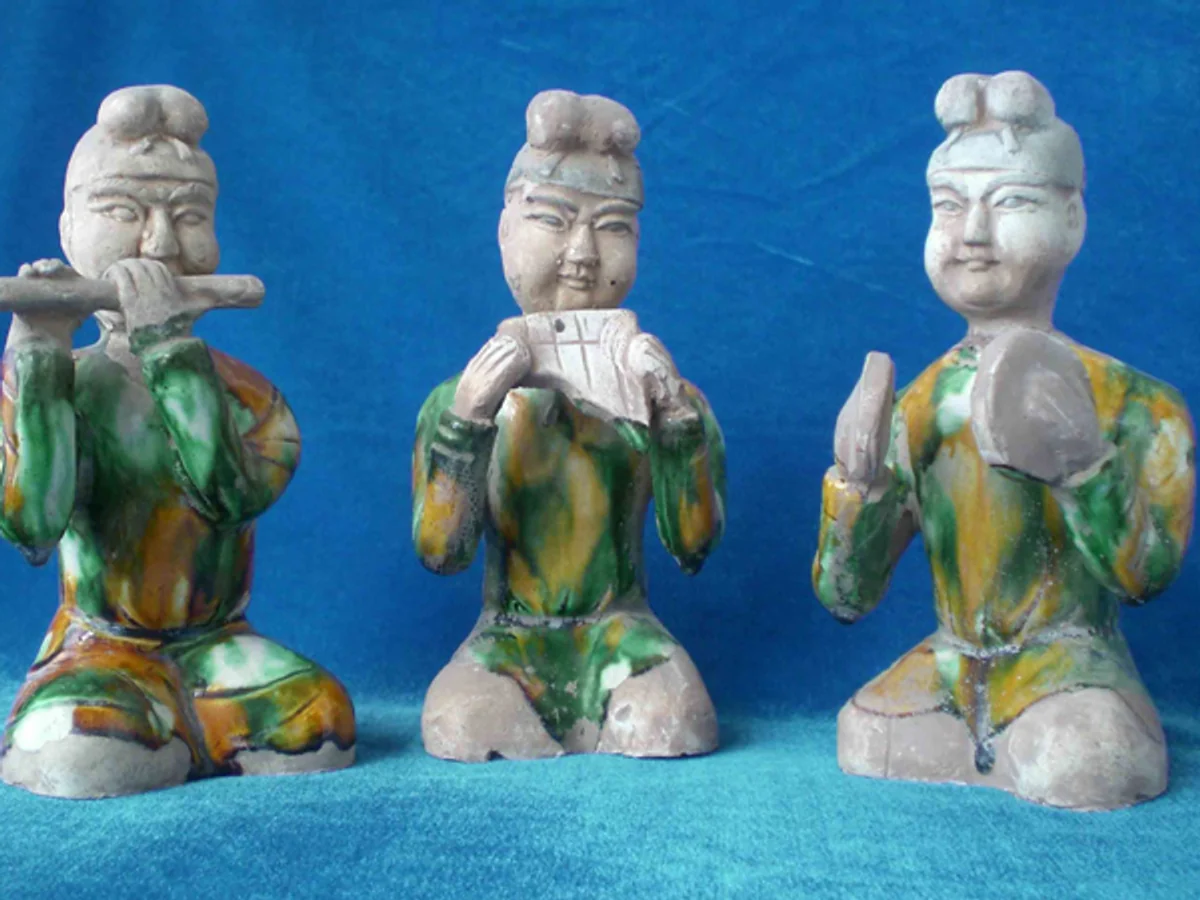
Tang sancai glazed pottery
Production Areas
Kiln sites and finds around Luoyang and Xi'an are central to the study of sancai, with other production and distribution evidence across China and beyond. In a museum, compare the excavation location, object type, glaze condition and proposed date; similar-looking wares were also made after the Tang, so color alone is not a secure dating method. Funerary figures were created for burial and should not automatically be described as household tableware. Travelers can use Luoyang tourism planning to connect museums with archaeological sites, then read the Luoyang sancai shopping guide only after understanding the originals. The Luoyang Museum of Ancient Tombs adds funerary context, but displayed objects and access may change. Modern replicas can be attractive and legitimate when clearly labeled; request the maker, material and intended use, and reject claims that an undocumented piece came from a tomb.
Editorial accountability
Hu Lei, CEO. The named owner is responsible for travel-planning accuracy and escalation of time-sensitive checks.
Yuntian Travel (Yunnan) Group is identified in its corporate profile as a licensed professional inbound travel service provider based in Kunming, China. Registration and travel-service documents can be requested before booking.
Page-specific references where cited, official destination, transport and entry notices, YUNSKY route-planning records, and direct provider confirmation before a booking is finalized.
Content is reviewed when rules, transport, access, pricing or route conditions change. Final availability and operating details are reconfirmed for each traveler’s dates.
Quality review: Page updated: