Your China & Yunnan Travel Experts



Pienfu, changpao and shenyi are three labels often used in English introductions to Chinese clothing, but they are not a complete taxonomy. Spellings and definitions vary in older sources, and China's clothing history also includes jackets, skirts, trousers, qipao, court dress and the distinctive traditions of many ethnic groups. Use these three terms as a starting point, then compare them with the history of Chinese clothing.
Pienfu is commonly described as a two-part formal ensemble with an upper garment and a lower skirt or trousers. The useful distinction is construction: top and lower garment remain separate. Exact cut, fabric, wearer and ritual meaning depend on the period. A modern costume labeled “pienfu” may be an educational reconstruction rather than a continuous everyday style.
Chángpáo literally means “long robe” and can refer broadly to a full-length gown. In discussions of late-imperial and modern clothing, it is often associated with Manchu-influenced robes and the men's changshan, but the term alone does not date an object. Lining, sleeve shape, closure and side vents help identify season and context. Padded, lined and unlined versions respond to climate; they are not three separate historical eras. A museum label is more reliable than judging from length alone.
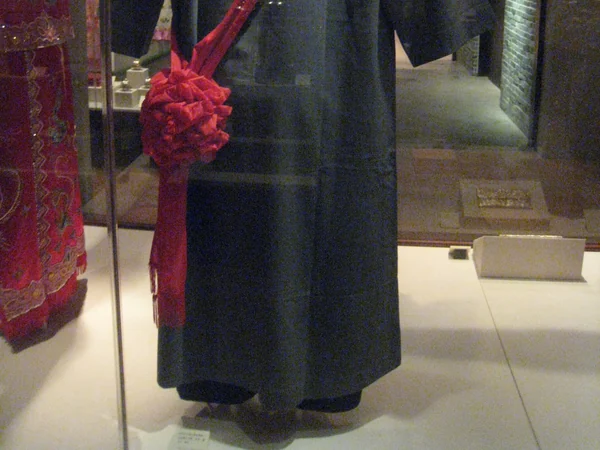
Long changpao robe displayed with its closure and side construction visible
Shēnyī is an early garment concept in which upper and lower sections are joined into one robe while preserving ritual ideas about their construction. Historical forms and modern reconstructions can use different hems, wrapping directions and sleeve proportions. It should not be described simply as a halfway point between pienfu and changpao, because its significance comes from its own ritual and structural history.
Both men and women wore forms discussed under the shenyi tradition in early periods, but status, date and archaeological context matter. Loose fit and wide sleeves appear in some examples, not every Chinese garment. Modern hanfu communities may use shenyi-related terminology for carefully researched, adapted or purely fashion-oriented pieces, so ask the maker what evidence informed the cut. For ceremonial color and motif, compare the Chinese wedding dress guide; for regional diversity beyond Han clothing, see costumes of China's ethnic minorities.
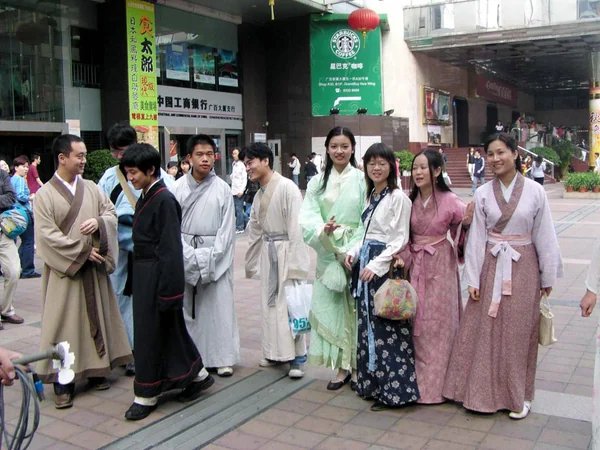
Historically informed shenyi reconstruction showing the joined upper and lower sections
Editorial accountability
Hu Lei, CEO. The named owner is responsible for travel-planning accuracy and escalation of time-sensitive checks.
Yuntian Travel (Yunnan) Group is identified in its corporate profile as a licensed professional inbound travel service provider based in Kunming, China. Registration and travel-service documents can be requested before booking.
Page-specific references where cited, official destination, transport and entry notices, YUNSKY route-planning records, and direct provider confirmation before a booking is finalized.
Content is reviewed when rules, transport, access, pricing or route conditions change. Final availability and operating details are reconfirmed for each traveler’s dates.
Quality review: Page updated: