Your China & Yunnan Travel Experts


Temujin united major Mongol groups and was proclaimed Genghis Khan in 1206. Relations between steppe powers and the Jurchen-led Jin dynasty had long involved tribute, trade, warfare and shifting alliances. Reducing the conflict to personal revenge hides the political and military conditions that made a large campaign possible.
After consolidating authority, Genghis Khan attacked Western Xia and then opened a major war against Jin in 1211. The Jin controlled northern China and maintained frontier defenses, but a wall could work only when troops, supplies, intelligence and field armies supported it.

Mongol cavalry in a thirteenth-century campaign is better understood through contemporary frontier geography than through later portraits that show the Ming brick Wall.
The 1211 campaign is associated with Yehuling, or Wild Fox Ridge, in today's Hebei. Jin forces attempted to defend mountain approaches, while the Mongols concentrated against vulnerable positions and maneuvered through the wider frontier. Exact troop totals in popular retellings vary greatly and should not be repeated as settled facts.
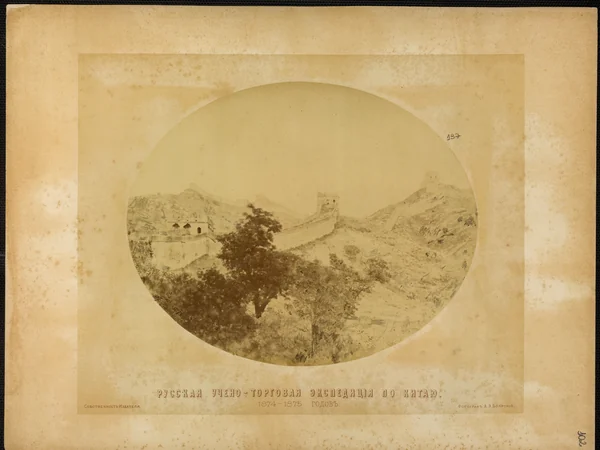
A route map should identify ridges, passes and the Jin capital approach; it should not imply that combat occurred along one continuous modern tourist wall.
Yehuling was a serious Jin defeat and weakened its ability to contain the Mongol advance. It also demonstrates that fortifications cannot compensate for dispersed command, poor coordination or an opponent able to choose where to concentrate force.
For the broader defensive context, compare this campaign with the Great Wall of the Jin dynasty, whose systems differed from later Ming rebuilding.
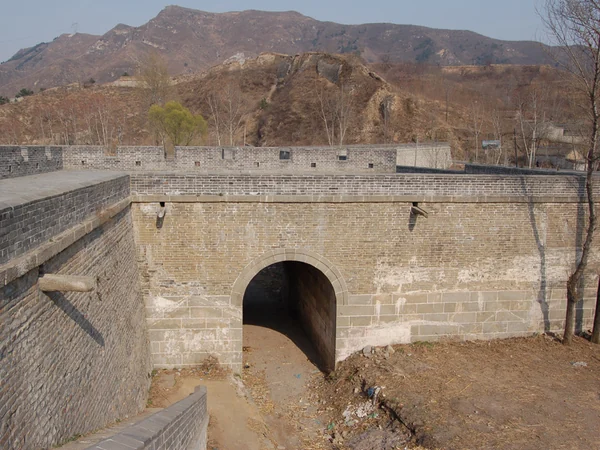
Juyongguan guarded an important corridor northwest of Zhongdu, the Jin capital in the area of modern Beijing. Campaign narratives describe Mongol forces bypassing, drawing out or turning defended positions rather than simply breaking through a wall by frontal assault. Juyongguan Pass remains a useful place to understand how walls, gates, valleys and roads formed one strategic landscape. Much of what visitors see today reflects later rebuilding, so it should not be used as an unchanged stage set for the events of 1211–1213.

The present masonry pass illustrates the terrain, not an exact reconstruction of the Mongol–Jin battlefield.
Accounts differ in tactical detail, and heroic anecdotes often compress several operations. The reliable lesson is that mobile forces could threaten multiple corridors and force defenders away from prepared positions. Zijingguan was another route through the mountain defenses. Its role helps explain why a frontier system depended on several Great Wall passes rather than one gate. When one approach was bypassed or isolated, the capital region remained exposed from other directions.
The Jin court negotiated after the Mongol advance and moved its capital south from Zhongdu to Kaifeng in 1214. Zhongdu fell in 1215. Those events were stages in a longer war, not the immediate creation of the Yuan dynasty.
Genghis Khan died in 1227 during the campaign against Western Xia. Under his successor Ögedei, Mongol armies continued the Jin war and coordinated with Southern Song forces against their common opponent. The Jin dynasty ended in 1234.
The Yuan dynasty was proclaimed later by Kublai Khan, so it is inaccurate to call every early Mongol victory “Yuan.” Travelers interested in the full chronology can continue with the Great Wall history collection and compare how later dynasties rebuilt different frontiers.
From $ 389

From $ 509

From on request
Editorial accountability
Hu Lei, CEO. The named owner is responsible for travel-planning accuracy and escalation of time-sensitive checks.
Yuntian Travel (Yunnan) Group is identified in its corporate profile as a licensed professional inbound travel service provider based in Kunming, China. Registration and travel-service documents can be requested before booking.
Page-specific references where cited, official destination, transport and entry notices, YUNSKY route-planning records, and direct provider confirmation before a booking is finalized.
Content is reviewed when rules, transport, access, pricing or route conditions change. Final availability and operating details are reconfirmed for each traveler’s dates.
Quality review: Page updated: